
Photo by Sven Piper on Unsplash
This digest compiles the latest from Engadget.
Today’s Engadget Roundup
Blizzard finally revealed its long-rumored Overwatch mobile game
24 Feb 2026, 4:29 pm by Lawrence Bonk
Blizzard is finally bringing Overwatch to mobile devices, but not exactly in the way you think. The company isn't making a port of the mainline game. Rather, it just announced a spinoff called Overwatch Rush, which is being described as a "top-down hero shooter designed specifically for mobile set in the Overwatch universe."
There have been rumors about an Overwatch mobile game for what seems like a lifetime. Most people assumed this would appear as a straight port, but a brand-new game is also great. It's not being developed by Team 4, the group that works on the mainline game, but is being made internally.
Overwatch Rush features many of the heroes of Overwatch battling on familiar-looking maps, according to a gameplay video. The game offers 4v4 matches, though the characters are more cartoonish and stylized than the mainline game. This is likely to accommodate smaller screens and the top-down view.
This is a mobile game, so the battles are described as "bite-sized" and the controls are touchscreen-based. Blizzard says it's still in the early stages of development but that it's going to offer "fast-paced, on-the-go play, with hero-centric combat and playstyle customization that suits both team and solo players."
Overwatch Rush will be playable soon, as part of a beta testing process. It'll be free to play and available for both Android and iOS whenever the full game is ready to go.
Blizzard says that a "new, separate, dedicated team" will be "focused exclusively" on Overwatch Rush. That's industry code for "we aren't draining resources from the main game to make the mobile spinoff." Oddly, the company recently held a series of panels to discuss the future of its franchises and didn't mention this mobile game.
This isn't the company's first foray into mobile game development. It's had a hand in stuff like Diablo Immortal and Warcraft Rumble.
This article originally appeared on Engadget at https://www.engadget.com/gaming/blizzard-finally-revealed-its-long-rumored-overwatch-mobile-game-162938590.html?src=rss
Netflix, Disney+ and other major streaming services face stricter UK oversight
24 Feb 2026, 4:01 pm by Kris Holt
Netflix, Disney+, Amazon's Prime Video and other major video on-demand (VOD) streaming services are set to face stricter regulation in the UK. Platforms with a monthly average of more than 500,000 UK viewers will be deemed “Tier 1" services that are subject to similar oversight as broadcasters like the BBC and ITV under the eye of media watchdog Ofcom.
Streaming services run by public broadcasters like ITVX and Channel 4 will have to abide by the new rules as well. BBC services such as iPlayer are exempt for now as they’re regulated under the Broadcasting Code, which broadcasters have to adhere to. That said, the UK government plans to update the BBC Framework Agreement so that iPlayer is regulated in the same way as Netflix et al.
The government said the new rules will reflect changes in how people are watching TV. It claimed that 85 percent of people use an on-demand service every month while 67 percent watch live TV. It added that two-thirds of UK households subscribe to at least one of Netflix, Prime Video and Disney.
According to Variety, the rules will not apply to video-sharing platforms such as YouTube, since those are regulated under the Online Safety Act. However, individual channels on such platforms could be subject to the VOD standards code.
Tier 1 platforms will have to adhere to regulations regarding accuracy and impartiality, while ensuring they shield audiences from “harmful or offensive" material. Ofcom will be able to accept viewer complaints over apparent breaches of such rules and carry out investigations. The watchdog will then be able to take action if it determines that there's been a breach of the VOD standards code. That includes fines of up to £250,000 ($337,000) or five percent of "qualifying revenue" per breach.
A public consultation will help shape the VOD standards code. The public and streaming services will have the chance to weigh in on what the rules should be. The standards code will then come into force a year after Ofcom publishes it. The government says "more than 20" platforms will be subject to the code as things stand.
Separately, a VOD accessibility code will be established to bring streaming services further into line with broadcasters. Tier 1 streaming platforms will have to ensure that at least 80 percent of their total catalogues are subtitled, 10 percent have audio descriptions and five percent is signed. They'll have four years to meet the requirements of the accessibility code.
"With UK audiences increasingly favoring on-demand platforms over live TV, we want to ensure that no one is left behind, and that everyone can enjoy the huge range of content available on video-on-demand services," Media Minister Ian Murray said in a statement. "Implementing a new Ofcom-regulated accessibility code for our largest video-on-demand services will give people with disabilities impacting their sight or hearing peace of mind that they’ll be able to stream all their favorite films and TV shows long into the future."
The UK government is implementing these rules for streaming services under the Media Act 2024. Currently, platforms including Prime Video, Disney+, Paramount+, Discovery+, Hayu and ITVX are subject to statutory rules that Ofcom enforces. However, the watchdog has no oversight of Netflix as things stand. That platform's European base is in the Netherlands. As such, the Dutch media regulator oversees Netflix instead.
This article originally appeared on Engadget at https://www.engadget.com/entertainment/streaming/netflix-disney-and-other-major-streaming-services-face-stricter-uk-oversight-160121268.html?src=rss
Samsung Galaxy Unpacked 2026: The Galaxy S26 series, AI and other products we might see on February 25
24 Feb 2026, 3:48 pm by Ian Carlos Campbell
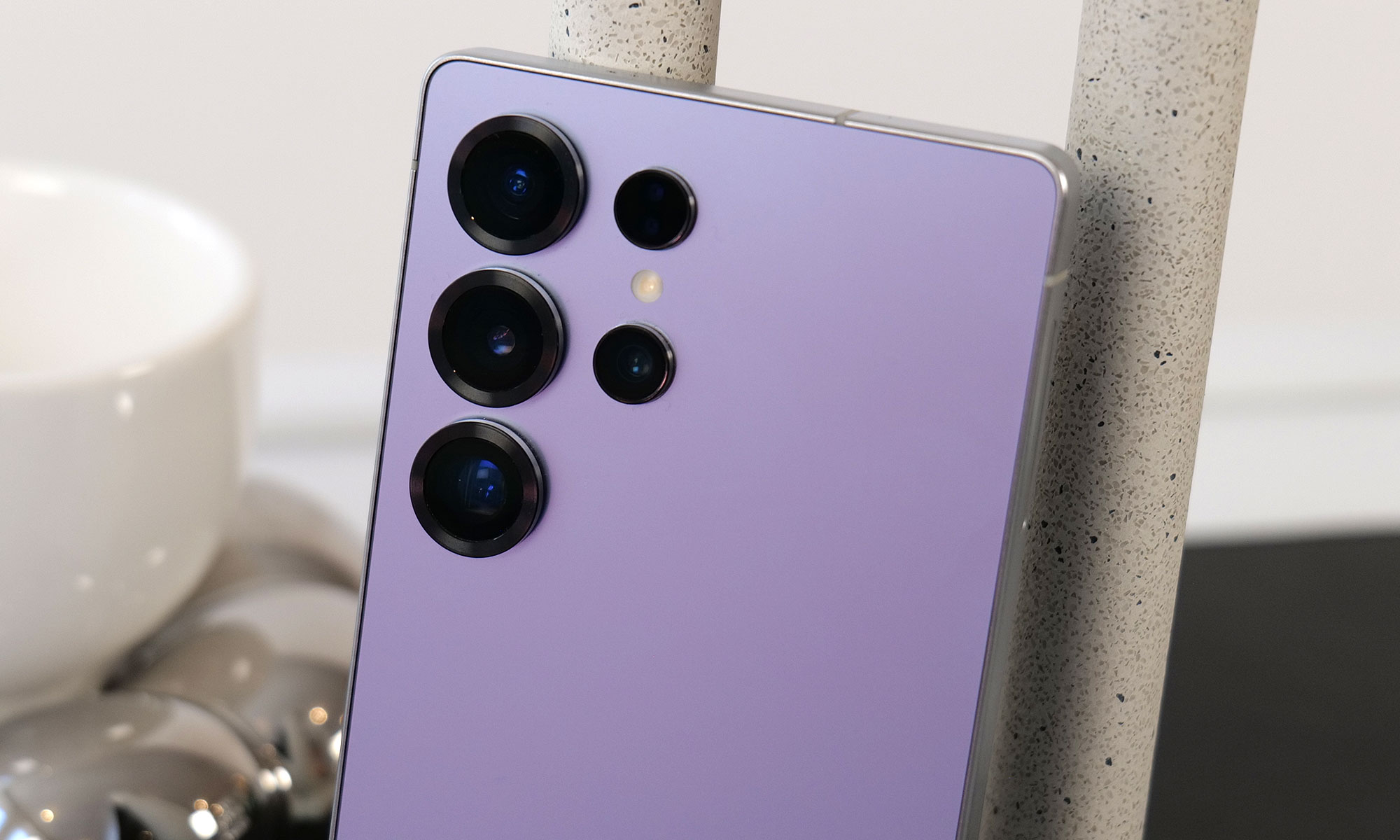
Samsung’s 2025 was filled with new foldables, an ultra-thin new form factor and the launch of Google’s XR platform. After making some announcements at CES 2026, the company has announced its first Galaxy Unpacked of the year will take place on February 25, where it is expected to introduce the Galaxy S26 lineup. Official invites have been shared, but actual information on what devices are arriving then is still not completely confirmed. But as usual, we know a lot about what’s expected at Unpacked.
Engadget will be covering Galaxy Unpacked live from San Francisco tomorrow, and we’ll most likely have hands-on coverage of Samsung’s new smartphones soon after they’re announced. While we wait for the full details, here’s everything we expect Samsung will introduce at the first Galaxy Unpacked event of 2026.
When is Unpacked 2026 taking place?
According to the official invite that Samsung shared on February 10, Unpacked will happen on February 25, 2026 in San Francisco. The keynote will start at 10AM PT (1PM ET) and be livestreamed on Samsung.com, as well as the company’s newsroom and YouTube channel. The announcement on February 10 also said this launch will mark “a new phase in the era of AI as intelligence becomes truly personal and adaptive.” It’s not a lot to go on, since we’ve heard a version of this from various companies over the last few years, but at least we won’t be shocked when we hear more about AI in just about two weeks.
Galaxy S26, S26+ and S26 Ultra
Samsung’s restrained approach to updating its phones will likely continue with the Galaxy S26. Based on leaked images of the new lineup, the company is not expected to radically reinvent the look of the Galaxy S26, Galaxy S26+ or Galaxy S26 Ultra, and instead will stick with a similar design to what it used on the Galaxy S25. The phones will have a flat front screen and frame, with rounded corners and cameras housed in a vertical pill-shaped plateau on the back. Unlike Apple’s move from the iPhone 16 Pro to the iPhone 17 Pro, the biggest difference here will likely be internal components like the screens, chips and camera sensors Samsung uses.
Qualcomm’s new Snapdragon 8 Elite Gen 5 chip is expected to be in all Samsung Galaxy S26 phones, though Korean news site Yonhap News reports Samsung’s relatively new Exynos 2600 chip could be used in some phones in the lineup depending on the region, a strategy Samsung has deployed in the past. Either way the new phones should be more performant than the previous generation, and in the case of the models with the Snapdragon 8 Elite Gen 5, particularly good at on-device AI processing.
I have compiled the most accurate comprehensive parameter comparison of Galaxy S25, S25+ and Galaxy S26、 S26+. Which one do you want to buy? pic.twitter.com/aQpoSvYjOz
— Ice Universe (@UniverseIce) November 29, 2025
One notable difference between the Galaxy S26 and the Galaxy S25 could be the phone’s screen. The new phone will reportedly feature a 6.3-inch FHD+ display according to specs shared by leaker Ice Universe, which makes it ever so slightly larger than the 6.2-inch display used on the Galaxy S25. The S26 will also allegedly come with 12GB of RAM, either 256GB or 512GB of storage and a slightly larger 4,300mAh battery. Samsung isn’t changing the cameras on the entry-level phone, though: leaks suggest it’ll feature the same 50-megapixel main camera, 12-megapixel ultrawide, 10-megapixel 3x telephoto and 12-megapixel selfie camera as the previous generation. Changes appear to be even more minor on the Galaxy S26+. Other than the new Snapdragon chip, the phone will reportedly feature the same 6.7-inch FHD+ screen, 4,900mAh battery, 12GB of RAM and the same camera array used on the base Galaxy S26.
The difference between the Galaxy S26 Ultra and Galaxy S25 Ultra is reportedly a bit clearer. According to Android Headlines, the new phone’s cameras will be slightly more raised, and stand out thanks to a new metallic finish. Samsung may also switch back to using an aluminum frame on the Galaxy S26 Ultra, after using titanium frames on both the Galaxy S24 and S25 Ultras. Most importantly, to make the phone actually support Qi2 rather than only technically work with the standard when a case is attached, rumors suggest Samsung will remove the S Pen digitizer layer in the phone and adopt a new method for accepting stylus input. It’s not clear what that new method will actually be, but it could let the Galaxy S26 Ultra more easily work with Qi2 accessories without losing its stylus.
Android Headlines also recently shared what appear to be full image renders of the S26 series, and they generally line up with what has already been rumored, leaked and reported so far. If these pictures are accurate, they give us a clearer look at the camera bump and two color variants of the S26 Ultra.
Fans of magnets may continue to be disappointed by Samsung if the latest rumors are accurate. Despite the launch of the Qi 2 wireless charging standard adding support for convenient magnetic alignment years ago, Samsung has yet to bring that feature to its phones. Though the S-series have the higher speed charging rates that the spec enables, Nieuwemobiel.nl is reporting that, due to images it received of cases with magnetic rings, the S26 series likely won’t have built-in magnets. Samsung has made these cases to add the magnetic capability to its S-series in the past, and the existence of the images of these accessories lends weight to the idea that the company will continue this approach.
Galaxy Buds 4

Samsung released the Galaxy Buds 3 and 3 Pro in 2024, with a major redesign that brought them much more in line with Apple’s AirPods. The Galaxy Buds 4 and Buds 4 Pro Samsung is rumored to be announcing soon won’t necessarily change that, though they will feature a more compact case and less angular stems, according to leaked images from the Samsung Tips app.
Support for head gestures to accept and decline calls, a feature Apple includes on the AirPods Pro 3 and AirPods 4, is also rumored to work on both versions of the new Galaxy Buds. SamMobile reports the Galaxy Buds 4 and 4 Pro may also ship with a new Ultra Wideband chip that will make them easier to find with Google’s Find Hub network.
Galaxy Z Trifold
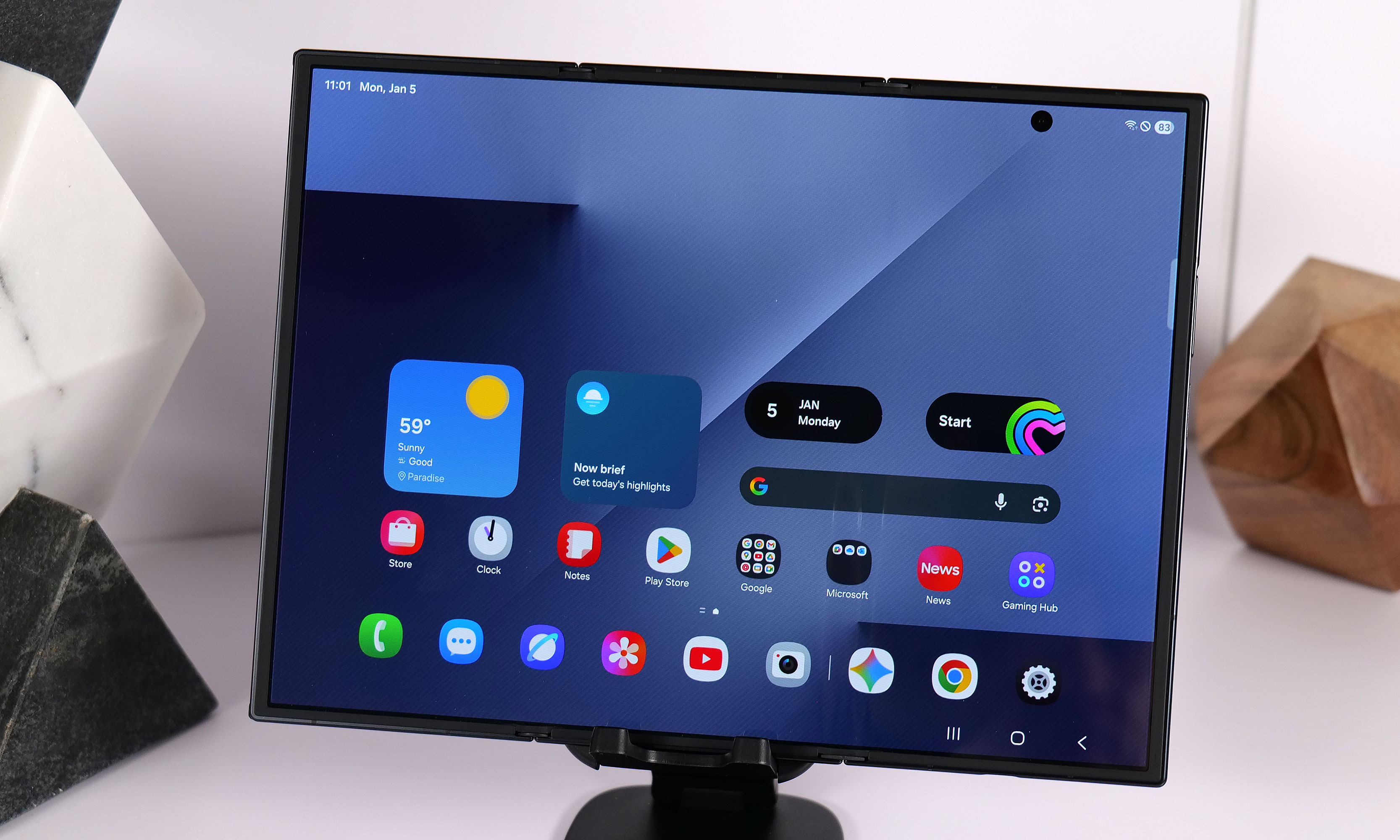
Samsung announced the Galaxy Z TriFold in late 2025 without firm details of when the new smartphone-that-folds-into-a-tablet would be available in North America. That info came on January 27, when the company announced the TriFold would be available in the US on January 30, for a whopping $2,900. Considering we’ve already seen the device in person at CES 2026 and people are most likely to have had a chance to look at, if not buy the foldable for themselves by the time Unpacked rolls around, we don’t expect Samsung to spend too much time dwelling on it, if at all.
Galaxy S26 Edge
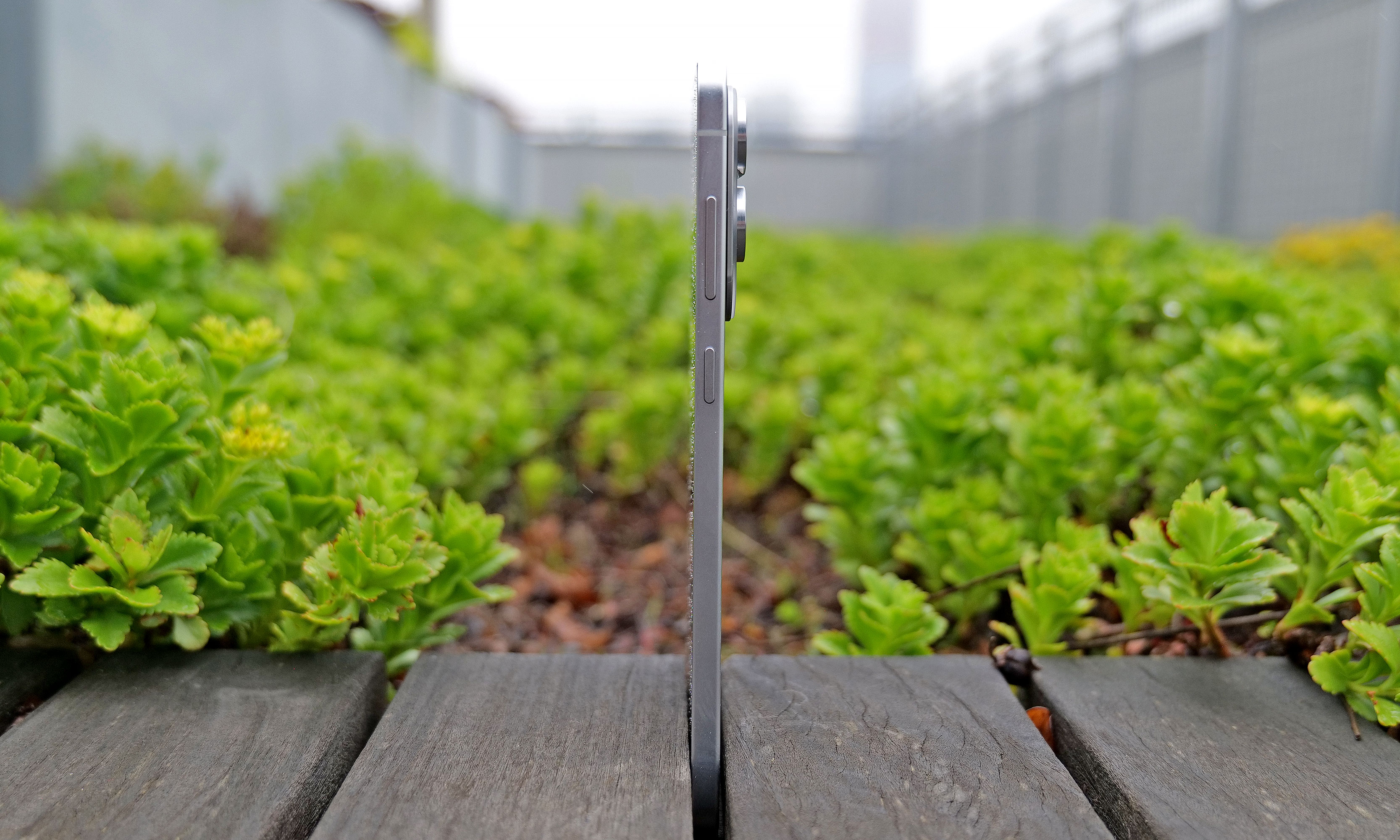
When the Galaxy S25 Edge was announced in 2025, it seemed possible that Samsung could replace its “Plus” smartphone with a unique form factor, just like Apple has opted to do with the iPhone Air. There have been conflicting reports on the matter, but it seems like Samsung will not be doing that with the Galaxy S26 Edge.
Instead, the smartphone will reportedly remain another option, much like foldables are for customers not swayed by Samsung’s traditional smartphones. The Galaxy S26 Edge is rumored to feature a slightly different design than last year’s model, according to Android Headlines, with a large rectangular camera plateau that’s reminiscent of Google’s Pixel phones, and the raised oval Apple used on the iPhone Air. Beyond that, the phone is also expected to be ever so slightly thinner at 5.5mm than the 5.8mm Galaxy S25 Edge.
Bixby and other AI features
Samsung already acts as a first place Google can show off new AI features for Android, but the company is reportedly exploring other AI partnerships, too. In June 2025, Bloomberg reported that Samsung was nearing a deal with Perplexity to integrate its AI-powered search engine across OneUI and its homegrown mobile browser. Perplexity already has a deal with Motorola on its Razr phones, so the only thing that would make a deal with Samsung unusual is the close relationship the company already has with Google.
The company also accidentally announced a new version of its Bixby AI assistant, which will likely also be integrated with Perplexity and could serve as an alternative to Google Gemini. Both a new Bixby and a deeper integration with Perplexity seem like natural new software features to show off at Galaxy Unpacked.
On February 17, Samsung teased some mobile AI photography features ahead of Unpacked. These expand the S-series’ existing image-editing tools by bringing the ability “to turn a photo from day to night in seconds, restore missing parts of objects in images, capture detailed photos in low light, and seamlessly merge multiple photos into a single, cohesive result.” A lot of these things are already possible in other photo-editing apps or even in the Google Photos app, but we’ll have to wait to see them in action on the S26 phones for more details on whether they’re different or more effective.
The company continued to drip feed more teasers in the week leading up to Unpacked 2026, announcing just a few days later that it’s updated its Bixby assistant to be more conversational. Then, over the weekend, it shared that the S26 series will offer third-party AI agents within Galaxy AI, including Perplexity’s offering. It will allow for the devices to respond to the wake phrase “Hey Plex,” which is sure to be popular and not at all confusing to those who already use a similarly named media server and streaming app.
Until we find out more at Unpacked 2026, it’s tricky to determine if and how effective these updates will be, so we’ll just have to be patient until we get the phones in our hands.
Update, January 27 2026, 11:55AM ET: This story has been updated to reflect the latest news around the Galaxy Z TriFold’s price and availability in the US.
Update, January 30 2026, 12:45PM ET: This story has been updated to include the latest leaks on the possible dates for Unpacked 2026.
Update, February 02 2026, 11:30AM ET: This story has been updated to include the latest leaks with full image renders of the S26 trio of devices.
Update, February 03 2026, 11:00AM ET: This story has been updated to include the latest leaks about the possible lack of magnetic support on the S26 series.
Update, February 10 2026, 7:15PM ET: This story has been updated to include the official date of Galaxy Unpacked as Samsung announced it today. The intro was also edited to reflect that detail.
Update, February 17 2026, 4:55PM ET: This story has been updated to add Samsung’s teaser about its upcoming mobile AI photography tools. The intro was also edited for timeliness.
Update, February 24 2026, 10:45AM ET: This story has been updated to add Samsung’s recent updates about Bixby and Galaxy AI’s integration with Perplexity. The intro was also edited for timeliness.
This article originally appeared on Engadget at https://www.engadget.com/mobile/smartphones/samsung-galaxy-unpacked-2026-the-galaxy-s26-series-ai-and-other-products-we-might-see-on-february-25-130000135.html?src=rss
Ryan Coogler's X-Files reboot gets the green light at Hulu
24 Feb 2026, 2:07 pm by Sarah Fielding
Good news for all Ryan Coogler fans: The Sinners director is bringing back a beloved TV show. Hulu has officially green lit a pilot of Coogler's X-Files reboot, a project three years in the making, Deadline reports. Coogler has a five-year exclusive television deal with Disney, Hulu's parent company.
Coogler is directing and writing the pilot episode, with Jennifer Yale coming on as showrunner. She previously held the role on The Copenhagen Test. Actress Danielle Deadwyler, known for roles in Till and The Harder They Fall, has signed on as co-lead.
The show will follow the original storyline of two FBI agents who bond as they work on cases around paranormal and unexplained phenomena. No confirmation has come over whether former stars Gillian Anderson and David Duchovny will have any role in the reboot.
The news came on Sunday, the same day Coogler won the BAFTA for Best Original Screenplay for Sinners. Coogler made history this year with a record 16 Oscar nominations for Sinners, including Best Original Screenplay and Best Picture. Coogler also wrote and directed Creed, Black Panther and Black Panther: Wakanda Forever.
This article originally appeared on Engadget at https://www.engadget.com/entertainment/tv-movies/ryan-cooglers-x-files-reboot-gets-the-green-light-at-hulu-140735536.html?src=rss
Seattle Ultrasonics C-200 review: This is the future of kitchen knives
24 Feb 2026, 2:00 pm by Sam Rutherford
There’s a type of knife tech often seen in science fiction that revolves around vibrating a blade to increase its sharpness. We’ve seen examples of this in franchises like Star Wars (vibroblades), Evangelion (the prog knife), Dune (pulse-swords) and the Marvel universe (vibranium), but what might surprise you is that the underlying science is sound. By vibrating a cutting tool at high frequencies, not only do you reduce friction, you essentially turn the blade into a saw, as tiny oscillations enhance the inherent sharpness of a blade.
However, up until recently, this tech largely only existed in fiction or for large companies that have the money to utilize the tech on an industrial scale. But that's changing in a big way for home cooks this year thanks to Seattle Ultrasonics, which is releasing the world's first ultrasonic chef's knife: the C-200. After chopping, smashing and cooking with it for about a month, I'm convinced that this is the future of kitchen knives.
Design
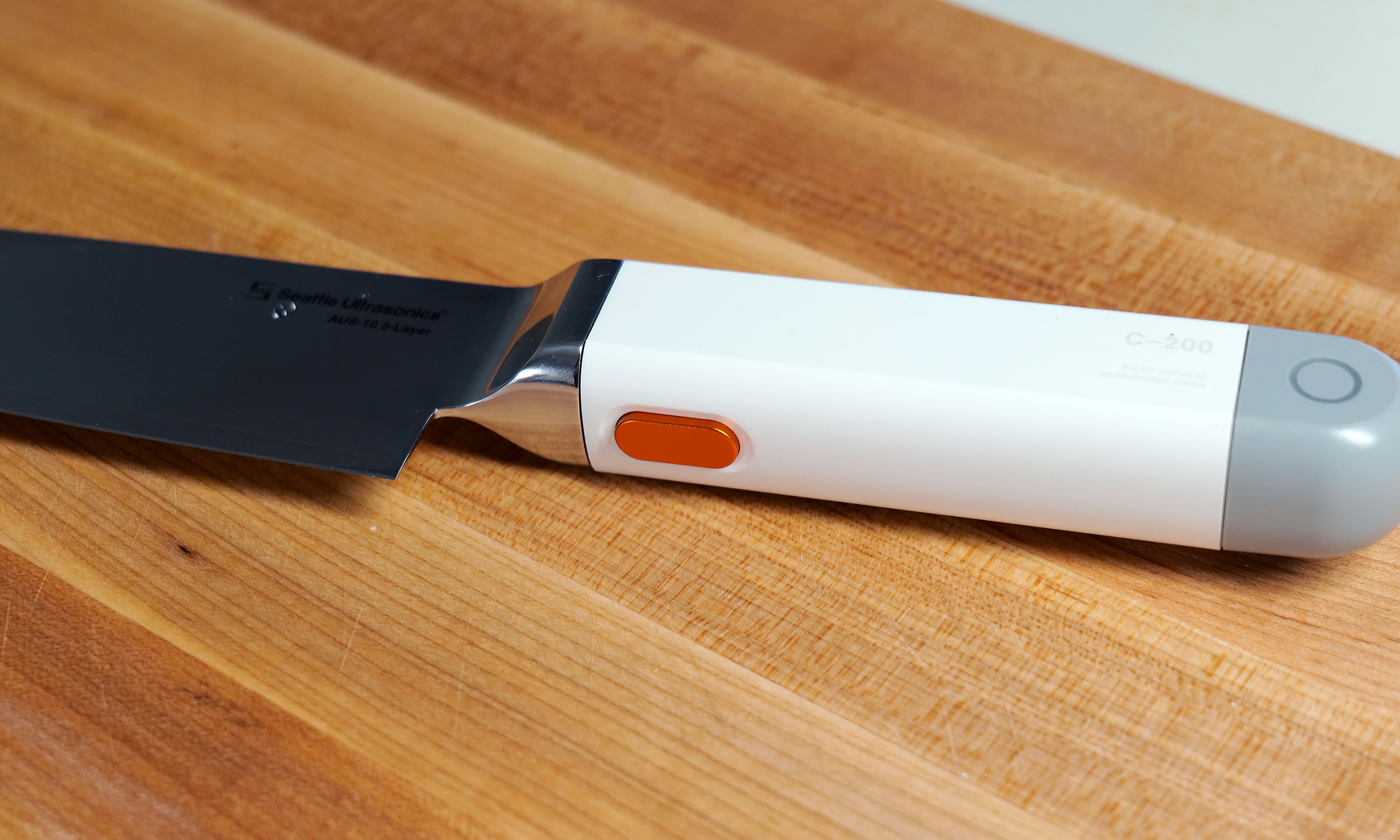
From afar, the C-200 looks a lot like a regular 8-inch chef's knife, but with a slightly more contemporary design. It features a three-layer san mai blade made from Japanese AUS-10 steel with a 13-degree edge angle per side (26 degrees total). However, upon closer inspection, you'll notice there are some features that seem a bit out of place on a premium knife.
The first is that the C-200 doesn't have a full tang, which is the back end of a blade that ideally extends into the handle to provide added strength and durability. This is usually a major no-no, particularly on a $400 knife. However, when you consider that Seattle Ultrasonics needed somewhere to put its vibration tech, there really isn't any room for it other than inside the knife's grip.
The knife's second quirk is that the back of the plastic handle features small indicator lights on either side, which is obviously a bit weird. Furthermore, the entire gray section can be removed to reveal a small 1,100mAh battery with an onboard USB-C port. Frankly, the presence of a battery in a knife is just kind of funky. But hey, the power to vibrate the knife has to come from somewhere because it definitely isn't being generated by your hands. And while Seattle Ultrasonics doesn't include a charging adapter or cable in the box, I don't mind because the company wisely took cues from the larger gadget industry and went with a power spec that's already widely in use. Honestly, I wish more kitchen tech makers would do the same.
However, the knife's biggest oddity is the big orange button on the bottom of its handle. This is what you use to make the blade vibrate, which it does at 33kHz. It's positioned well so that it's easy to press regardless of whether you do a traditional pinch grip or if you're a bit more casual and prefer to hold the knife only using its handle. In the future, I can see this button becoming a touch-sensitive sensor, but for now, it's simple and effective.
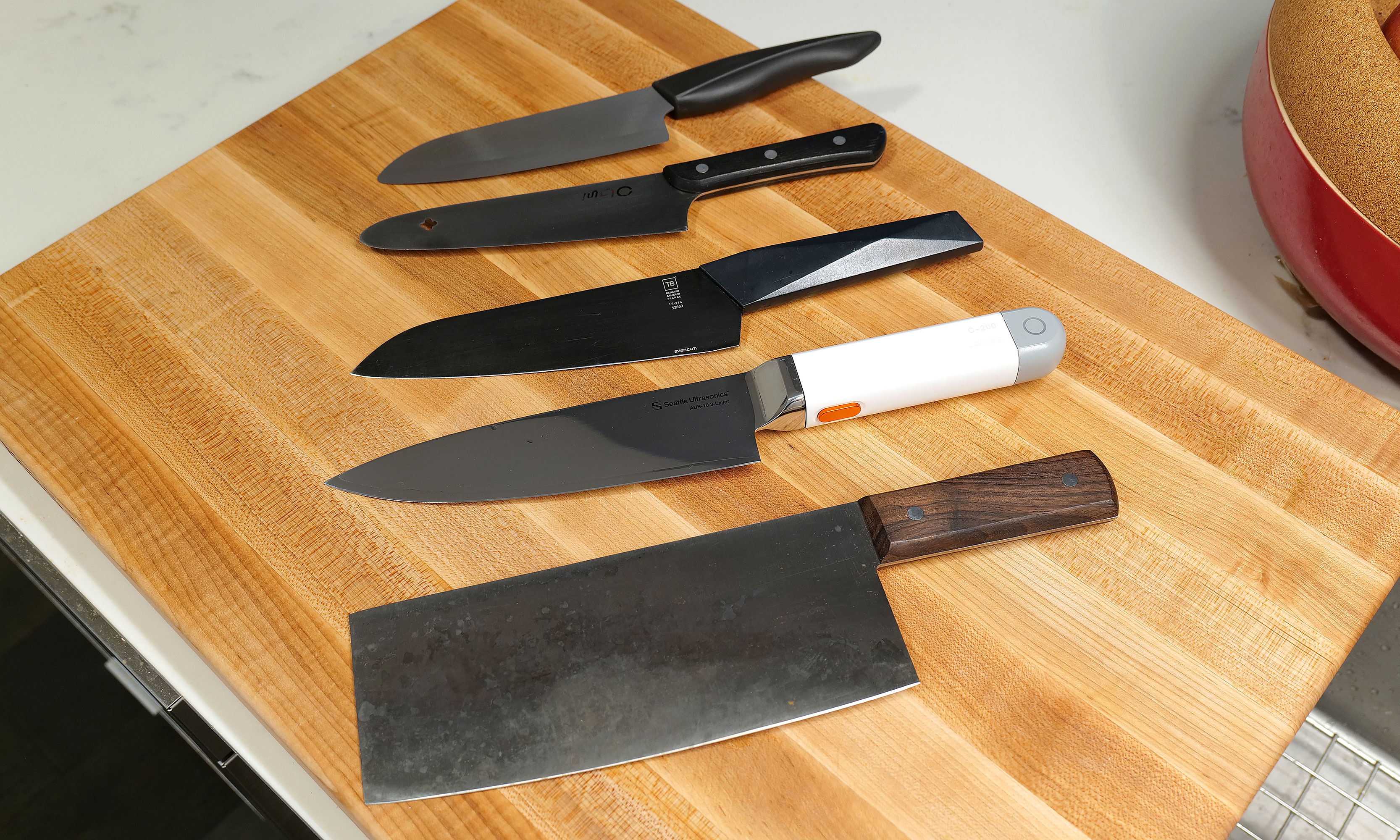
The main downside to the C-200's design is that at 328 grams (around 0.75 pounds) it's heavier and bulkier than a typical knife. When compared to other knives I own, which are made from a wide variety of materials including, ceramic, molybdenum steel, carbon steel and even titanium carbide, it weighs more than everything else aside from my big Chinese cleaver (396 grams). And while it fits nicely in my hand, my wife said it takes a bit more effort for her to wield. It's not too much to the point where you don't want to use it. But for quick tasks, sometimes I found myself subconsciously reaching for lighter options like my 6-inch ceramic knife, which weighs just 97 grams.
How it works
From a user standpoint, putting the C-200 to work couldn't be simpler. Just press the button and let the knife do its thing. The big difference from how knives like this work in sci-fi is that there's no audible hum or detectable vibration when it's on. It's practically silent (well, most of the time, but more on that later), so you have to trust that it's on or check the indicator light on the handle. That said, if you still don't believe anything is happening, you can run the edge of the blade under water or scrape it over some cut citrus, at which point the blade's vibration will atomize nearby liquid into a fine mist. It's a cool party trick that also doubles as a way to amp up a cocktail by adding a faint essence of lemon, lime or anything else you can think of.
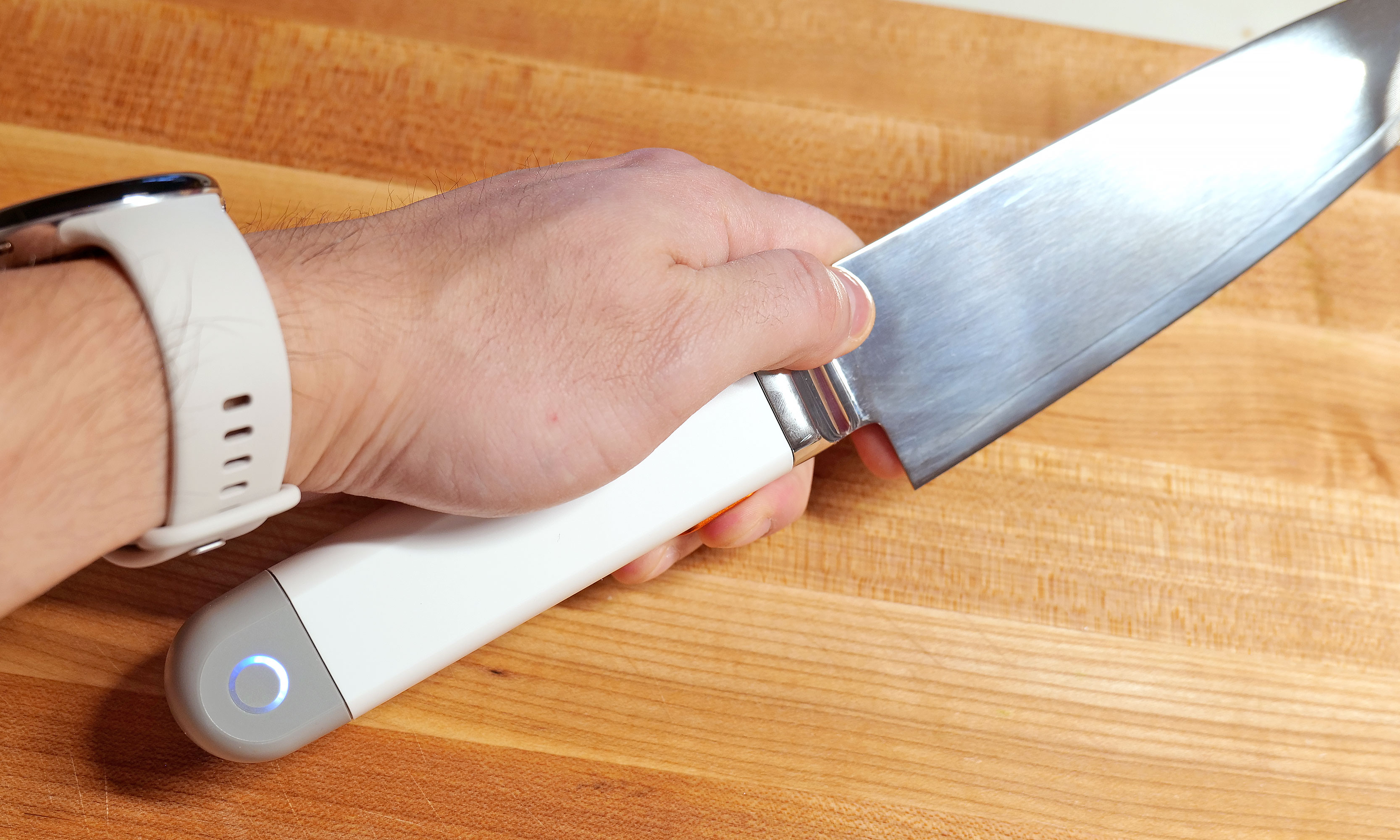
Inside, the knife relies on PZT-8 piezoelectric ceramic crystals to generate up to 30,000 vibrations per second, which propagate down the blade and make the knife function as if it's sharper than it actually is. This all sounds rather fantastic, so how does it function in the real world?
In-use
To really put the C-200 through its paces, I cooked over a dozen meals that involved neatly slicing or preparing a wide variety of foods — including Hasselback potatoes, flank steak, pork belly, chives, sushi-grade tuna and all sorts of fruit.
In short, the C-200's effectiveness depends a lot on what you're chopping. For soft things like strawberries or a piece of cake, I didn't notice much of a difference. To make things even more difficult, the knife arrived out of the box with an incredibly fine edge — the kind that makes shearing through a sheet of paper child's play. So even though Seattle Ultrasonics says its knife can reduce cutting effort by up to 50 percent, there's not much gain to be had when slicing foods that could just as easily be cut by a butter knife.
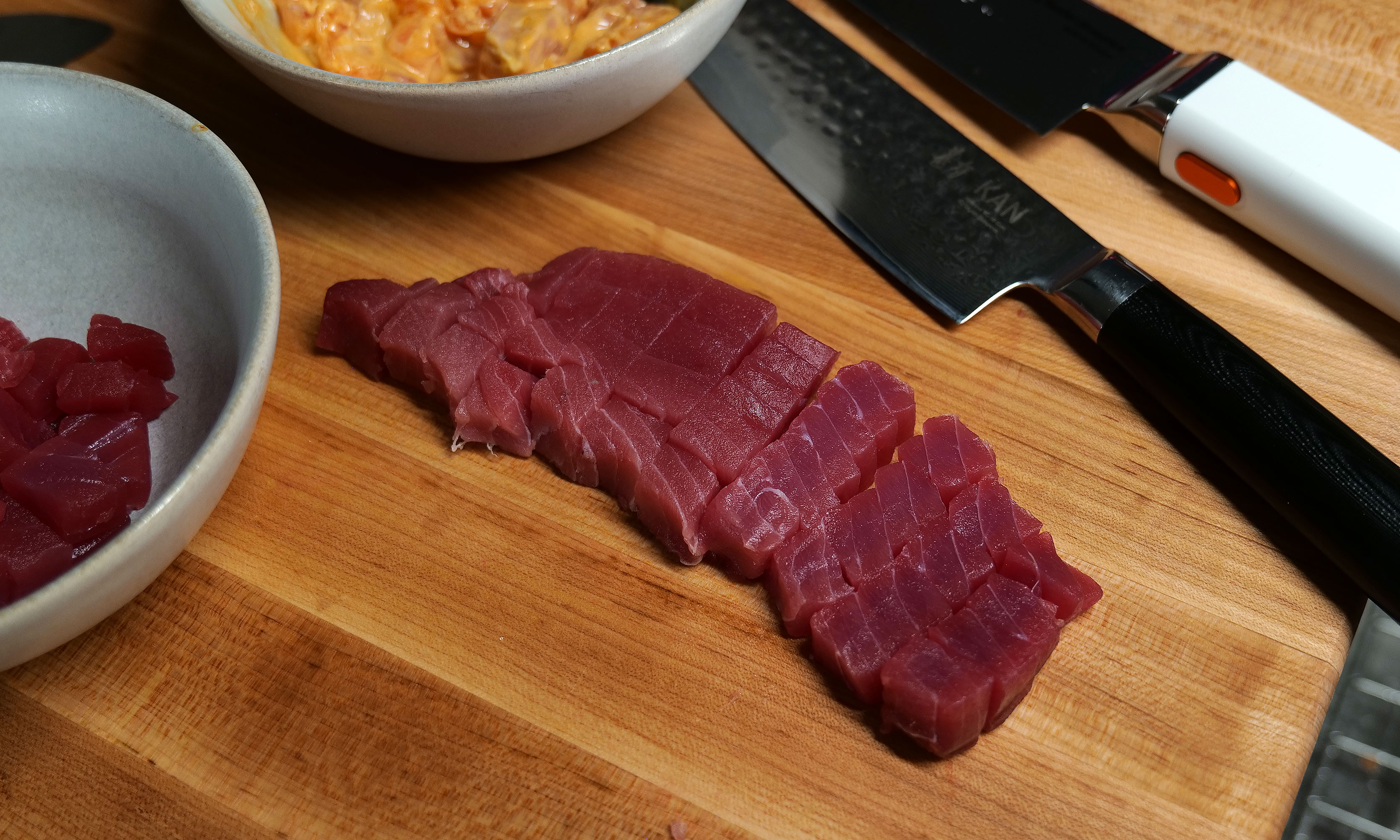
However, as I used it more, I found that the C-200 excels at cutting through delicate items like tomatoes, scallions and fish, where using a dull knife often results in bruising the food as you chop. This was most evident when I made poke at home, where Seattle Ultrasonic's knife delivered cleaner, more precise cuts than anything else I own.

When I whipped up some pico de gallo, I distinctly noticed how neatly the C-200 sliced through the skin of a tomato, instead of initially putting a crease in it before cleanly passing through its interior — which often happens when using dull knives. An additional benefit is that because of the vibrations, I found some foods like garlic didn't stick to the side of the blade as much. This made it easier to keep track of how much I chopped while simultaneously reducing the mess from things falling willy-nilly during prep. But perhaps the most obvious demonstration of the knife's prowess was when I diced an onion. When using my other knives or the C-200 without powering it on, I could feel when I tried to cut through thicker, more sturdy layers. But then, at the touch of a button, I was able to slice down with practically no resistance. It's almost shocking because it feels like magic.
The C-200 even has the ability to reduce the importance of certain knife techniques. Anyone who's seen all the posts on r/kitchenconfidential about cutting chives will already know what I'm talking about. As J Kenji Lopez-Alt neatly demonstrated, the ideal way to get crisp, clean slices is to do a subtle forward or back cut instead of simply chopping straight down. But with Seattle Ultrasonics' knife, I've found that it's so sharp you can get away with almost any motion and still get good results. And if you do it the right way, things are even better.
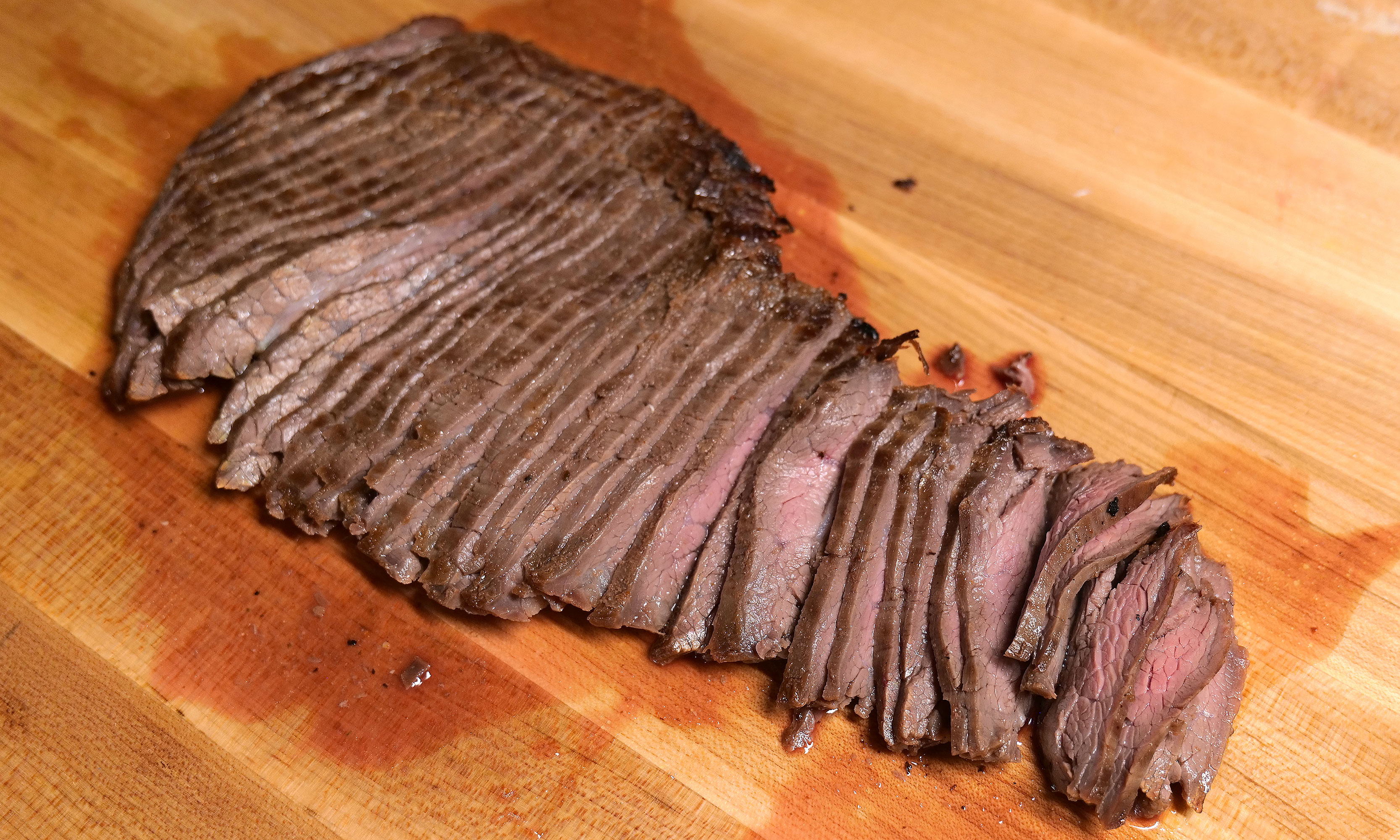
Other types of food that makes the C-200 really shine are denser ingredients like meat and potatoes, where you can really feel the added cutting power. Previously, when I had to break down thick cuts of protein, I sometimes wished I owned a serrated electric knife. You know, the kind you break out once a year on Thanksgiving and then it sits and gathers dust for the other 364 days. But the C-200 made that desire a thing of that past, as it quickly and easily worked through flank steak while once again producing neat, uniform slices.

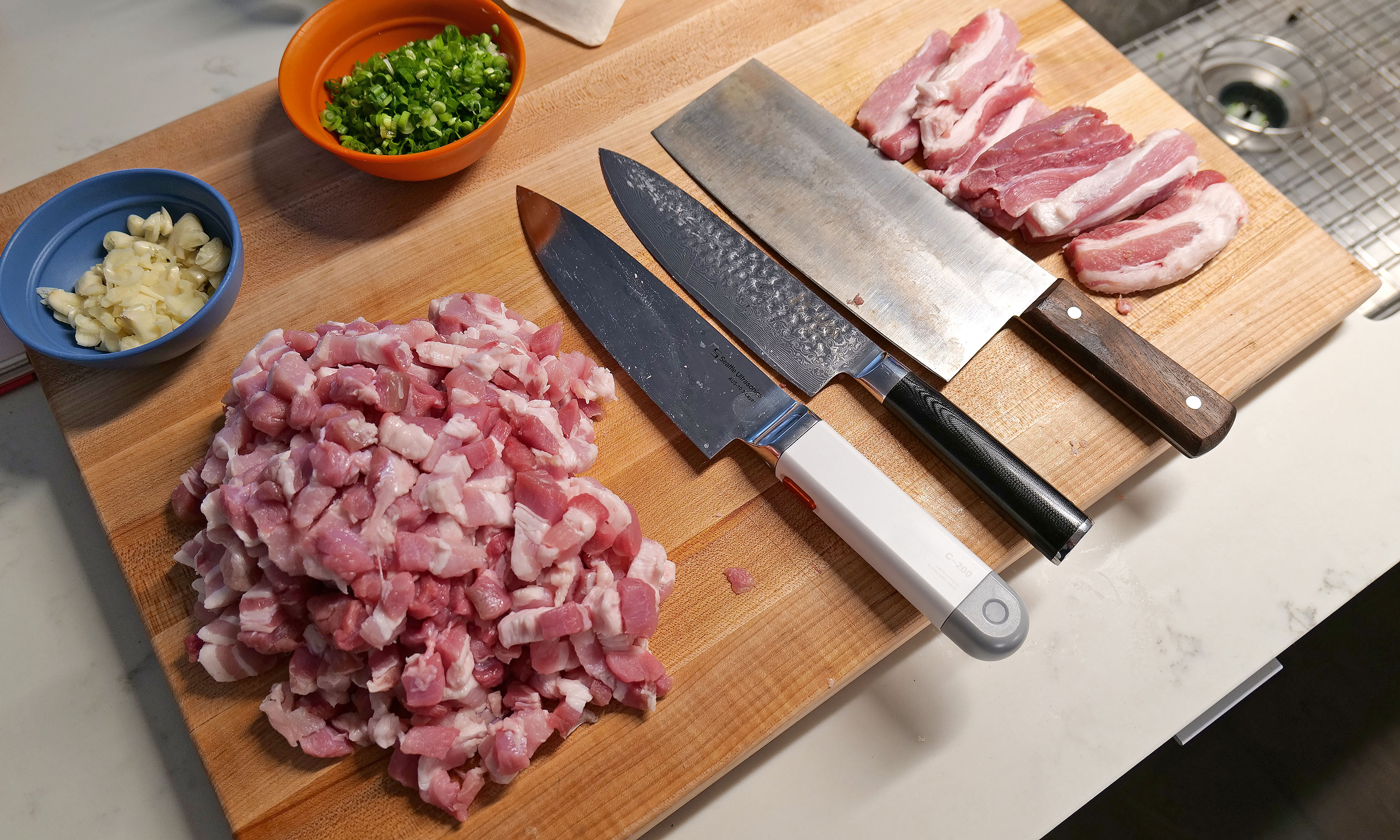
My favorite application of the C-200 was when I was doing prep for Taiwanese braised pork (aka 滷肉飯). Despite this being one of my most beloved dishes that I taught myself how to cook because I couldn't easily find it from local restaurants, I don't make it very often because it's a lot of work to cut multiple pounds of pork belly into small lardon-shaped pieces. Here, the knife's vibrations made it so much easier to cut through all those layers of meat, fat and skin. If there's any situation where the C-200 makes it 50 percent easier to slice through something, it's this.

During my testing, two small issues cropped up. While it was quite rare, the knife would sometimes emit a faint high-pitched whine. When I asked Seattle Ultrasonic's founder Scott Heimendinger about this behavior, he was rather frank, saying that this can occur when water or moisture accumulates in just the right spots on the blade. Furthermore, he said this only happens on a small number of V1 models, which the company is working to fix in the future. Thankfully, I don't mind, but if it bothers you, making the noise go away is as easy as wiping down the knife down with a cloth or paper towel.
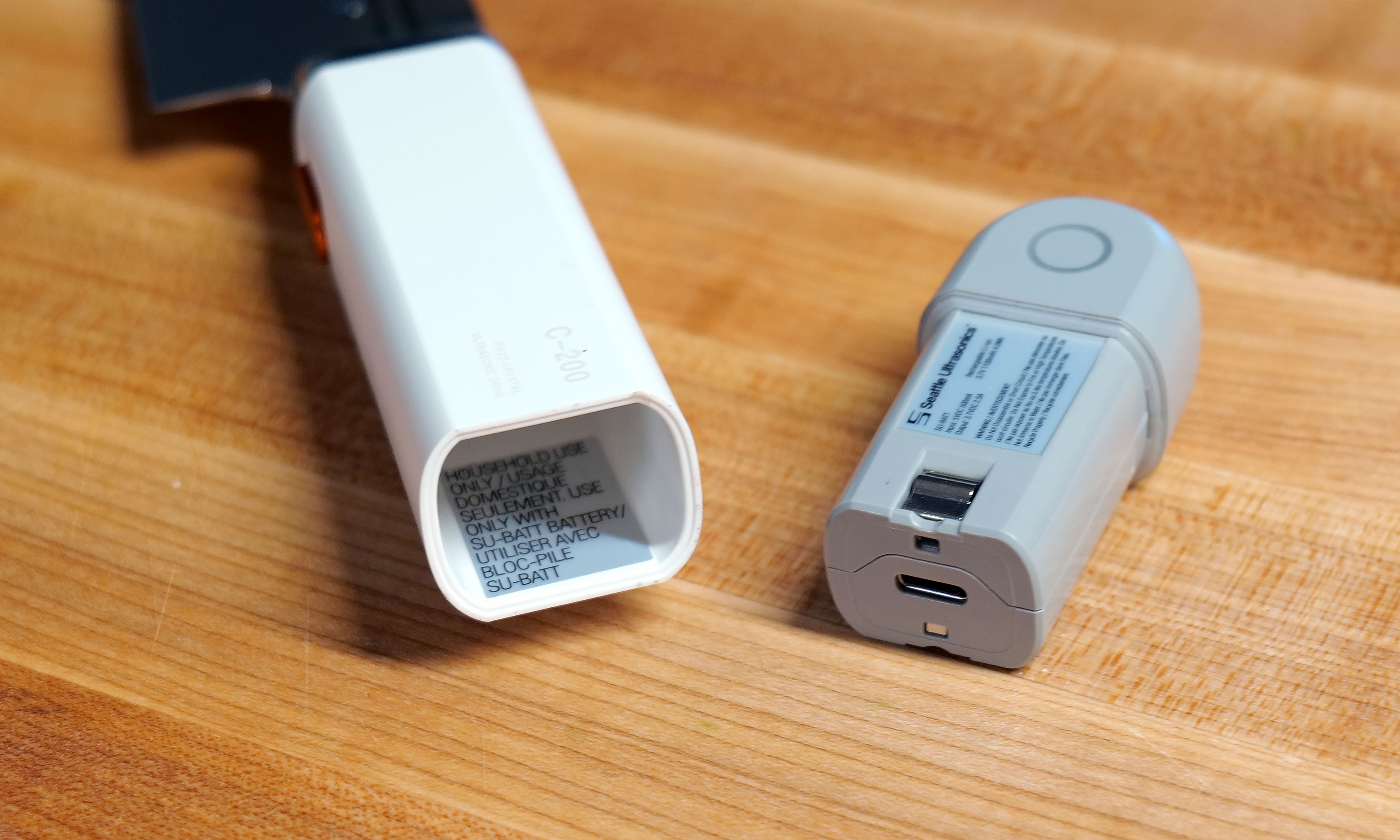
The other complication came while I was working through the multiple pounds of pork belly I mentioned earlier. After 10 to 15 minutes of continuous use, the knife beeped and its indicator light turned red. Turns out the knife had overheated, which was something I had not even considered. This led to higher-than-normal temperatures inside the knife's sealed electronics causing it to shut off. But after just 30 seconds, it returned to form. During later uses, I learned that simply taking my finger off the button between tasks, which happens naturally as you prep anyway, was more than enough to stop that situation from happening ever again.
On the flipside, I was happy to discover that despite lacking a full tang, the C-200 can handle fairly rough tasks, including laying the knife on its side to smash garlic or jamming it into an avocado to remove its pit. That said, I would really recommend against doing the latter, because between its inherent sharpness and its vibration tech, this is the first knife I've used that can slice cleanly through an entire avocado with almost no extra effort.
Cleaning and care

The last big concern about a knife with built-in electronics is how it handles clean-up. Thankfully, the C-200 features an IP65 rating for dust and water resistance. That means it can withstand rinsing and splashes without issue. And it's actually even tougher than that, because the front of the knife, including its bolster and button, are rated IP67. This means it can take full submersions in water if need be. However, just because you can, doesn't mean you should. Good kitchen protocol says you don't throw knives you care about in the sink and forget them, just like how you wouldn't put one in the dishwasher either.
But perhaps the greatest advantage of this tech is that it allows you to go longer between needing to get your knives sharpened, which if you're like most home cooks, is probably never. To be clear, I haven't tested this and in some respects I wish I had been able to test out a dull version of the C-200. That said, science dictates that slice for slice, an ultrasonic knife will simply cut better than an equivalent blade without the extra tech. So if you believe in the adage that a dull knife is more dangerous than a sharp one because you need to apply more force to get the same results, this is another bonus for both safety and convenience.
The not-so-optional accessory
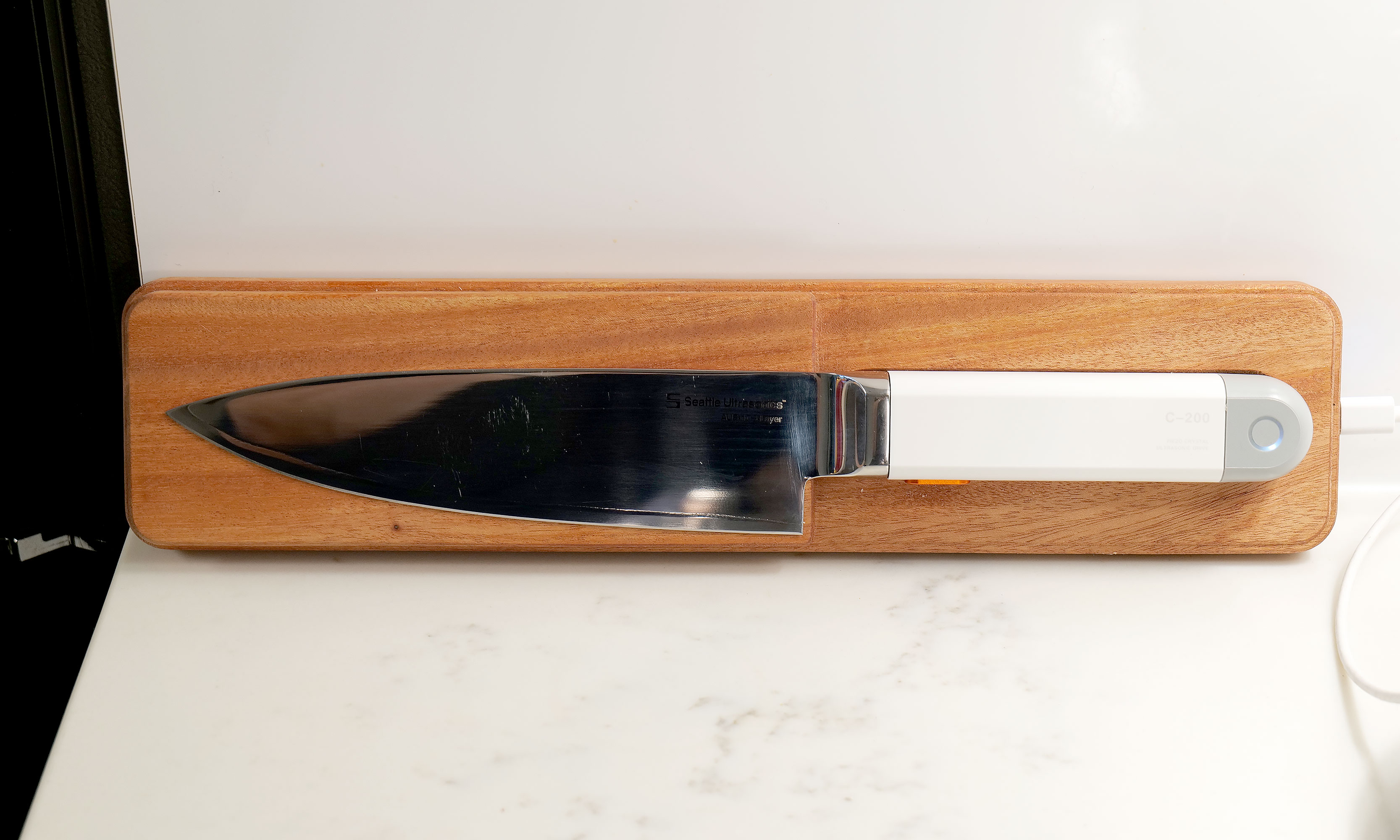
I fully admit the need to keep a knife charged up is a major annoyance and something I or anyone else probably doesn't want to do. Thankfully, Seattle Ultrasonics thought of that by including support for wireless charging via the C-200's magnetic tile and it's dead simple to use. Just toss it on the charger when you're not using and it will take care of itself, so you never have to worry about how much of its normal 20-minute runtime it may or may not have left. There are also holes around back so you can easily mount the charger on a wall or shelf. In short, the added convenience the charging tile brings is so valuable that I don't really consider it an optional accessory. If you're getting the C-200, you need to buy this too, which sadly means you're looking at an all-in price of $500 for the bundle instead of just $400 for the knife by itself.
Wrap-up
After using the C-200, I don't think people need to rush out and throw all their old-school knives in the trash. The beauty of an ultrasonic blade like this is that it can handle everything your old cutlery is meant for, but with the touch of a button, it delivers sharpness unlike anything you've experienced before. And while it has some quirks, they're nothing like the kind you typically encounter on first-gen gadgets. Its biggest drawback is that its magnetic charging tile feels like an essential accessory, but it adds extra cost on top of a product that already has a deservedly premium price tag.
Even though I'm sure knife makers will continue tweaking blade shapes and alloy mixes from now until the end of time, the addition of ultrasonic vibrations to a chef's knife unlocks a completely new tier of performance. That's because this technology is additive. All it does is enhance what a blade already does best. And when you look at related gadgets in the maker space, I don't think it's a coincidence that there's a similar revolution that resulted in Adam Savage of Mythbusters fame naming a sonic cutter as one of his favorite things of 2025. When viewed that way, it makes me even more confident that the C-200 is the flagbearer for a new breed of kitchen knives.
This article originally appeared on Engadget at https://www.engadget.com/home/kitchen-tech/seattle-ultrasonics-c-200-review-this-is-the-future-of-kitchen-knives-140000051.html?src=rss
Meta may trade AI chips for shares in its latest AMD deal
24 Feb 2026, 1:42 pm by Steve Dent
Meta has struck a deal with AMD to buy up to six gigawatts worth of AI chips, both companies announced. The agreement is structured in a way that could see AMD issue Meta up to 160 million shares of its common stock provided GPU shipment milestones are achieved — meaning Meta could own up to 10 percent of AMD if the deal fully completes.
Meta plans to purchase six gigawatts of AMD's Instinct GPUs based on the MI450 architecture and optimized for Meta's workloads, with the first gigawatt deployment set to begin in the second half of 2026. AMD and Meta will also expand on their EPYC CPU partnership, with Meta deploying "millions" of AMD EPYC CPUs and become a launch customer for its sixth-generation EPYC CPUs.
The tranche of AMD common stock will vest with the first one gigawatt of shipments, with additional tranches vesting as Meta scales to 6 gigawatts. Vesting is tied to AMD hitting certain stock price thresholds and Meta achieving certain technical and commercial milestones. The deal is very similar to one that AMD structured with OpenAI last year, with AMD obtaining up to a 10 percent stake in AMD in exchange for six gigawatts of Instinct GPUs.
Such deals are being likened to circular transactions that have created a tangle of interconnected dependencies between AI companies and chip manufacturers. Analysts have observed that such deals may magnify losses if demand for AI doesn't match the sky-high market expectations.
The agreement also shows that AI companies are keen to diversify away from NVIDIA, with AMD being a key alternative. "By diversifying our partnerships and technology stack, we’re building a more resilient and flexible infrastructure," Meta wrote in its news release.
This article originally appeared on Engadget at https://www.engadget.com/ai/meta-may-trade-ai-chips-for-shares-in-its-latest-amd-deal-134259842.html?src=rss
Samsung Galaxy Book 6 series will be available in the US starting on March 11
24 Feb 2026, 12:51 pm by Mariella Moon
You can get any of the Samsung Galaxy Book 6 models in the US, starting on March 11. In fact, you can make a reservation right now through Samsung’s website and its experience stores. The company launched the Book 6 series of laptops, namely the basic Book 6, the Book 6 Pro and the Book 6 Ultra, at CES earlier this year. They’re powered by Intel’s new Core Ultra Series 3 processors, which were also announced at CES and which promise great graphics and battery life.
All three models come in grey and with AI features, such as AI Select and Search that you can use to look for information using natural language. The basic Book 6 laptop will set you back at least $1,050, while the Book 6 Pro’s prices start at $1,600. The Book 6 Ultra will cost you at least $2,450. The Galaxy Book 6 Pro will be available in 14- and 16-inch versions and will come equipped with up to Core Ultra X7 processors and Intel Arc graphics. Meanwhile, you can equip the 16-inch Galaxy Book 6 Ultra with up to Core Ultra X9 processors. The most expensive Book 6 promises significant performance improvements, thanks to its new 5th-generation MPU, Intel Arc graphics and NVIDIA’s RTX 50 series GPUs.
The Book 6 Ultra and the 16-inch Pro have slimmer profiles than their predecessors, though the former has a more traditional laptop shape and the latter looks more like the MacBook Air. It’s worth noting that Samsung redesigned the Ultra’s components across a larger surface area so that it can distribute heat more evenly. Both the Book 6 Pro and Ultra can last for up to 30 hours of video playback, since they feature Samsung’s longest-lasting batteries yet. Both models also come with AMOLED 2X (2,880 x 1,800) displays with refresh rates going up to 120Hz.
This article originally appeared on Engadget at https://www.engadget.com/computing/laptops/samsung-galaxy-book-6-series-will-be-available-in-the-us-starting-on-march-11-125140613.html?src=rss
The Morning After: What to expect at Samsung’s Galaxy Unpacked event tomorrow
24 Feb 2026, 12:29 pm by Mat Smith
Samsung’s ready to launch its first new devices of 2026, and it’s got a Galaxy Unpacked event in San Francisco to stream everything. The keynote starts at 10AM PT (1PM ET) and will be livestreamed on YouTube. The announcement on February 10 also said this launch will mark “a new phase in the era of AI as intelligence becomes truly personal and adaptive.”
What are we expecting? Based on leaked images of the new lineup, the company is not likely to have radically reinvented the look of the Galaxy S26, Galaxy S26+ or Galaxy S26 Ultra, sticking instead with a similar design to the Galaxy S25.
We’re expecting Qualcomm’s new Snapdragon 8 Elite Gen 5 chip to be in all Samsung Galaxy S26 phones, though Korean news site Yonhap News reports Samsung’s relatively new Exynos 2600 chip could be in some devices, depending on the region.
Despite the launch of the Qi 2 wireless charging standard, which added support for convenient magnetic alignment, Samsung still hasn’t brought the feature to its phones. Rumours suggest the S-series will have the spec’s higher speed wireless charging rates but will lack built-in magnets and have to depend on cases to add MagSafe-style charging and mounting.
Honestly? It could be a pretty mild launch event, especially after wowing everyone with the Galaxy TriFold at the start of the year.
Are you more interested in foldables than traditional candy bar devices? (If so, get ready for MWC 2026, kicking off next week. We’re expecting a lot of foldables.)
— Mat Smith
The other big stories (and deals) this morning
-
Engadget review recap: Sony WF-1000XM6, ASUS Zenbook Duo and more
-
Falcon Northwest FragBox review: A compact gaming rig that does everything right
A new Evangelion series is coming
Yoko Taro, creator of NieR, will pen it.
Yes, a truly new Neon Genesis Evangelion series is coming. The announcement came during a 30th-anniversary event in Japan. However, franchise creator Hideaki Anno won’t write the scripts. His replacement will be Yoko Taro, creator of the NieR video game series, who wears a giant spooky moon mask for interviews and game briefings. He’s also a cool guy underneath. Evangelion veteran Kazuya Tsurumaki will be on hand to direct episodes, produced by Studio Khara and Cloverworks.
Bungie says ‘no second chances’ if you’re caught cheating in its new game
Marathon players found cheating or developing cheats will receive a permaban.
In a detailed blog post, Bungie took a very declarative position against those caught trying to cheat: “We are taking a strong stance against cheating and anyone found to be cheating or developing cheats will be permanently banned from playing Marathon forever, no second chances.” The blog post added that an appeals system will be in place.
However, Bungie’s anti-cheat standards go beyond punishment. In the blog post, Bungie explained that Marathon’s dedicated servers have full authority on movement, shooting, actions and inventory. Since these key actions rely on the server, it will translate to smoother gunplay for players as well as the prevention of cheats related to teleportation, unlimited ammo or damage manipulation.
This is the Nothing Phone 4(a)
And it’s coming March 5.
Looks like Nothing.
This article originally appeared on Engadget at https://www.engadget.com/general/the-morning-after-engadget-newsletter-122906428.html?src=rss
Telegram founder Pavel Durov is reportedly under criminal investigation in Russia
24 Feb 2026, 12:10 pm by Mariella Moon
Pavel Durov, the founder of Telegram, is reportedly under criminal investigation by Russian authorities for “abetting terrorist activities.” According to the Financial Times, state-run publications are accusing Durov of enabling attacks on Russia and Telegram of becoming an intelligence tool for Ukraine and the west. Telegram was one of the apps that Russia blocked in the country just a few days ago, along with WhatsApp, in what seemed to be an effort to push local users towards the unencrypted state-owned app, Max.
When Telegram was banned, pro-Russian voices criticized the country’s decision, because it was apparently harming frontline operations. Russia’s own soldiers are using the app to communicate and coordinate their moves. Authorities near the Ukrainian border, for instance, send out warning for incoming drone and missile attacks through the messaging app. Even Vladimir Putin’s spokesperson uses Telegram to speak to the media.
Now, the Times says Russia is accusing Telegram of being the main instrument for “NATO countries’ secret services and the Kyiv regime.” Rossiiskaya Gazeta, a Russian state-run publication, added that Telegram was “intercepting location data, selling secret information and intimidating soldiers and their families.” Digital platforms like Telegram, the publication said, are “becoming strategic weapons.” Rossiiskaya Gazeta said its information came from Russia’s Federal Security Service, the country’s primary domestic security agency.
Durov has yet to issue a statement, but after Russia blocked access to Telegram, he said the country was restricting access” to the application to “force its citizens onto a state-controlled app built for surveillance and political censorship.” The Telegram founder was born in Russia and co-founded the country’s largest social network, VK. He left his country after Kremlin pressured him to sell his stake in the social network.
This article originally appeared on Engadget at https://www.engadget.com/apps/telegram-founder-pavel-durov-is-reportedly-under-criminal-investigation-in-russia-121000511.html?src=rss
Amazon Games is winding down King of Meat
24 Feb 2026, 11:30 am by Sarah Fielding
King of Meat's reign is ending. The game will end service on April 9, less than a year after its October 2025 debut. The Amazon Games-published title will be playable until that date, but will then be taken entirely offline.
"Despite the creativity and innovation Glowmade brought to King of Meat, the game has unfortunately not found the audience we hoped for," the announcement read.
Developer Glowmade had high hopes for King of Meat, its debut game, but it fell starkly short of expectations. The developer wanted a concurrent player count of at least 100,000, but peaked at 320, according to Insider Gaming. The game had a multi-million dollar marketing budget that included a video on MrBeast's YouTube channel and custom-wrapped London buses. The company even made a pilot for an animated TV show. Here at Engadget, we were so-so on a preview version of the game.
December brought voluntary redundancies to Glowmade after previous assurances to staff. Anyone who has purchased King of Meat will be able to get a refund through their purchase platform and, in most cases, these refunds should process automatically by April 9.
While it seems that King of Meat struggled to reach its audience, Amazon has a history of pulling games that are popular. Last fall, Amazon Games announced it would wind down support for New World: Aeternum, which first debuted in 2021. The news came as the division faced layoffs, but just that week the game had reached almost 50,000 concurrent players on Steam.
This article originally appeared on Engadget at https://www.engadget.com/gaming/amazon-games-is-winding-down-king-of-meat-113049172.html?src=rss
The US military will reportedly use Elon Musk's Grok AI in its classified systems
24 Feb 2026, 11:00 am by Steve Dent
The US Department of Defense has reportedly reached a deal to use Elon Musk's Grok in its classified systems, according to Axios. That follows news that the Pentagon is currently in a dispute with another AI company, Anthropic, over limits on its technology for things like mass surveillance.
Last year, the White ordered Grok, along with ChatGPT, Gemini and Anthropic's Claude to be approved for government use. Up until now, though, only Anthropic's model has been allowed for the military's most sensitive tasks in intelligence, weapons development and battlefield operations. Claude was reportedly used in the Venezuelan raid in which the US military exfiltrated the country's president, Nicolás Maduro, and his wife.
However, the Pentagon demanded that Anthropic make Claude available for "all lawful purposes" including mass surveillance and the development of fully autonomous weapons. Anthropic reportedly refused to offer its tech for those things, even with a "safety stack" built into that model.
xAI, by contrast, agreed to a standard that would allow the DoD to employ its AI for any purpose it deems "lawful." However, the xAI model is not considered by officials to be as cutting-edge or reliable as Anthropic's Claude, and they admit that replacing Claude with Grok would be a challenge. The Pentagon is reportedly also negotiating deals with OpenAI and Gemini, both of which it considers to be on par with Anthropic.
xAI had announced a version of Grok for US government agencies in July 2025. Shortly before that, though, the chatbot started spouting fascist propaganda and antisemitic rhetoric while dubbing itself "MechaHitler." All of that followed a public spat between Musk and Trump over the president's spending bill, after which GSA approval of Grok seemed to stall. Earlier this week, Anthropic accused three Chinese AI labs of abusing Claude's AI with "distillation attacks" to improve their own models.
This article originally appeared on Engadget at https://www.engadget.com/ai/the-us-military-will-reportedly-use-elon-musks-grok-ai-in-its-classified-systems-110049021.html?src=rss
Apple will start making Mac minis in the US
24 Feb 2026, 10:10 am by Mariella Moon
Starting later this year, Apple will start manufacturing Mac minis meant for sale in the US within the country. The company took The Wall Street Journal on a tour of its Houston facility, where Foxconn is also building servers for Apple Intelligence, and was shown an empty warehouse. Apple says it will turn the space into a 220,000 square feet plant where it will produce the compact desktop computers. The decision to produce Mac minis for local sales within the US is part of the company’s efforts to make good on its pledge last year that it will spend $500 billion in the US over the next four years.
If you’ll recall, Apple announced it was going to ramp up its investments and hiring in the US after Tim Cook met with President Trump. The president said at the the time that the company was growing its US investments because it wanted to avoid tariffs. Prior to that pledge, during the Biden administration in 2021, Apple vowed to invest $430 billion domestically over the following five years.
As the Journal notes, Apple previously made Mac Pros in a facility in Texas, but production in the plant has dwindled in recent years. Sabih Khan, Apple’s COO, told the Journal that the company feels more confident in projecting the Mac mini’s long term demand. At the same time, the model makes up a tiny portion of Apple’s sales, making it one of the company’s best options if it wants bring more production into the US. It will be incredibly difficult, after all, to move the production of a more in-demand product, say the iPhone, stateside. The companies making and assembling iPhones in China already have factories fitted for and people with skills honed for the production of Apple’s best-selling device.
Khan said the Houston facility will be able to meet local demand as production ramps up, insinuating that it might start small. Apple will also continue manufacturing Mac minis in Asia for everyone else in the world.
This article originally appeared on Engadget at https://www.engadget.com/big-tech/apple-will-start-making-mac-minis-in-the-us-101000341.html?src=rss
The best webcams for 2026
24 Feb 2026, 10:00 am by Valentina Palladino
Whether you’re on back-to-back video meetings, live streaming or just trying to look presentable on a family call, your webcam matters more than most might expect. The cameras built into laptops are fine in a pinch, but they rarely deliver consistent image quality, especially in less-than-ideal lighting. A dedicated webcam can noticeably improve sharpness, color accuracy and overall reliability.
There’s no single “best” webcam for everyone, though. Some models are built around higher resolutions, while others focus on smoother video, better low-light performance or stronger onboard microphones. We’ve tested a wide range of options to see which ones are actually worth using day to day.
Best webcams for 2026
Factors to consider before buying a webcam
Resolution and field of view
While some newer computers have 1080p webcams, most built-in cameras have a resolution of 720p, so you’ll want to look for an external webcam that has a higher resolution. FHD webcams will give you better video quality; ideally, you’re looking for something that can handle 1080p at 60fps or 30fps. If you’re considering a cheap 720p webcam, make sure to get one that supports at least 30fps (most will) or, even better, 60fps. However, if your primary concern is better picture quality during video calls, 1080p is the way to go.
Some webcams can shoot in 4K, but that’s overkill for most people. Not to mention most video conferencing services like Zoom, Google Meet and Skype don’t even support 4K video. When it comes to streaming, Twitch maxes out at 1080p video, but YouTube added 4K live streaming back in 2016. Ultimately, with 4K webcam shots having such limited use, most people can get by with a solid 1080p camera.
Field of view (FOV) controls how much can fit in the frame when you’re recording. Most webcams I tested had a default field of view of around 78 degrees, which captured me and enough of my background to prove that I really need to organize my home office. On cheaper webcams you’ll usually see narrower fields of view (around 60 degrees), and those aren’t necessarily bad. They won’t show as much of your background, but that also means you won’t be able to squeeze as many friends or family members into frame when you’re having Zoom birthday parties. On the flip side, more expensive webcams may let you adjust the field of view to be even wider than average, and some even offer features like digital zoom.
Autofocus and other “auto” features
Webcams with autofocus will keep the image quality sharp without much work on your part. You should be able to move around, step back and forth, and remain in focus the whole time. Some standalone webcam models let you manually adjust focus, too, if you have specific needs. Devices with fixed focus are less convenient, but they tend to be more affordable.
In the same vein is auto framing, a feature that some high-end webcams now offer. Similarly to Apple’s Center Stage feature, the camera automatically adjusts to keep you in the center of the frame even as you move around. This used to be a feature only available on the most premium webcams, but now you can find it on sub-$200 devices.
You’ll also see other “auto” features listed in webcam specs, most notably auto light correction. This will adjust the camera’s settings to make up for a dimly lit room. If you don’t have bright lights, or often take calls in places where you can’t control the lighting, this feature will be valuable. Alternatively, you might consider using your mirrorless camera as a high-quality webcam solution, taking all of the benefits and features with you (albeit in a cumbersome package).
Microphones
Most webcams have built-in microphones that, depending on your setup, might end up being closer to you than your computer’s own mics. Check to see if the model you’re considering has mono or stereo mics, as the latter is better. Some even use noise-reduction technology to keep your voice loud and clear. While audiophiles and streamers will want to invest in a standalone microphone, most others can get by using a webcam’s built-in mic.
Design
There aren’t a ton of fascinating breakthroughs when it comes to external webcam design. Most are round or rectangular devices that clip onto a monitor or your laptop screen. Some have the ability to swivel or screw onto a tripod stand and others can simply sit on your desk beside your computer. But unless you really like having people stare up your nose, the latter isn’t ideal. We recommend clipping your webcam to your monitor and ensuring that it’s at or slightly above eye level.
A few webcams go above and beyond by adding hardware extras like built-in lights and lens covers, too. The former can help you stand out in a dark room, while the latter makes it so hackers can’t view you through your webcam without your knowledge.
Price
Most external webcams that are just good enough to be a step up from your computer’s built-in camera cost between $60 and $150. If the webcam has the same resolution as the internal one on your laptop, you should look out for other specs like auto light correction, a wider field of view or an extra-long connecting cable that can provide a step-up in quality or ease of use.
Spending $150 or more means you might get advanced features that tend to be present in a pro webcam like 4K resolution, vertical and horizontal recording options, stereo mics, customizable video settings and more. But unless you’re spending hours on video calls each day or streaming multiple times each week, you can settle on a budget webcam and safely skip most of those high-end options.
How we test webcams
We primarily test webcams by putting them through as much real-world use as possible. We examine their design, how flexible they are and how easy they are to reposition, and make note of how heavy they are and if that affects their ability to stay put while sitting on top of a screen. We use each webcam for at least a week straight as our primary camera for all video chats, and we make sure to use the device in different lighting environments to test low-light performance. We also use any built-in microphones as our primary audio inputs on video calls as well. Finally, although most of these webcams are plug-and-play, we test out any proprietary software that’s intended to work with each webcam, tweaking things like field of view, video resolution and effects, and using any special features like Show Mode on Logitech webcams.
Others webcams we tested
Logitech C920s Pro HD
Our previous top pick, the Logitech C920s Pro HD webcam remains a solid option for those with less than $100 to spend and really only need a basic 1080p camera to upgrade their setup, or something affordable to make them look better on those inevitable Zoom calls. It has a 78-degree field of view, decent microphones and handy privacy shutter built in. The Brio 500 took the top spot away from this model thanks to its advanced light correction, auto-framing and Show Mode.
Webcam FAQs
Should I get a 4K or 1080p webcam?
It depends on how you plan to use it. A 1080p webcam is more than enough for most video calls, online classes and casual streaming. The picture looks clear, loads quickly and works well even on slower internet connections.
A 4K webcam makes sense if you want sharper detail, especially for content creation, professional streaming or recordings you plan to upload. The extra resolution also helps if you crop or zoom in during a call without losing much quality. Keep in mind that 4K requires more bandwidth and not every platform supports it, so think about whether your setup and audience will benefit before spending more.
Georgie Peru contributed to this report.
This article originally appeared on Engadget at https://www.engadget.com/computing/accessories/best-webcams-123047068.html?src=rss
Tesla sues California DMV after it banned the term 'Autopilot'
24 Feb 2026, 9:08 am by Steve Dent
Tesla is suing California's Department of Motor Vehicles (DMV) to reverse a ruling that prevented the automaker from using the terms "Autopilot" and "Full Self-Driving" to sell cars, CNBC reported. That follows a December ruling by a California administrative law judge that forced Tesla to clean up its marketing language or risk a suspension of its sales license. Last week, the DMV determined that Tesla had made the necessary changes, including changing the name to "Full Self-Driving (Supervised)," and that no suspension would occur.
However, if you had "Tesla is going to sue them back" in your office pool, you can go ahead and claim your prize. The company filed a complaint on February 13 alleging that the DMV "wrongfully and baselessly" called Tesla a false advertiser. Calling the order "factually wrong" and "unconstitutional," Tesla demanded that order be set aside.
The DMV had originally argued that Tesla's terms for its driver assistance program gave consumers the impression that its cars were safe to drive without a human at the wheel. However, Tesla said that the DMV never proved that buyers were confused and that it was "impossible" to buy a Tesla without seeing "clear and repeated statements" that its systems aren't fully autonomous.
Tesla's appeal of the ruling isn't a shocker given that the company is essentially betting its future on autonomous vehicles. CEO Elon Musk has long promised buyers that its vehicles would eventually become fully autonomous and that you'd even be able to rent them out to provide robo-taxi services. "If you fast forward a year, maybe [15 months], we'll have over a million robo-taxis on the road," he wrongly predicted back in 2019.
Following a sales decline last year that was particularly steep in Europe, Tesla is banking on its Cybercab two-seater to boost its fortunes. The company has started limited testing of automated vehicles as part of its Robotaxi pilot in Austin, Texas.
Last week, however, Tesla lost an appeal in a $243 million lawsuit verdict over a 2019 crash of a Model S — largely over its use of the terms "Autopilot" and "Full Self-Driving." Last month, the company canceled Autopilot, its basic of advanced driver assistance tier, on new Model 3 and Model Y vehicles and switched its FSD (Supervised) tier to subscription-only.
This article originally appeared on Engadget at https://www.engadget.com/transportation/evs/tesla-sues-california-dmv-after-it-banned-the-term-autopilot-090845766.html?src=rss
End of today’s Engadget roundup.