This digest compiles the latest from Engadget.
Today’s Engadget Roundup
NASA overhauls Artemis program, delaying Moon landing to 2028
27 Feb 2026, 4:42 pm by Igor Bonifacic
NASA is making major changes to its Artemis Moon program. On Friday, Administrator Jared Isaacman announced the space agency would carry out an additional flight in 2027 to test commercial lunar landers from SpaceX and/or Blue Origin. The new mission will take the place of Artemis 3, which previously would have seen NASA attempt to land on the Moon for the first time since 1972. The flight will also see the agency test a new spacesuit made by Axiom Space.
As part of the new plan, the redesigned Artemis 3 mission will give NASA the chance to test at least one lander in the relative safety of low Earth orbit. NASA will attempt to return humans to the Moon during Artemis 4 sometime in 2028, with the potential for another mission as early as later that same year. Per CBS News, the decision comes after NASA's Aerospace Safety Advisory Plan said the agency's existing mission plan was too risky.
"NASA must standardize its approach, increase flight rate safely, and execute on the President’s national space policy. With credible competition from our greatest geopolitical adversary increasing by the day, we need to move faster, eliminate delays, and achieve our objectives," said Isaacman. "Standardizing vehicle configuration, increasing flight rate and progressing through objectives in a logical, phased approach, is how we achieved the near-impossible in 1969 and it is how we will do it again."
The change of plan also comes as Artemis 2 has faced multiple delays in recent months. The Space Launch System (SLS) heavy-lift rocket has, once again, proven to be temperamental. NASA had planned to launch Artemis 2 in early February, but pushed the flight back after it caught a hydrogen leak during a fueling test. More recently, NASA delayed the mission to give its engineers time to fix a helium pressurization issue in the upper stage of the SLS. At the earliest, the mission can now get underway on April 1.
This article originally appeared on Engadget at https://www.engadget.com/science/nasa-overhauls-artemis-program-delaying-moon-landing-to-2028-164255318.html?src=rss
Celebrate Pokémon’s 30th anniversary with this Game Boy-shaped music player
27 Feb 2026, 3:46 pm by Matt Tate
Pokémon celebrates its 30th anniversary today, and as you’d expect, Nintendo and The Pokémon Company are cranking up the nostalgia in every possible way. In addition to re-releasing the Game Boy Advance remakes of Pokémon Red and Blue on Nintendo Switch Online, they’re also selling us a Game Boy-shaped portable Pokémon jukebox.
Officially titled the Pokémon Game Music Collection, the little music player is palm-sized and can be loaded up with 45 different cartridges, each featuring a different melody or sound effect from the original games' soundtrack. The device was announced by longtime series composer Junichi Masuda during today’s anniversary Pokémon Presents livestream, where he said that special care has gone into the audio sounding like it did on the Game Boy.
Each cartridge also features a screenshot from the games, so when you slide it into the device’s display slot it looks like you’re playing as well as listening. Put one of these next to last year’s equally charming Lego Game Boy on a shelf and you’ve got two entirely non-playable replicas of the iconic handheld, which is sure to confuse and disappoint your guests in equal measure.
The Pokémon Game Music Collection is available to buy from Pokémon Center starting today, but US pricing is yet to be confirmed.
This article originally appeared on Engadget at https://www.engadget.com/gaming/nintendo/celebrate-pokemons-30th-anniversary-with-this-game-boy-shaped-music-player-154644225.html?src=rss
Pokémon Winds and Waves are coming to Switch 2 in 2027
27 Feb 2026, 3:22 pm by Kris Holt
The Pokémon leakers were right: the Gen 10 games are called Pokémon Wind and Pokémon Waves. The Pokémon Company confirmed the titles during a 30th anniversary stream on Pokémon Day. The games are set to hit Nintendo Switch 2 in 2027. (A Game Freak leak last October suggested Wind and Waves would be out this year with DLC to follow in 2027.)
According to the Pokémon account on X, in Wind and Waves, “you’ll travel across beautiful windswept islands and a vast ocean with glittering waves that ebb and flow. You’ll also team up with Pokémon to overcome challenges and even the forces of nature!” They’ll be playable in 11 languages, including Brazilian Portuguese.
Introducing the first partner Pokémon from #PokemonWindsWaves!
Say hello to Browt 🌱, Pombon 🔥, and Gecqua 💧. Who will you partner with on this adventure, Trainers? pic.twitter.com/UfKtE5lszu
— Pokémon (@Pokemon) February 27, 2026
A trailer for the two games revealed the three new starter Pokémon: Browt, Pombon and Gecqua. As suggested by their colors and environments they’re shown in, they are grass, fire and water types, respectively. Other Pokémon that were featured include Pikachu (sporting fetching beachwear) and Oddish. The trailer, which reveals a new region for the series, ends by taking us into the ocean to gawk at an number of water Pokémon.
The Pokémon Presents stream on Friday included updates for many other games in the franchise, including the battle-focused Pokémon Champions (a modern spin on the likes of Pokémon Stadium). That will debut on Nintendo Switch in April before arriving on iOS and Android later this year. Cross-play will be available between the three platforms. It was also confirmed that Pokémon XD: Gale of Darkness will hit the GameCube library on Nintendo Switch Online + Expansion Pack on Switch 2 in March.
Pokémon Day marks the 30th anniversary of the series’ debut with the 1996 release of Pocket Monsters Red and Pocket Monsters Green (later released as Pokémon Red and Pokémon Blue in the West) on Game Boy in Japan. The games were remade for GameBoy Advance in 2004 as Pokémon FireRed Version and Pokémon LeafGreen Version. Starting today, those are available on Switch and Switch 2 for $20 each. Meanwhile, Pokémon Pokopia, a cozy life sim spin-off, will hit Switch 2 on March 5.
This article originally appeared on Engadget at https://www.engadget.com/gaming/nintendo/pokemon-winds-and-waves-are-coming-to-switch-2-in-2027-152248895.html?src=rss
The Morning After: The Galaxy S26 Ultra’s Privacy Display is pretty cool
27 Feb 2026, 3:02 pm by Mat Smith
Samsung’s Unpacked event midweek revealed three new phones and two sets of earbuds, but the real standout, as usual, is the Galaxy S26 Ultra. This year, the Ultra actually features a bit of genuine tech innovation — and no, we don’t mean it folds.
Let’s talk about its new Privacy Display. This isn't a shimmery, holographic screen protector that’s hard to read and constantly peels off at the corners; this tech is engineered directly into the S26 Ultra’s OLED display.
Samsung Display revealed its Flex Magic Pixel technology back in 2024. The S26 Ultra’s Privacy Display is built off the back of this. It controls the direction of light emitted from the AMOLED at the pixel level, integrating wide-angle and narrow-angle pixel arrays so the display can switch between a wide-angle viewing experience and more private, straight-on views.
While HP’s SureView tech is similar, the amount of customization possible is incredible — and we all have our phones out in public much more than our… HP laptops. It could be perfect for keeping prying eyes off your banking apps, messaging apps and even dating apps.
Otherwise, the rest of the S26 series offers incremental updates with better cameras and newer processors. This makes the base S26 and S26+ a harder sell unless your current Galaxy phone is several years old. Also, following the 2026 trend, they are all pricier this year.
Make sure you check out our early impressions (S26 Ultra, S26, Galaxy Buds 4); reviews are coming soon.
— Mat Smith
The other big stories (and deals) this morning
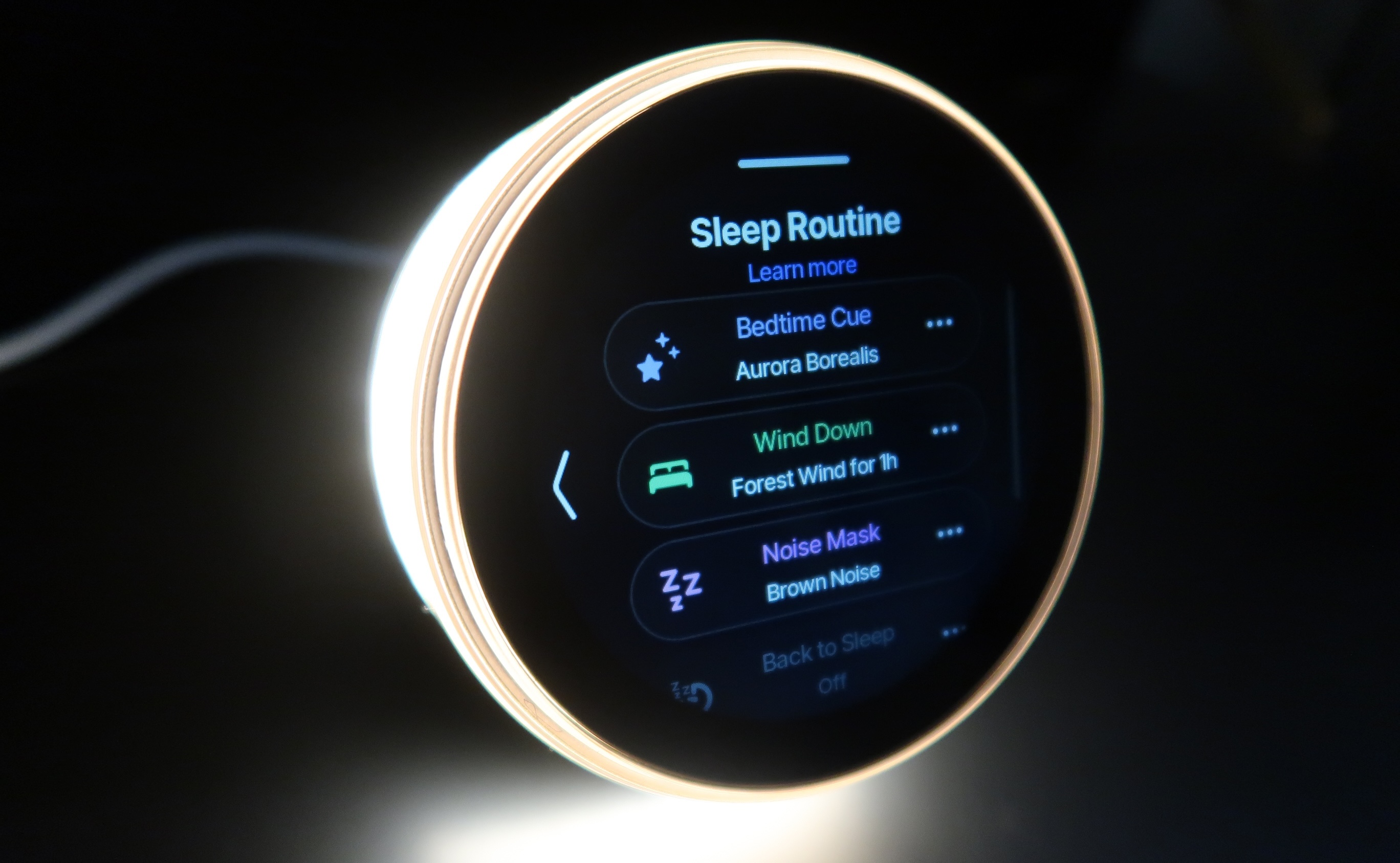
Ambient Dreamie bedside companion review
How much for a good night’s sleep? $250?
Ambient’s dedicated alarm clock offers many of the conveniences of your smartphone alarms — highly customizable alarm schedules, a library of soundscapes and noise masks and even Bluetooth so you can connect earbuds. There’s no subscription, it sounds great and sleep insights are supposedly incoming. However, $250 is a lot. Check out our full review.
An AI-generated Resident Evil Requiem review briefly made it on Metacritic
By a video game news site owned by ClickOut Media.
Review aggregator Metacritic has removed a review of Resident Evil Requiem because it was AI generated. Kotaku explained the review was published by UK gaming site VideoGamer, but appears to be “written” by a fake AI journalist rather than a real person. “Brian Merrygold” doesn’t seem to exist.
The author’s profile on VideoGamer is just as awkwardly written as the review, and the profile picture of the account also appears to be AI-generated. Literally, the file name includes “ChatGPT-Image.”
ClickOut Media, the company that owns VideoGamer and a collection of other publications, reportedly laid off the staff of its gaming sites earlier this month to pivot to AI-generated content. Here it is.
This article originally appeared on Engadget at https://www.engadget.com/general/the-morning-after-engadget-newsletter-144951777.html?src=rss
Engadget Podcast: Xbox's leadership shakeup and Samsung's Galaxy S26
27 Feb 2026, 3:00 pm by Devindra Hardawar
This week, we're diving into the big changes at Xbox and what it all means for Microsoft's gaming future. Phil Spencer, the longtime face of Xbox, announced he's retiring last week. He'll be replaced by Microsoft's former CoreAI CEO Asha Sharma, instead of his longtime deputy Sarah Bond, who plans to leave the company. Will this change actually help the beleaguered Xbox division, or is it another example of Microsoft shoving AI into everything?
Also, Samsung held its latest Unpacked event this week to announce its new Galaxy S26 family. They look pretty much the same as last year, but the Ultra model includes a unique privacy feature that can instantly make the screen unreadable to bystanders. It's one of those features we expect to see in every phone eventually.
Subscribe!
Topic
-
Xbox leadership falls apart. what happens next with Phil Spencer and Sarah Bond out? – 1:53
-
Samsung Unpacked: Privacy display on the S26 Ultra looks amazing – 27:27
-
U.S. Defense leadership gives Anthropic a Friday deadline to let it use Claude as it sees fit – 42:38
-
MrBeast editor accused of insider trading on Kalshi – 50:40
-
Discord delays age verification program after user revolt – 54:09
-
Around Engadget – 1:04:04
-
Working on – 1:05:16
-
Pop culture picks – 1:08:21
Credits
Hosts: Devindra Hardawar and Igor Bonifacic
Producer: Ben Ellman
Music: Dale North and Terrence O’Brien
This article originally appeared on Engadget at https://www.engadget.com/gaming/xbox/engadget-podcast-xboxs-leadership-shakeup-and-samsungs-galaxy-s26-150000180.html?src=rss
A cheap MacBook is the perfect way for Apple to win over Windows users
27 Feb 2026, 1:00 pm by Devindra Hardawar
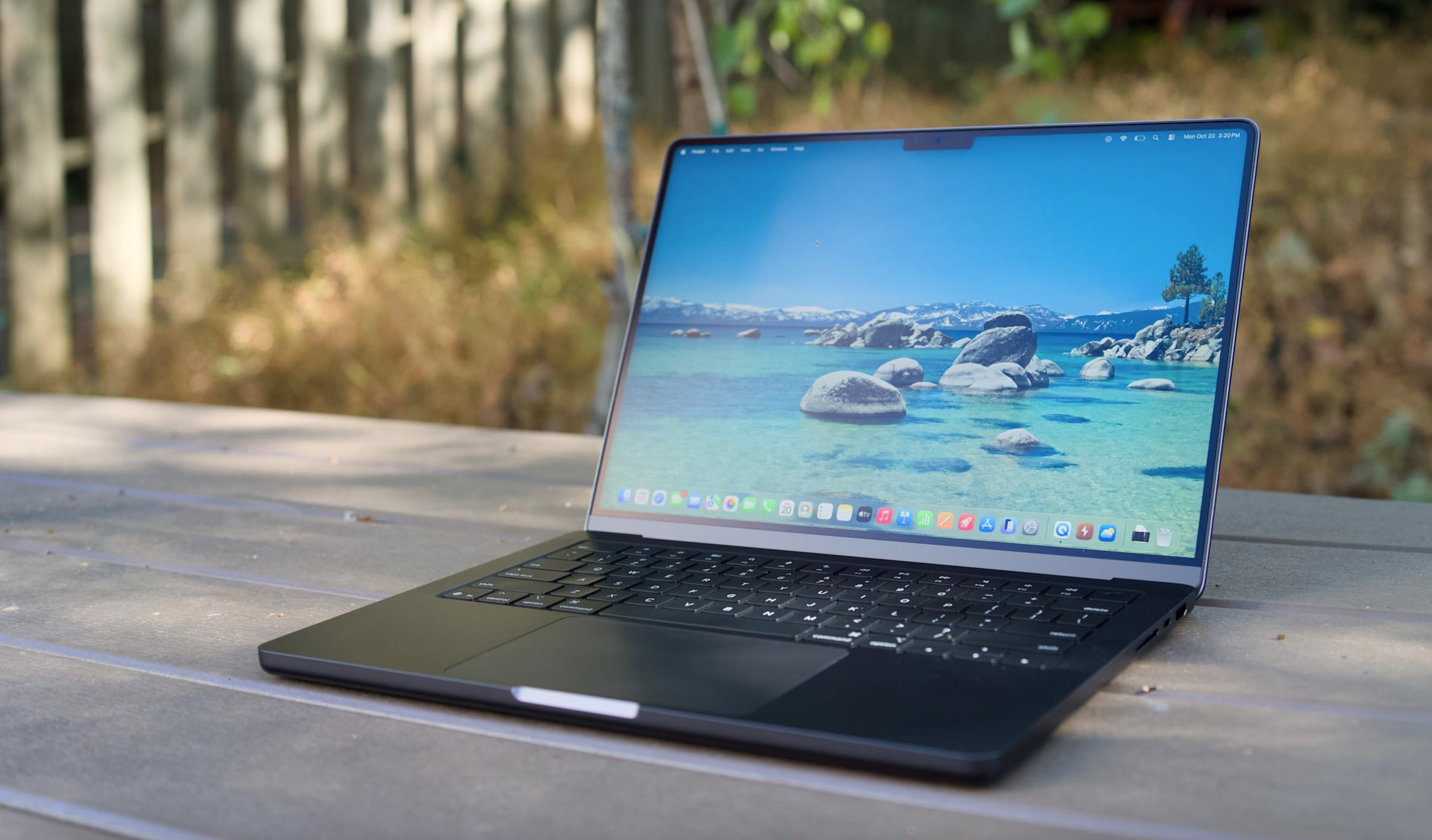
The MacBook is coming back — or at least, that's what the rumors claim. Next week, Apple is expected to announce a colorful, low-cost, non-Air, non-Pro MacBook powered by one of its mobile processors. By avoiding its pricier M-series chips, Apple may reportedly be able to reach a low $699 or $799 price for the MacBook. The $999 MacBook Air is the cheapest laptop on the company's website right now, but Apple also sold the older M1 MacBook Air at Walmart for $700 in 2024, which later went down to $650 last year.
That Walmart deal was a smart way for Apple to test out the viability of cheaper MacBooks without building an entirely new product. But now the M1 Air’s design looks seriously dated, and the company also needs to move beyond the six-year-old M1 chip. It's time to get serious about delivering a true low-cost Apple laptop.
There's another compelling reason to bring back a cheaper MacBook: It's the perfect way to court disgruntled Windows users, something Apple hasn't really done since its "Get A Mac" ads from the mid-2000s. I figure the unbridled success of the iPhone and iPad made Apple focus less on directly competing with Windows. The sleek designs of the 2011-2015 era MacBook Air and Pros were their main selling points, but Apple's push towards USB-C-only machines and unreliable butterfly keyboards later made it clear it wasn't totally focused on Macs.
But now Microsoft is distracted by AI — it's been pushing Copilot and AI features for years, instead of improving the Windows experience with more useful upgrades. Recent talk of agentic AI capabilities, which would let Copilot handle tasks for you automatically, also sparked plenty of criticism from Windows users. And with all of the focus on AI, Microsoft has also released some disastrous Windows updates over the last year, which have bricked OS installations. So, Apple, why not make a direct play for Windows users?
Last year, I covered why it's a great time to jump ship from Windows to Mac, and I haven't been able to let go of that idea since. Apple's M-series chips are shockingly fast and efficient, and its hardware tends to be more durable than typical PC fare. Rumors point to Apple developing a new aluminum case for the low-cost MacBook, so it will likely feel more polished than a typical sub-$1,000 Windows laptop. macOS has also avoided the bloat that's plagued Windows for years — you can turn off Apple Intelligence with two clicks if you want to, and there aren't any annoying ads to deal with.
And while it used to be a pain to transition from Windows to Mac, it’s far easier these days, especially if you mainly rely on web apps. It also wouldn't be tough for Apple to make short tutorials to help Windows users get their bearings with the macOS basics, like installing apps and juggling app windows. Apple could also make a play for iPhone owners using Windows, who may not be aware of the many ways iOS and macOS are integrated. iPhone mirroring may be a huge draw on its own.
Rumors also suggest the upcoming MacBook might use the A18 Pro from the iPhone 16 Pro, a chip that benchmarks faster than the M1. Even if it only has six cores, making it slower for heavy workloads than the M2, an A18 Pro-powered MacBook would still be more than enough power for basic productivity work. Not everyone needs the surprising amount of GPU power in the MacBook Air — especially if downgrading means they can save $200 to $300.
I'm not saying any of this through any sort of Apple-loving bias. I typically use a MacBook Pro for work, but I'm a Windows user at heart. Windows was my gateway to computing in the '90s, back when Macs were far more expensive than PCs. These days, I spend more time on my Windows desktop making podcasts, playing PC games and bumming around the internet than I do working on Macs.
And yet, it’s hard to deny everything Apple is doing right today — the only thing it’s missing is an inexpensive laptop entry. A $699 or $799 MacBook simply makes sense. And for many Windows users, it’ll be just the escape from Microsoft they need.
This article originally appeared on Engadget at https://www.engadget.com/computing/laptops/a-cheap-macbook-is-the-perfect-way-for-apple-to-win-over-windows-users-130000045.html?src=rss
Ultrahuman’s new Pro ring comes with 15 days battery life
27 Feb 2026, 12:00 pm by Daniel Cooper
If there’s one thing that stops people using their smart rings over the long term, it’s the battery life. After all, they’re so unobtrusive, it’s easy to forget to drop it on the charging plate every few days. It doesn’t take long for your pricey gadget to become little more than a very expensive piece of jewelry. It’s one of many maladies Ultrahuman is looking to address with the advent of its new Pro, a smart ring boasting up to 15 days of battery life. It even ships with a fancy battery case, which itself includes enough power to last it 45 days, making it easier to keep re-charged on the go.
Ultrahuman Ring Pro hasn’t just got a far bigger battery, it’s been re-engineered from the ground up. The company’s Bhuvan Srinivasan explained the older hardware had been pushed to its limit, especially in terms of the data it could process. Consequently, the Pro is equipped with a dual core processor with on-device machine learning to better crunch the numbers your body is throwing out. Its memory has also been increased, holding up to 250 days of data before it needs to sync with your smartphone. As well as improvements to durability, the new ring is also easier to cut apart in the hopefully rare event your finger, or its battery, begins to swell.
I’ll admit, having seen a prototype Pro Charger in person back in January, that it’s the prettiest way to re-juice a smart ring I’ve ever seen. Whereas Samsung and Oura have both opted for discreet, ring box-style hardware, Ultrahuman made something designed to sit on your nightstand. It’s not taking up space just for show, either, since it includes the aforementioned battery, LED charge indicator, speaker and haptics. It’s also got the ability to diagnose and address firmware issues to eliminate worries around firmware issues bricking devices.
At the same time, Ultrahuman is pulling the covers off Jade, its new “real time biointelligence AI.” The company promises Jade will be able to “pull real-time actionable insights, and even start breathwork or trigger Afib detection.” Jade is expected to get new features over time, with some examples being ordering good, changing your room temperature or flagging potential health issues. The idea is that Jade will keep a constant eye on your health, pulling in data from the ring, M1 continuous glucose monitor and environmental stats from your Ultrahuman Home.
Naturally, we’ll be getting in the Pro to test and will give our opinions on how effective all of this is when we’ve spent a month or two actually using it. But if you’d rather not wait and you’re based outside the US, you can pre-order the Ultrahuman Ring Pro right now, for $479, with shipments beginning in March. If you already have an Ultrahuman Ring, you can also get a trade-in deal to help cut the cost of the new model.
This article originally appeared on Engadget at https://www.engadget.com/wearables/ultrahumans-new-pro-ring-comes-with-15-days-battery-life-120038820.html?src=rss
OpenAI will notify authorities of credible threats after Canada mass shooter's second account was discovered
27 Feb 2026, 11:27 am by Mariella Moon
OpenAI has vowed to strengthen its safety protocols and to notify law enforcement of credible threats sooner in a letter addressed to Canadian authorities, according to Politico and The Washington Post. If you’ll recall, Canadian politicians summoned the company’s leaders after reports came out that it didn’t notify authorities when it banned the account owned by the Tumbler Ridge, British Columbia mass shooting suspect back in 2025. Some of OpenAI’s leaders have already met with Candian officials, and British Columbia Premier David Eby said Sam Altman had also agreed to meet with him.
While OpenAI has yet to announce changes to its rules, Ann O’Leary, its vice president of global policy, reportedly wrote in the letter that the company will tweak its detection systems so that they can better prevent banned users from coming back to the platform. Apparently, after OpenAI banned the shooter’s original account due to “potential warnings of committing real-world violence,” the perpetrator was able to create another account. The company only discovered the second account after the shooter’s name was released, and it has since notified authorities.
Further, OpenAI will now notify authorities if it detects “imminent and credible” threats in ChatGPT conversations, even if the user doesn’t reveal “a target, means, and timing of planned violence.” O’Leary explained that if the new rules had been in effect when the shooter’s account was banned in 2025, the company would have notified the police. OpenAI will also establish a point of contact for Canadian law enforcement so it can quickly share information with authorities when needed.
The Canadian government sees OpenAI’s decision not to report the shooter’s original account as a failure. It threatened to regulate AI chatbots in the country if their creators cannot show that they have proper safeguards to protect its users. It’s unclear at the moment if OpenAI also plans to roll out the same changes in the US and elsewhere in the world.
This article originally appeared on Engadget at https://www.engadget.com/ai/openai-will-notify-authorities-of-credible-threats-after-canada-mass-shooters-second-account-was-discovered-112706548.html?src=rss
Google Maps will finally be usable in South Korea
27 Feb 2026, 10:43 am by Steve Dent
Google will finally be able to provide real-time driving and walking directions in South Korea, The New York Times reported. The company has received permission from the nation's Transport Ministry to export geographic data out of the country, which will allow it to provide GPS services as well as detailed listings for restaurants and other businesses.
"We welcome today’s decision and look forward to our ongoing collaboration with local officials to bring a fully functioning Google Maps to Korea," Google's senior executive Cris Turner told the NYT in a statement. However, the approval is contingent “on the condition that strict security requirements are met,” a spokesperson from the Transport Ministry said. Those conditions reportedly restrict Google from displaying sensitive military sites and longitude and latitude coordinates.
South Korea has generally restricted the export of 1/5000 scale map data over national security concerns, as it's still technically at war with its neighbor North Korea. Google hasn't been able to provide mapping directions or business details since it arrived in the nation, though it has applied twice in 2007 and 2016.
This lack of data sharing has reportedly been a bone of contention in trade talks with the US. Google argued that it was unfairly handicapped by the restrictions that allowed local apps like Naver to thrive.
However, critics in the nation have expressed concern that Google could now come in and monopolize the market. "If Naver and Kakao are weakened or pushed out and Google later raises prices, that becomes a monopoly. Then, even companies that rely on map services — logistics firms, for example — become dependent [on Google]," geography professor Choi Jin-mu told Reuters.
This article originally appeared on Engadget at https://www.engadget.com/apps/google-maps-will-finally-be-usable-in-south-korea-104301396.html?src=rss
The best Wi-Fi extenders in 2026
27 Feb 2026, 10:01 am by Valentina Palladino
Weak Wi-Fi can turn everyday tasks into small frustrations, whether it’s a video call that drops mid-sentence or a stream that refuses to load in certain rooms. If upgrading your router isn’t an option, a Wi-Fi extender can be a practical way to stretch your existing network farther and smooth out coverage gaps — without rewiring your home or rearranging furniture.
Today’s Wi-Fi extenders range from simple plug-in repeaters to more advanced models that behave like miniature access points or mesh nodes. Some are best suited for extending coverage to a single room, while others are designed to preserve faster speeds across larger spaces. Choosing the right one depends on your home’s layout, your internet plan and how much performance you’re willing to trade for convenience.
We’ve tested a variety of Wi-Fi extenders to find the best options for different budgets and setups, from affordable fixes for small dead zones to higher-end models built to handle heavier traffic and faster connections.
Best Wi-Fi extender for 2026
How do Wi-Fi extenders work?
These handy wireless devices do exactly what their name suggests: extend your Wi-Fi network so it covers more areas of your home. Most wireless extenders plug into an AC outlet and connect to your existing router so they can then rebroadcast it to spots that your router alone may not cover well. As a rule of thumb, you’ll get the best results by placing the extender half way between your router and the dead zone you’re trying to fix or improve your W-Fi connection and strengthen the wireless signal.
One important thing to note about Wi-Fi range extenders (also sometimes called “repeaters”) is that most of them actually create a new Wi-Fi network when rebroadcasting your existing one. That network will have a new name (it’ll often be your default network’s name with an EXT appended at the end, unless you change it) and that means you’ll have to connect to different networks when in different parts of your home. While that’s a small tradeoff in return for improved internet connection, some will be more inconvenienced than others.
If you’d rather have one, much larger network in your home, you’re better off upgrading to mesh networking systems. Mesh systems come with a main router and a wireless access point or two that, by default, create one large Wi-Fi system that should be accessible throughout your whole home. They tend to be the best Wi-Fi routers you can get, but that also translates to more expensive, and possibly more complicated, devices. Mesh Wi-Fi systems are, by far, more costly than a simple extender, plus you may have to work with your internet service provider to get your home’s existing network working on your new router.
What to look for in a Wi-Fi extender
Speed
Extenders today can support single, dual or tri-band Wi-Fi, and they will tell you the maximum speeds they support on all of their available bands. For example, one dual-band device might support 600Mbps speeds over its 2.4GHz band and up to 1300Mbps over its 5GHz band, for a combined maximum speed of 1900Mbps. For the best performance, you’ll want to go with a Wi-Fi extender that has the highest speeds possible (and those, as you might expect, tend to cost more). Some extenders even support Wi-Fi 7, giving you the latest in wireless technology for higher bandwidth, faster internet speed and lower latency.
However, it’s important to remember that Wi-Fi extenders are not true “signal boosters” since they are not designed to increase speeds across your home. In fact, you may find that the extender’s network is slower than your router’s. Instead, extenders are designed to increase the strong Wi-Fi coverage throughout your home, making them ideal for filling in dead zones. Some mesh extenders can help create a more seamless network, reducing the drop in speed and improving connectivity in larger spaces.
Range, and number of supported devices
With the name of the gaming being coverage area, taking note of a device’s range is important. Depending on the size of your home and property, you may only need up to 1,200 square feet of coverage. But those with larger homes will want to spring for an extender that can support upwards of 2,000+ square feet of coverage.
Similarly, those with lots of gadgets will want an extender that can handle them all at once. If you spend most of your time on your phone or laptop and maybe have your smart TV online for a few hours of Netflix each day, you could get by with a more limited extender. Smart home aficionados and tech lovers should invest in one that won’t buckle under the pressure of a few dozen connected devices. This is especially important if you plan on linking all of the devices in a certain part of your home to your Wi-Fi range extender’s network, rather than directly to your existing router. Some models with external antennas can improve performance by providing stronger, more directional wireless signal.
Design
There isn’t a ton of innovation when it comes to design in the Wi-Fi extender space. Most of the ones you’ll find today are rounded rectangles roughly the size of your hand that plug into a standard wall outlet. They usually have a few indicator lights that will show you when the extender is connected, how strong its signal strength is and when there’s a problem, and some will even have moveable external antennas that companies claim provide even better Wi-Fi signal. Generally, they are pretty simple to install and get connected, but if you’re struggling with how to set up your Wi-Fi extender, there are plenty of YouTube videos you can check out.
Aside from that, there are the scant few standalone Wi-Fi extenders that sit on an end table or a desk, and those look pretty similar to regular ol’ routers. But make no mistake, anything labeled as an extender or a “Wi-Fi repeater” will need an anchor router in order for it to work.
Another convenient feature you’ll find on most Wi-Fi extenders is an extra Ethernet connection port (or a few). This allows you to use the extender as a wireless access point if you connect it to your existing router, or an adapter to provide devices like TVs, smart home hubs or game consoles a hardwired connection to the internet. Unsurprisingly, this wired connection usually provides you with the fastest speeds possible, so you may want to use it for your most crucial devices.
Wi-Fi extender FAQs
What's the difference between a wifi booster and extender?
Nowadays, there’s really no difference between a Wi-Fi booster and Wi-Fi extender – they’re just different names for the same thing. Previously, however, Wi-Fi boosters were devices that received signals from wireless routers, broadcasting them to another network. This essentially extends the range of the signal. Wi-Fi extenders expand the coverage within your home’s Wi-Fi network, but often you will see extenders described as boosters.
Is a Wi-Fi extender better than a mesh router?
Mesh routers, or mesh Wi-Fi systems, use multiple devices (or nodes) across your home to create a larger home network. Essentially, you have multiple routers around your home with these systems, and that will hopefully provide the best coverage possible. Wi-Fi extenders, on the other hand, are usually just one device that extends your existing Wi-Fi signal, and they often require you to switch networks when connecting. Wi-Fi extenders are more affordable, though, and are great if you’re traveling or need a Wi-Fi signal in harder-to-reach areas. However, a mesh router can offer a better long-term solution to upgrade your entire home’s Wi-Fi.
Should I use multiple Wi-Fi extenders?
Some people may need to use multiple Wi-Fi extenders, for instance, if your home is large or has dead zones in different areas. But if you do use multiple Wi-Fi extenders, there’s a chance of interference. You may also need to manually connect to the extenders separately, which isn’t always convenient.
What is the maximum distance for a Wi-Fi extender?
The maximum distance for a Wi-Fi extender varies depending on the model, but most can effectively extend your wireless signal between 800 and 2,500 square feet. Some high-end models may reach even farther, especially if they feature external antennas or are part of a mesh system with additional dedicated wireless access points.
However, keep in mind that real-world performance depends on factors like your home's layout, wall materials and interference from other devices. For best results, place your extender about halfway between your router and the area with weak or no Wi-Fi connection. Always check the manufacturer’s specs — some of our top picks clearly list their expected range so you can find one that fits your space.
This article originally appeared on Engadget at https://www.engadget.com/computing/best-wifi-extender-130021313.html?src=rss
Anthropic refuses to bow to Pentagon despite Hegseth's threats
27 Feb 2026, 8:55 am by Steve Dent
Despite an ultimatum from Defense Secretary Pete Hegseth, Anthropic said that it can't "in good conscience" comply with a Pentagon edict to remove guardrails on its AI, CEO Dario Amodei wrote in a blog post. The Department of Defense had threatened to cancel a $200 million contract and label Anthropic a "supply chain risk" if it didn't agree to remove safeguards over mass surveillance and autonomous weapons.
"Our strong preference is to continue to serve the Department and our warfighters — with our two requested safeguards in place," Amodei said. "We remain ready to continue our work to support the national security of the United States."
In response, US Under Secretary of Defense Emil Michael accused Amodei in a post on X of wanting "nothing more than to try to personally control the US military and is OK putting our nation's safety at risk."
The standoff began when the Pentagon demanded that Anthropic its Claude AI product available for "all lawful purposes" — including mass surveillance and the development of fully autonomous weapons that can kill without human supervision. Anthropic refused to offer its tech for those things, even with a "safety stack" built into that model.
Yesterday, Axios reported that Hegseth gave Anthropic a deadline of 5:01 PM on Friday to agree to the Pentagon's terms. At the same time, the DoD requested an assessment of its reliance on Claude, an initial step toward potentially labelling Anthropic as a "supply chain risk" — a designation usually reserved for firms from adversaries like China and "never before applied to an American company," Anthropic wrote.
Amodei declined to change his stance and stated that if the Pentagon chose to offboard Anthropic, "we will work to enable a smooth transition to another provider, avoiding any disruption to ongoing military planning, operations or other critical missions." Grok is one of the other providers the DoD is reportedly considering, along with Google's Gemini and OpenAI.
It may not be that simple for the military to disentangle itself from Claude, however. Up until now, Anthropic's model has been the only one allowed for the military's most sensitive tasks in intelligence, weapons development and battlefield operations. Claude was reportedly used in the Venezuelan raid in which the US military exfiltrated the country's president, Nicolás Maduro, and his wife.
AI companies have been widely criticized for potential harm to users, but mass surveillance and weapons development would clearly take that to a new level. Anthropic's potential reply to the Pentagon was seen as a test of its claim to be the most safety-forward AI company, particularly after dropping its flagship safety pledge a few days ago. Now that Amodei has responded, the focus will shift to the Pentagon to see if it follows through on its threats, which could seriously harm Anthropic.
This article originally appeared on Engadget at https://www.engadget.com/ai/anthropic-refuses-to-bow-to-pentagon-despite-hegseths-threats-085553126.html?src=rss
End of today’s Engadget roundup.