This digest compiles the latest from Engadget.
Today’s Engadget Roundup
Blue Prince is out on Switch 2 today, complete with mouse control
3 Mar 2026, 4:22 pm by Lawrence Bonk
The unique and highly addictive roguelike Blue Prince is now available for Switch 2, as announced at today's Nintendo Indie World Showcase. This version allows for mouse control, via the underutilized Joy-Con feature.
This is a wonderfully designed puzzle game that oozes atmosphere. The game tasks players with exploring a gigantic mansion, but there's a twist. You actually build this mansion as you explore, room by room. This is done by placing what can only be described as magical blueprints.
The goal is to fully explore the mansion and solve its many, many mysteries. However, there are only so many blueprints and too many obstacles. This is where the roguelike part comes in. When you build yourself into a dead end, you go to sleep and end the run. All of the rooms reset, but you may have learned a thing or two for the next run. Rinse and repeat.
It's a very nifty gameplay loop, which is why it easily found a spot on Engadget's list of our favorite games from 2025. We even called it a masterpiece, which is deserved. In other words, this is a fantastic addition to the Nintendo eShop.
I only have one small gripe. This is a gorgeous game, but that's primarily due to the art direction and overall vibe. Why is it a Switch 2 exclusive? It seems like the OG Switch could handle it. In any event, this version is priced at $30 but has been discounted to $20 for launch.
This article originally appeared on Engadget at https://www.engadget.com/gaming/nintendo/blue-prince-is-out-on-switch-2-today-complete-with-mouse-control-162242506.html?src=rss
Everything Apple announced this week: iPhone 17e, new MacBooks, M4 iPad Air and more
3 Mar 2026, 4:07 pm by Kris Holt
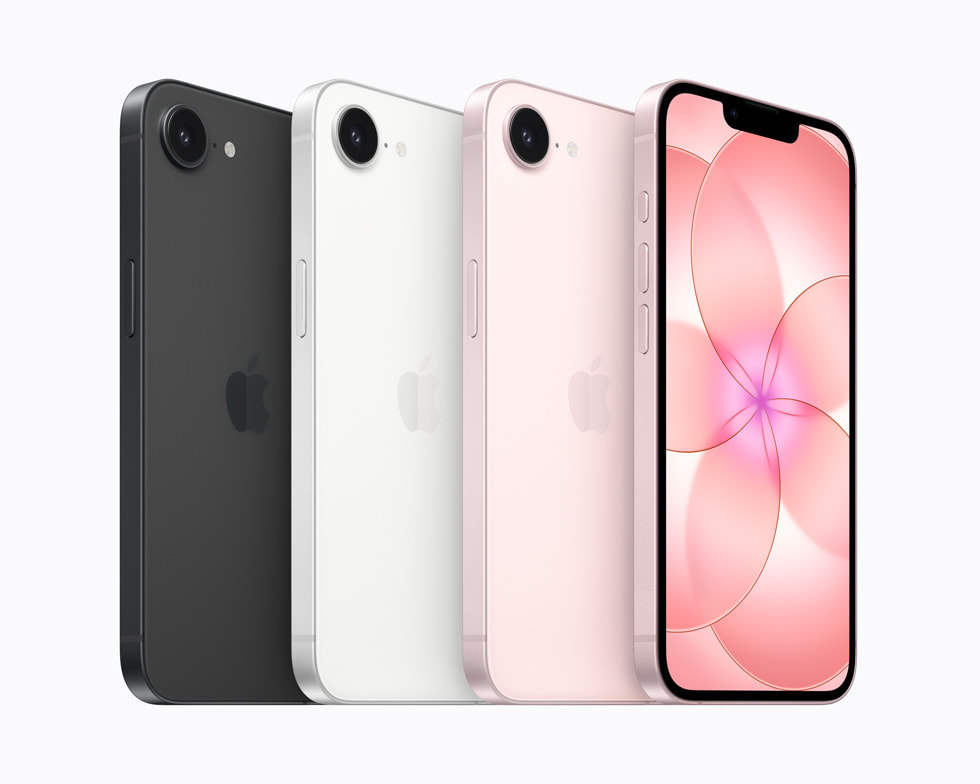
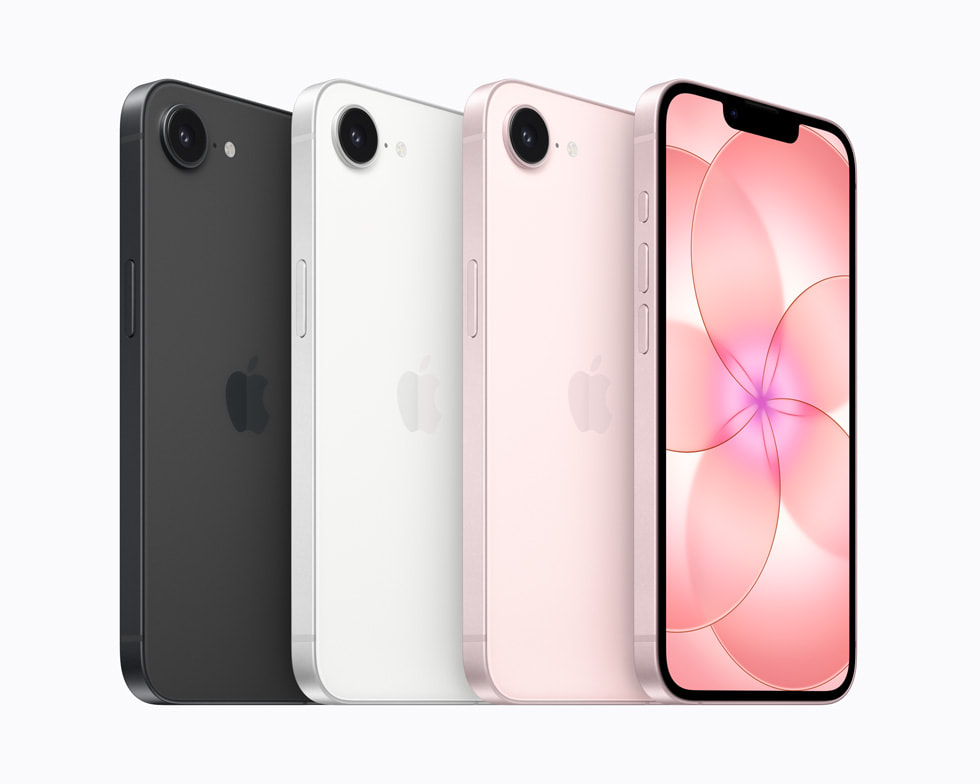
Apple has promised a “big week” for the company, which includes an in-person event for press and creators on March 4. But it didn’t exactly wait until Wednesday to get things started.
The news started on Monday with the announcements of the iPhone 17e and M4-powered iPad Air. The company followed up on Tuesday with the reveal of the M5 MacBook Air, the M5 Pro and M5 Max chips, MacBook Pro models that use said chips, a refreshed Studio Display and a brand-new 27-inch Studio Display XDR.
In addition, ahead of an official announcement, Apple leaked news of a cheaper MacBook called the MacBook Neo. Whoops! We may well see a formal announcement of that on Wednesday. In the meantime, here’s our recap of everything Apple has announced so far this week:
iPhone 17e
Apple has spruced up this year’s entry-level iPhone with some pretty solid upgrades, though it's keeping the starting price at $599. The iPhone 17e has double the base storage of the iPhone 16e at 256GB. It also has MagSafe support with Qi2 wireless charging speeds of up to 15W, double that of the iPhone 16e.
Design-wise, Apple hasn't exactly rocked the boat. The iPhone 17e looks pretty much identical to its predecessor. It appears that Apple is sticking with the same 48MP Fusion camera system as it used in the iPhone 16e too.
That said, the 6.1-inch Super Retina display has Ceramic Shield 2. According to Apple, this provides “3x better scratch resistance than the previous generation and reduced glare.” The company slotted its C1X cellular modem into the iPhone 17e as well. It says this is up to two times faster than the C1 that was in the iPhone 16e. The device has the same A19 chip as the iPhone 17, so it supports Apple Intelligence AI tools, and it runs iOS 26.
In addition, the iPhone 17e has an IP68 rating for water and dust resistance, as well as the promise of "all-day battery life." It also supports satellite-powered features including Emergency SOS, Roadside Assistance, Messages and Find My.
Pre-orders for the iPhone 17e open on March 4 and it will be available in black, white and soft pink. The device will hit shelves in more than 70 countries and regions on March 11.
iPad Air M4
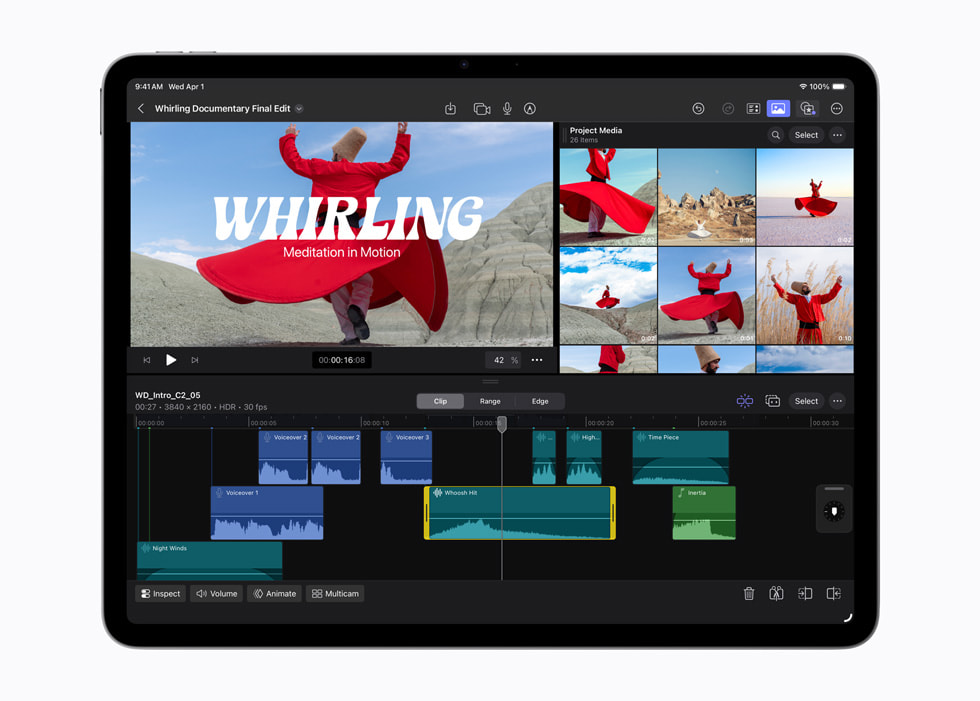
The latest iPad Air boasts Apple’s M4 chip. That means the mid-range iPad is effectively remaining a year behind the iPad Pro. The M4 is almost two years old at this point, while the top-end model has the newer M5 chip. Still, if you only use an iPad for casual tasks like watching shows, web browsing, email and so on, the M4 will be more than powerful enough. It will be more adept at handling resource-intensive tasks like video editing than previous iPad Air models too.
Apple has also bumped up the RAM from 8GB from the last-gen model to 12GB. Given the sharp increase in RAM prices in recent months, it’s slightly surprising that Apple is sticking to the same prices for the iPad Air. The 11-inch M4 iPad Air starts at $599 while the 13-inch version starts at $799, each with 128GB of storage. There's a $50 discount for those buying it for educational use.
Apple claims the M4 delivers up to 2.3 times faster performance compared with the M1 iPad Air and "over 4x faster 3D pro rendering with ray tracing performance." Of course, the new iPad Air runs iPadOS 26.
Apple gave the iPad Air other internal upgrades by including its N1 and C1X connectivity chips. As such, this is the first iPad Air with Wi-Fi 7 support. As you might expect, 5G cellular connectivity is available as well.
The design of the M4 iPad Air doesn't seem to have changed, as it appears to have the same LCD display Apple used in the last two iterations of the tablet. The company has stuck with the same rear-facing camera and dual-speaker setup as well.
As with the iPhone 17e, pre-orders for the M4 iPad Air open on March 4. The tablet will hit retailers in 35 countries and regions on March 11. It will be available in blue, purple, starlight and space gray.
Apple MacBook Pro with M5 Pro and Max
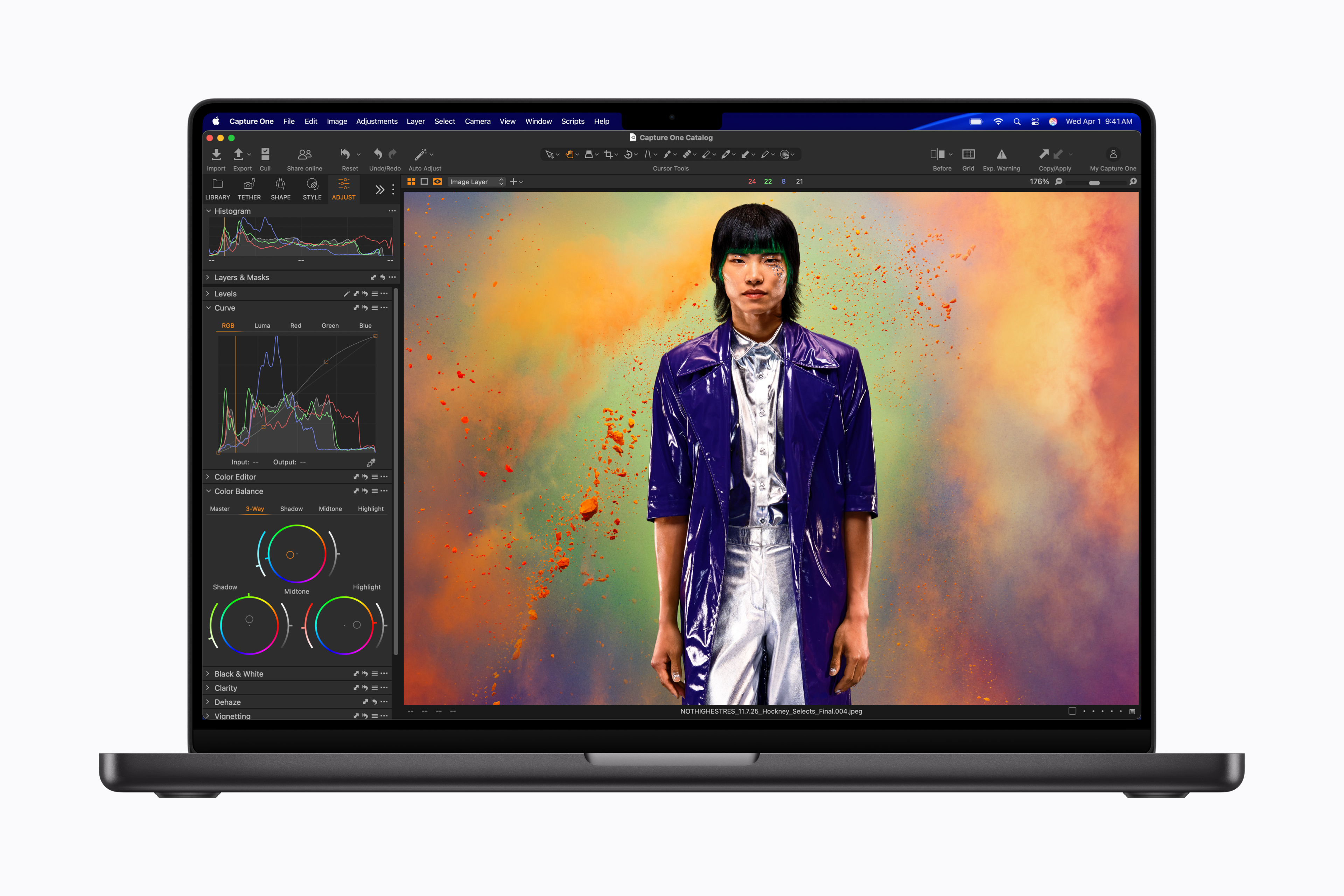
Apple’s most powerful laptop line finally got the chip upgrades that we’d long been expecting. Along with announcing the M5 Pro and M5 Max, the company is offering versions of the MacBook Pro with those chipsets. However, there are price increases to go with the upgrades.
The new 14-inch MacBook Pro with an M5 Pro, 24GB of RAM and 1TB of storage starts at $2,199. That's a $200 increase compared with the base M4 Pro-powered system from late 2024, though Apple has doubled the base storage, which is a welcome touch. If you prefer, you can have a 14-inch MBP with a more powerful M5 Pro (with up to 18 CPU and 20 GPU cores) or M5 Max (with 18 CPU cores and 32 or 40 GPU cores). You can double the RAM to 48GB as well.
The 16-inch MacBook Pro has an M5 Pro chipset with 18 CPU cores and 20 GPU cores as standard. Of course, you can swap that out for an M5 Max if you'd rather. The 16-inch model starts at $2,699, a $200 increase from the base M4-powered system. That too has 24GB of RAM and 1TB of storage (Apple says both the memory and SSD are faster than in previous models).
Apple hasn’t changed the Liquid Retina XDR display and 12MP Center Stage front-facing camera for these models. However, the company has installed its N1 chip to power Wi-Fi 7 and Bluetooth 6 connectivity.
As with the rest of the products Apple announced this week, pre-orders start on March 4 with general availability to follow on March 11.
Apple said the M5 Pro and M5 Max are built using new “Fusion Architecture” that “combines two dies into a single system on a chip (SoC).” As ever, the goal is to deliver more power and efficiency. We’ll find out for ourselves whether Apple’s performance claims hold up when we’re able to test the chips.
Meanwhile, the base 14-inch MacBook Pro with an M5 chipset also got a $100 price increase to $1,699. To take the sting out of that a bit, Apple doubled the base storage of that model to 1TB as well. Given that Apple usually charges a premium for storage increases, that’s not a terrible tradeoff.
M5 MacBook Air
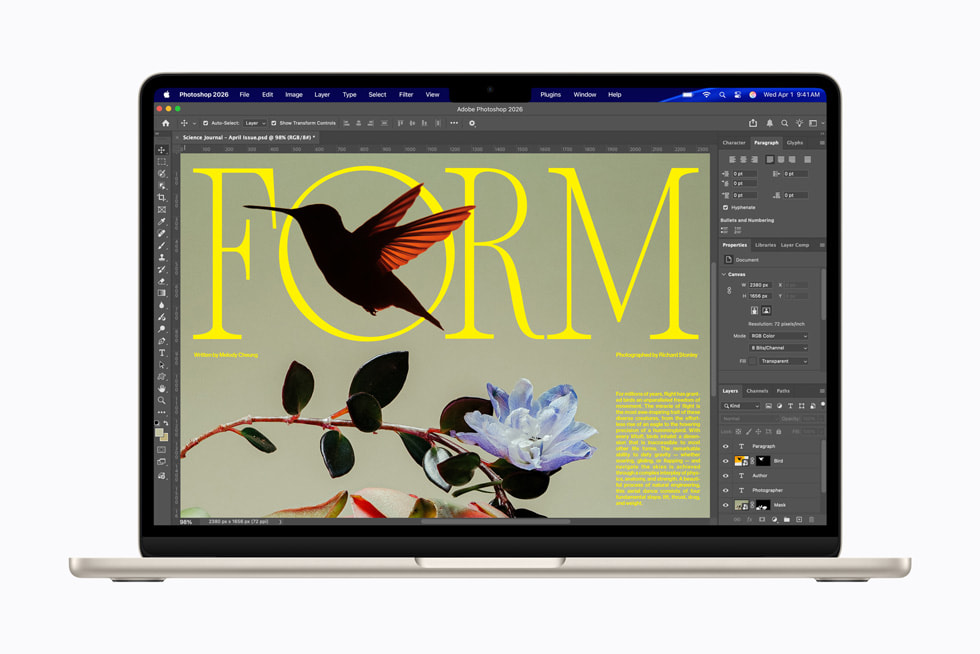
A year after Apple upgraded the MacBook Air with an M4 chipset, the company pulled the same trick by swapping in an M5 chip. The company also boosted the base storage from 256GB to 512GB, with an SSD that it claimed can provide “2x faster read/write performance compared to the previous generation.”
While the MBA still has 16GB or RAM as standard, Apple also upgraded the memory to have 153GB/s of bandwidth — the company said that’s a 28 percent improvement over what the M4 MBA offered. Meanwhile, Apple has slapped in the N1 chip to deliver for Wi-Fi 7 and Bluetooth 6 connectivity.
Alas, with those upgrades comes a tradeoff. Apple has bumped the starting price of the latest MacBook Air back up to $1,099 after cutting it to $999 for the M4 model. That’s for the 13-inch variant. The 15-inch M5 MacBook Air starts at $1,299.
The latest MacBook Air is available in sky blue, midnight, starlight and silver. You can pre-order one on March 4. It will hit stores in 33 countries and regions on March 11.
This story is developing; refresh for updates
This article originally appeared on Engadget at https://www.engadget.com/computing/laptops/everything-apple-announced-this-week-iphone-17e-new-macbooks-m4-ipad-air-and-more-155617625.html?src=rss
Apple's cheap MacBook could be called the MacBook Neo
3 Mar 2026, 3:38 pm by Devindra Hardawar
“MacBook Neo” appears to be the name of Apple’s long-rumored cheap MacBook, based on a regulatory posting on Apple’s website, MacRumors reports. The gaffe was quickly removed from Apple’s site (pour one out for the poor soul who posted it). Previous rumors didn’t attach a name to the low-cost MacBook — I figured Apple would just revive the clean and simple “MacBook” branding. The name MacBook Neo sounds like something we’d see from ASUS or Acer, it’s just trying a bit too hard to seem cool.
To recap, Apple is expected to unveil its first low-cost MacBook laptop tomorrow (and personally, I think it has a good shot at peeling away disgruntled Windows users). It’s rumored to be powered by one of the company’s A-series mobile chips, instead of the M-series hardware in its laptops and desktops so far. Apple reportedly isn’t skimping on the case — it’s expected to be all metal, except with plenty more colors than the company’s existing lineup. In many ways, the MacBook Neo sounds like a revival of Apple’s cute and colorful iBook laptops, except for far less money than those machines, with no handle for toting around.
Apple kicked off its week of spring announcements with the iPhone 17e and iPad Air M4 yesterday, both of which are relatively modest upgrades. (Still, it’s nice to have MagSafe on the iPhone 17e.) This morning, Apple unveiled the MacBook Air M5 and MacBook Pro M5 Pro/Max systems, both of which are slightly more expensive than the previous models. We also got a new addition to Apple’s monitor lineup with the 5K MiniLED Studio Display XDR. Along with the MacBook Neo, we may also see an upgraded Mac Studio desktop announced tomorrow.
This article originally appeared on Engadget at https://www.engadget.com/computing/laptops/apples-cheap-macbook-could-be-called-the-macbook-neo-153800133.html?src=rss
2027 Audi RS5 first drive: Big thrills with a big battery
3 Mar 2026, 3:20 pm by Tim Stevens
There's more waffling going on about the future of electric vehicles in America right now than you might expect at a Belgian breakfast buffet. Some brands like Hyundai are staying committed, some brands like Honda are dialing back, and everyone else is simply doing their damndest to provide as many propulsion options as possible
Count Audi in that last category. On the EV side, it recently launched the new Q6 E-Tron and refreshed the ballistic E-Tron GT. On the internal combustion side, it has a new A6, and there's a full-size, three-row SUV coming in the form of the Q9. The company's latest car, though, can be found in the middle: Meet the new RS5, Audi's latest and greatest plug-in hybrid.
RS stands for "RennSport," or "Racing Sport" in German, the moniker applied to Audi's highest performing cars. RS designates an elite group of machines intended to be a bit more edgy and exclusive than your BMW M cars or Mercedes-Benz AMGs. The 2027 RS5 marks the first time an RS has come with both a big battery and a big engine, but the RS5 is much more than a novelty with a plug.
Tricky diff
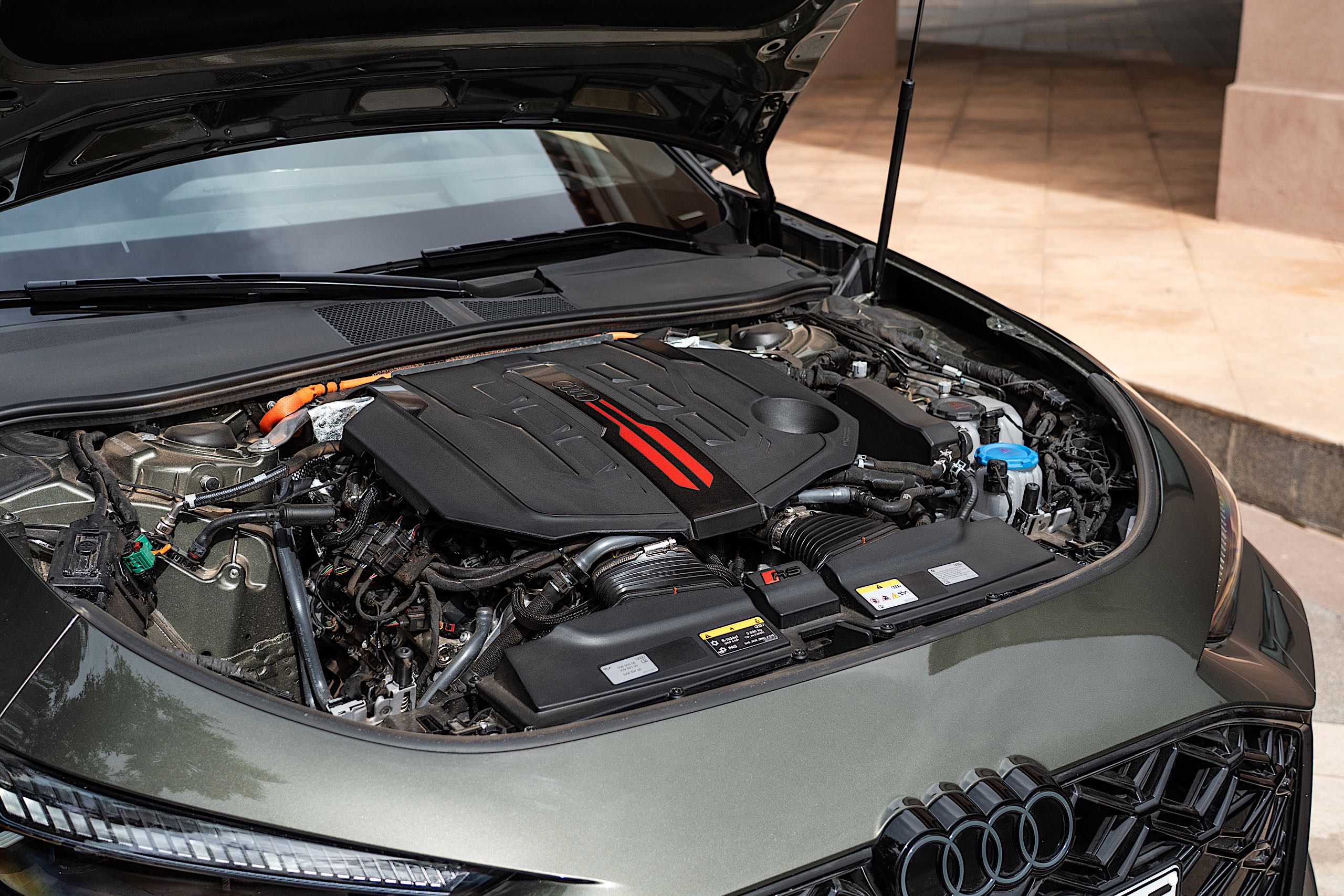
The main grunt of the new RS5 comes from a 2.9-liter, twin-turbocharged V-6 mounted up front under the hood. On its own, that engine produces 503 horsepower, a figure that you might think is plenty. Here, though, it has some help here in the form of not one but two electric motors.
The first is a typical hybrid arrangement, a 174-hp motor wedged in between the engine and transmission. This is the primary means of electric propulsion for the car, giving it a total, maximum system output of 630 hp and 609 lb-ft.
Because that motor is positioned where it is, the RS5 can still make full use of its eight-speed automatic transmission when driven only by the electric motor. That means a top speed of 87 mph before the engine kicks in. Once it does, it'll take you all the way up to 177 mph.
There's a second motor at the back, though, which is far more interesting. No, it isn't there to drive the rear axle like on the RAV4 Hybrid. The RS5 has a traditional Quattro setup with a mechanical differential in the middle to distribute power between the front and rear wheels.
The small, 11-hp motor at the back exclusively controls a new type of system that Audi calls Dynamic Torque Control. This motor uses planetary gearsets to selectively and effectively magnify the power to either the left or the right axle at the back. It may be small, but this motor makes the RS5 do some wonderful things.
Drift time
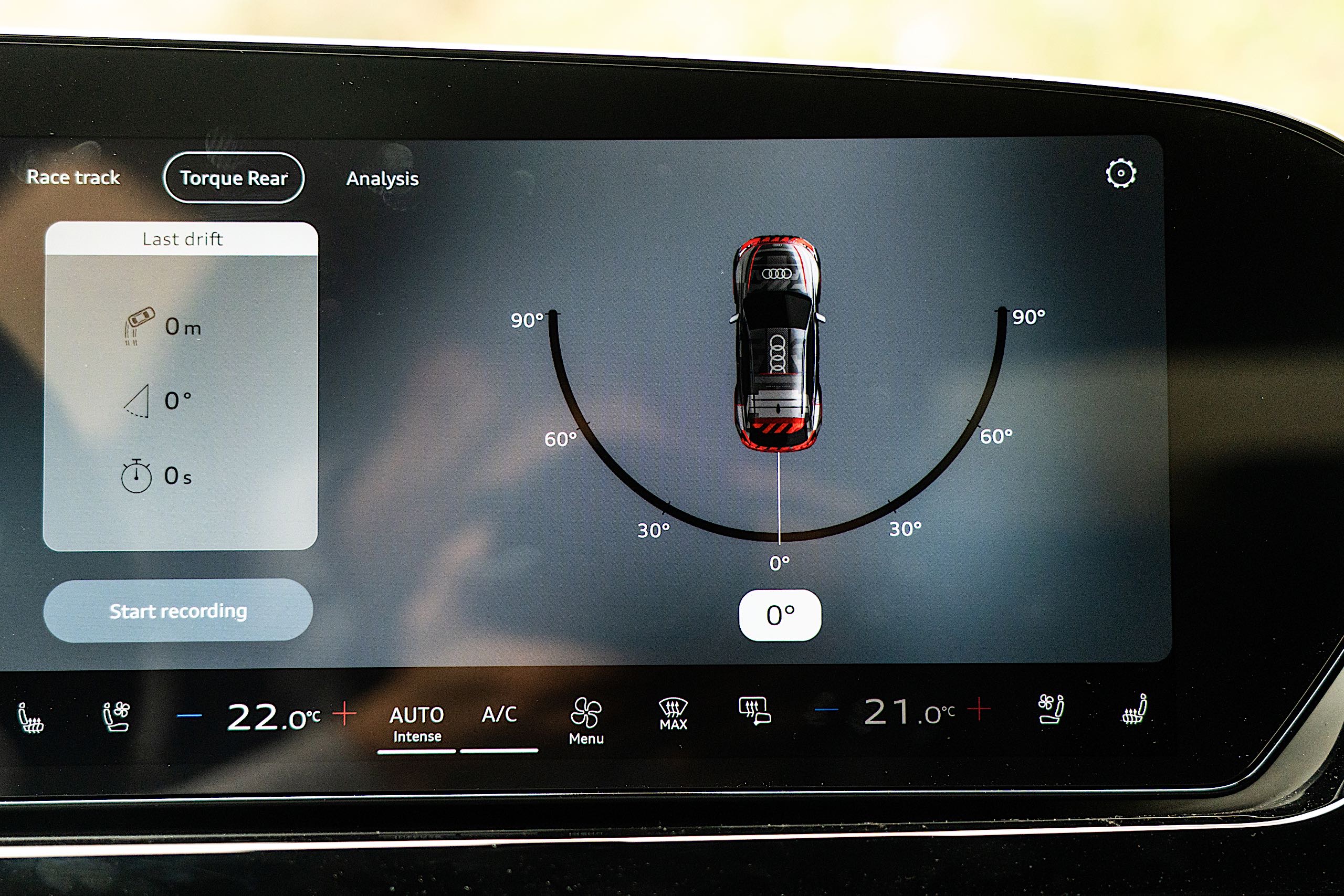
For maximum fun in the new RS5, dial it over to what Audi calls Torque Rear mode. This configures the new rear differential to send maximum twist to the outside rear wheel. Combine that with the center differential, which can send up to 85 percent of the engine's power to the rear, and the result is a remarkably willing drift partner.
After less than 30 seconds behind the wheel on a closed track in Marrakesh, I was confidently sliding my way through a set of cones in a slalom, then pirouetting around a cone at the end in a tight circle, clouds of tire smoke hanging in the air. Normally, drifting a 5,200-pound, 630-hp machine rolling on sticky tires is a real nightmare. It's delightfully easy in the RS5.
The car's differential setup not only makes this easy but also tracks just how successful you are at it. It records the time, length and even angle of your most dramatic drifts. You can even replay them on the touchscreen if you're so inclined, scrubbing back and forth to see what kinds of G forces you were generating.
This is part of a new extension to its infotainment system called the Audi Driving Experience. It'll also track lap times around race tracks, giving you a bit more information in the timeless pursuit of tenths of a second.
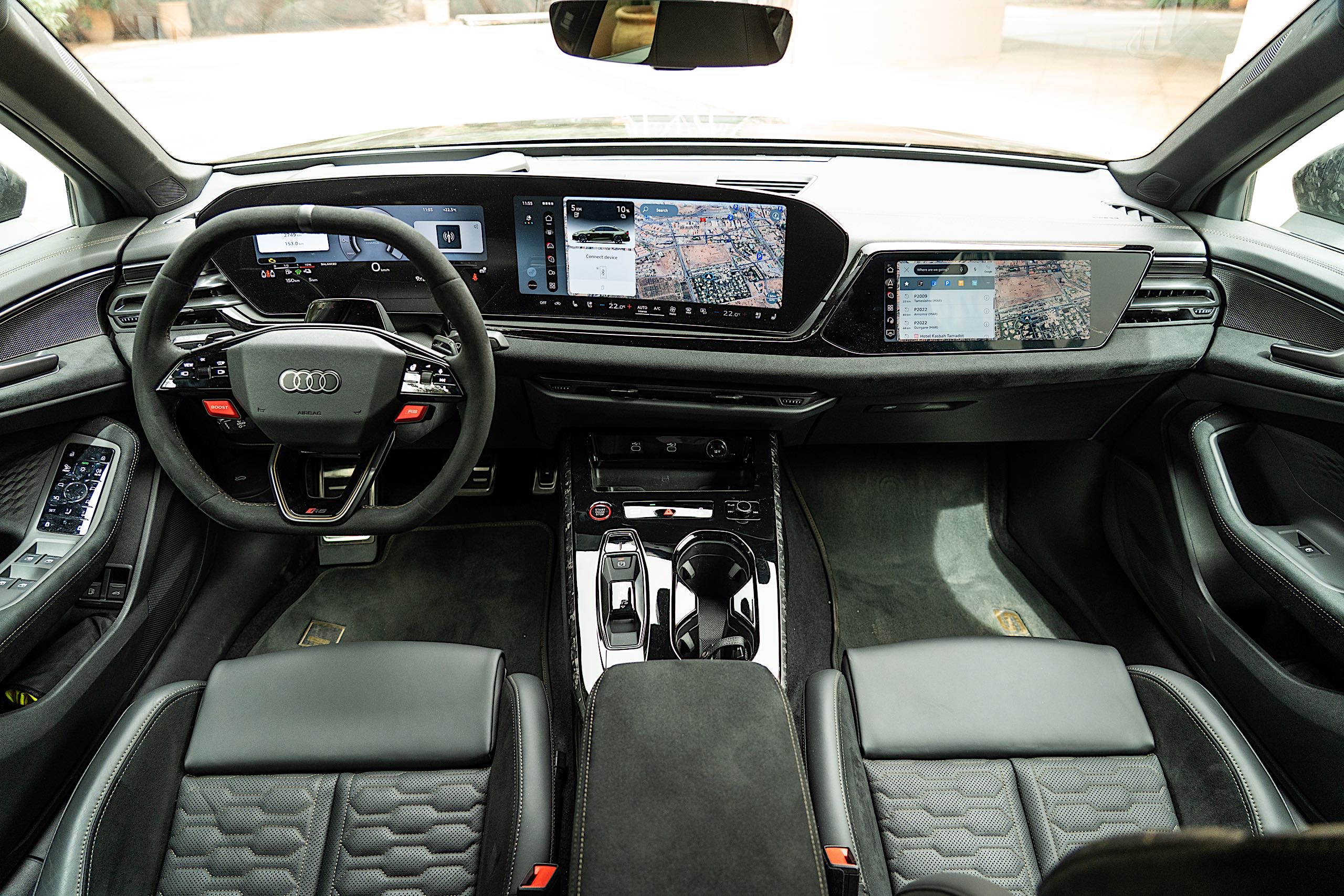
Audi also added a few custom screens showing the power distribution of the car and letting you monitor things like critical system temperatures and tire pressures at every corner. Otherwise, though, it's much the same interface as seen on most new Audis, with a 14.5-inch central touchscreen, an 11.9-inch gauge cluster and an optional 10.9-inch display way over on the right for the passenger.
That's a lot of displays, with the left two encased within an oversized, sweeping panel that stands tall and proud out of the dashboard. Too tall, actually. If big bezels ruin your day, look away, because there's a lot of wasted space here.
Likewise, if you don't like steering wheels with capacitive touch controls, you're not going to love the RS5. Audi has brought back the little scroll wheels under your thumbs, at least, but everything else on there is just a flat surface.
Putting the power down
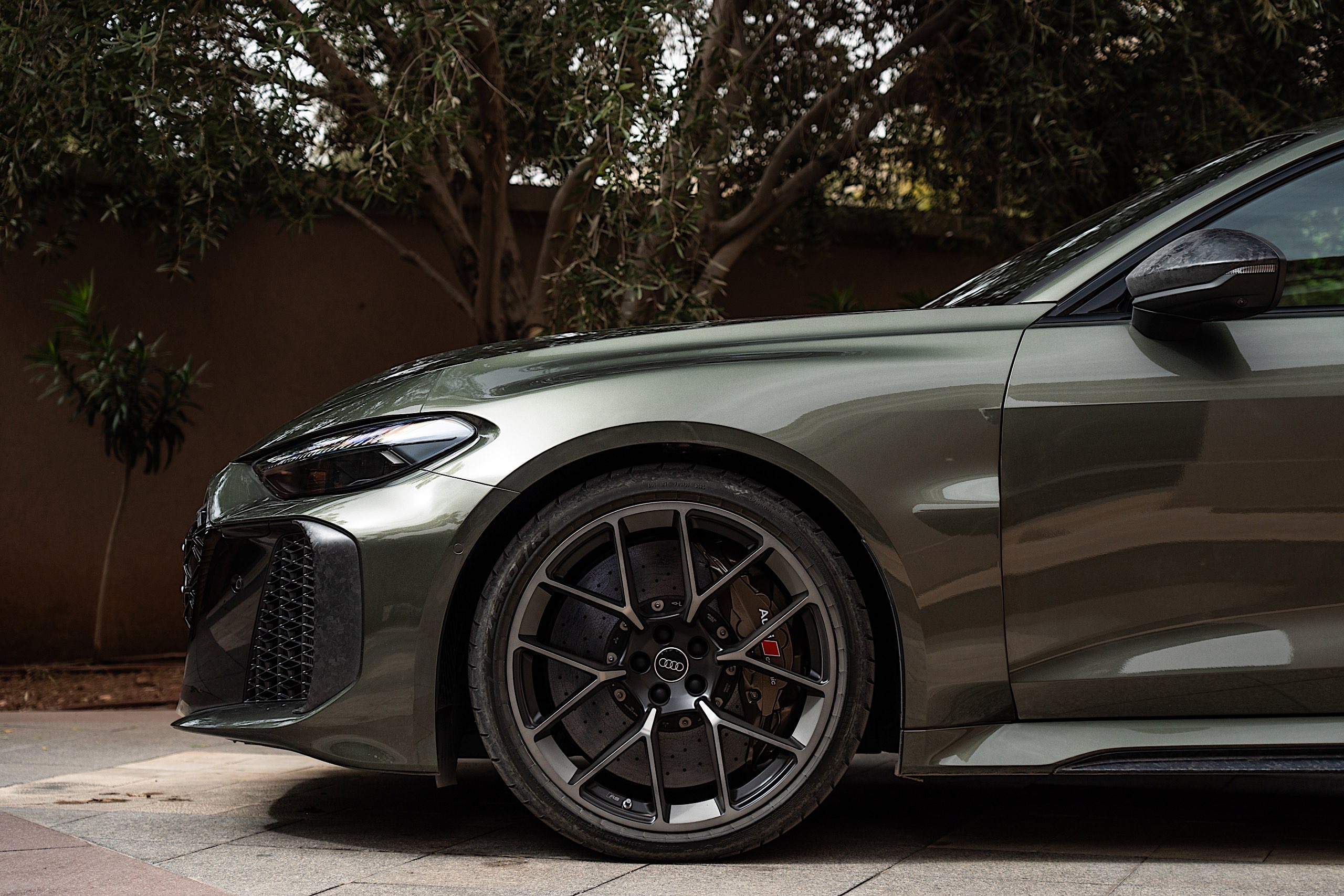
I spent the better part of a day driving the RS5 through the wild streets of Marrakesh and up into the Atlas Mountains to the south. In the city, I left the car in EV mode, letting that primary electric motor and the car's 25.9-kilowatt-hour battery (22 kWh net) do the heavy lifting. Audi says the car can cover up to 54 miles in this mode, and while I didn't have time to go that far on battery power, it seemed like an achievable estimate.
The car is perfectly pleasant in this mode, silent and even reasonably quick. In Comfort mode, the suspension is at its softest, and despite those giant wheels, the RS5 did perfectly fine over the decidedly imperfect Moroccan roads. But it wasn't until I got far away from the city that I could start to open things up a bit, working my way through the various drive modes and eventually all the way up to RS Sport, the most performance-oriented.
Here, the suspension is at its stiffest and the throttle at its sharpest, transmission swinging through its ratios eagerly to keep the engine singing. Jump on the gas, and the car really does leap forward, the electric motor doing its part to cover the power delay caused by the turbochargers in the mix.
You can feel that rear differential here, too, adding an extra bit of pivot to the rear when you're powering out of corners. But, on the way in, you really can feel the substantial weight of this car, the front end scrubbing and pushing forward when you ask too much of it.
Again, this model gained more than 1,000 pounds over the old RS5, and though the improved suspension, drivetrain, tires and even giant, ceramic brakes all help to reduce its feel, there's no hiding that much mass.
Wrap-up
Yes, the RS5 has gained a lot of weight, and that hurts its nimbleness on track, but remember that this is a large, luxury sedan. It was never meant to be a lithe track toy. Despite that, the new RS5 actually feels far more fun and aggressive than its predecessor, a characteristic at least partially due to that trick new rear differential and the instant response of the new hybrid system. 54 miles of emissions-free range doesn't hurt, either.
The big question is cost, and sadly, Audi's not ready to answer that one yet. You do, at least, have a little time to save. The new RS5 doesn’t hit American shores until sometime in 2027.
This article originally appeared on Engadget at https://www.engadget.com/transportation/2027-audi-rs5-first-drive-big-thrills-with-a-big-battery-152057907.html?src=rss
The MacBook Air M5 starts at $1,099, up $100 from the M4
3 Mar 2026, 2:32 pm by Kris Holt
Reports had suggested that Apple wasn’t going to reveal a refreshed MacBook Air with an M5 chip during its week of announcements, but whaddyaknow? Apple just went ahead and did that exact thing.
Let’s deal with the bad news first: Apple is reverting a price cut from last year. It dropped the M4-powered MBA’s starting price down to $999, but for the M5-equipped model, you’ll need to shell out at least $1,099.
The company claimed the M5 MacBook Air will be able to deliver four times faster performance in AI tasks than the M4 MBA. Compared with the M1 MacBook Air, you’ll get up to 9.5 times faster performance, the company said.
Along with swapping in a more powerful chip, Apple has upgraded the starting storage by doubling it from 256GB to 512GB. The company says the SSD has “2x faster read/write performance compared to the previous generation.” You can kit out the MacBook Air with 4TB of internal storage if you have the will and the means.
You’ll also get 16GB of RAM for starters. The memory has 153GB/s of bandwidth, which Apple said is a 28 percent improvement over the M4 MBA. The latest MacBook Air can be equipped with up to 32GB of memory.
Just like it did with the latest iPad Air, Apple has upgraded the connectivity hardware. Thanks to the inclusion of the company’s N1 wireless chip, the M5 MacBook Air supports Wi-Fi 7 and Bluetooth 6.
As you’d imagine, the M5 MacBook Air runs on macOS Tahoe and it supports Apple Intelligence features. It has a Liquid Retina display, 12MP Center Stage camera, a sound system with Spatial Audio support and a pair of Thunderbolt 4 ports, which allows the laptop to support up to two external displays. Apple claims the M5 MacBook Air will run for up 18 hours on a single charge.
The M5 MacBook Air is available in 13-inch and 15-inch models, with the latter starting at $1,299. It’s available in sky blue, midnight, starlight and silver. Pre-orders start on March 4 at 9:15AM ET. The laptops will be available in stores in 33 countries and regions on March 11.
This article originally appeared on Engadget at https://www.engadget.com/computing/laptops/the-macbook-air-m5-starts-at-1099-up-100-from-the-m4-141612909.html?src=rss
Apple unveils the M5 Pro and M5 Max chips, which feature new, faster 'super cores'
3 Mar 2026, 2:26 pm by Cherlynn Low
As part of its big week of announcements, Apple has unveiled a new pair of M5 chips alongside two new MacBooks. The new M5 Pro and M5 Max chips will power the new MacBook Pro that was just announced today, while the new MacBook Air comes with the base M5. According to the company’s press release, the M5 Pro and M5 Max come with an “advanced GPU with Neural Accelerators and higher unified memory bandwidth for a massive increase in AI compute.”
At the heart of the M5 Pro and M5 Max are what Apple is calling a new “Fusion Architecture” that “combines two dies into a single system on a chip (SoC).” The chips both feature a new 18-core CPU, six of which Apple is now calling “super cores, that are the word’s fastest CPU core.”
The other 12 are “all-new performance cores, optimized for power-efficient, multithreaded workloads.” Altogether, Apple says these CPU changes improve performance by “up to 30 percent for pro workloads.” Meanwhile, the GPU is a jump over the next-gen design we saw in the M5, as it goes to up to 40 cores. Each GPU core has a Neural Accelerator in it, and together with the higher unified memory bandwidth, the company says the M5 Pro and M5 Max offer “over 4x the peak GPU compute for AI compared to the previous generation.”
Apple added that graphics performance is also getting a substantial boost, by up to “35 percent for apps using ray tracing” compared to the M4 Pro and M4 Max.
To be clear, this isn’t the first time Apple has claimed it has the “world’s fastest” core. According to our resident Apple Silicon expert Devindra Hardawar, the benchmarks have proven the company’s claims true. It’s also worth noting that the two-die design isn’t novel or unique, as companies like Intel and AMD have been doing similar.
The M5 Pro and M5 Max will first show up in the new MacBook Pro, which is available for pre-order starting March 4, and will arrive on Wednesday, March 11.
This article originally appeared on Engadget at https://www.engadget.com/computing/apple-unveils-the-m5-pro-and-m5-max-chips-which-feature-new-faster-super-cores-141533420.html?src=rss
Apple brings its M5 Pro and Max silicon to the next MacBook Pro generation
3 Mar 2026, 2:25 pm by Anna Washenko,Nathan Ingraham
It happened much later than we expected, but Apple's announcement of MacBook Pros with its M5 Pro and M5 Max chips has finally arrived. These more powerful variants on Apple's silicon will be available in the 14-inch and 16-inch models of the laptops. Pre-orders will open on March 4 with an expected ship date of March 11. You’ll want to save some extra coin this time, though, as prices have gone up compared to the prior generation.
The new 14-inch MacBook Pro can be kitted out with either an M5 Pro or M5 Max. The Pro option for the chip boasts a CPU with 15 or 18 CPU cores and 16 or 20 GPU cores. For the M5 Max, users will have 18 CPU cores along with 32 or 40 GPU cores. The base model with an M5 Pro has either 24 or 48GB of RAM and now starts with 1TB of storage, up from 512GB as was standard before.
If you're eyeing the 16-inch MacBook Pro, it starts with the M5 Pro with 18 CPU cores and 20 GPU cores. You can also get the same two M5 Max configurations as you can on the 14-inch model.
Perhaps most significantly, Apple has raised prices on its entire MacBook Pro lineup. The 14-inch M5 model previously started at $1,599; it’s now priced at $1,699. At least you’re getting something for that cash, as Apple has doubled its base storage to 1TB.
The same goes for the new M5 Pro and Max options. The 14-inch with the M5 Pro now starts at $2,199 instead of $1,999, while the 16-inch starts at a whopping $2,699 instead of $2,499. That 16-inch model comes with 24GB of RAM and 1TB of storage now as standard; that’s again double the storage space from the prior model. The M5 Max model starts with 2TB of storage and 36GB of RAM for $3,599 (14-inch) or $3,899 (16-inch).
Running down the rest of the specs: Apple says the storage in the new MacBook Pro is twice as fast as the prior generation — so you’re getting more, faster storage than before for the extra cash. The laptops also include the Apple-designed N1 chip for Wi-Fi 7 and Bluetooth 6 connectivity, and Apple says the MacBook Pro is rated for up to 24 hours of battery life. It has the same excellent Liquid Retina XDR display as we’ve seen for multiple years now, as well as a 12-megapixel “Center Stage” front-facing camera.
It's a little unusual for these heavy-duty upgrades to Apple's MacBook Pros to be announced so much later from the news of its latest silicon updates. The company debuted the M5 chip last fall as usual, but spent several months before it revealed these major hardware additions for housing it. And the M5 MacBook Pro that was announced in October shortly after the M5 chip news came with zero fanfare.
This article originally appeared on Engadget at https://www.engadget.com/computing/laptops/apple-brings-its-m5-pro-and-max-silicon-to-the-next-macbook-pro-generation-141553279.html?src=rss
Apple reveals its new 5K mini-LED Studio Display XDR
3 Mar 2026, 2:15 pm by Steve Dent
Apple continues its gradual unveiling of new products this week with the launch of the Studio Display and an all-new 27-inch Studio Display XDR. The latter is a higher-end model aimed at content creators with a 27-inch 5K Retina XDR display that features a mini-LED display with 2,000-plus dimming zones, up to 2,000 nits of peak HDR brightness and a wider color gamut for improved accuracy. It looks like a replacement for the expensive, nearly seven-year-old 32-inch 6K Pro XDR Display, which is no longer for sale on Apple’s website.
The Studio Display XDR also has a 120Hz refresh rate, addressing complaints about the relatively anemic 60Hz refresh rate of previous models. At the same time, it comes standard with a new tilt- and height-adjustable stand, with a height range of 105mm.
Apple calls the Studio Display XDR the “world’s best pro display” for things like HDR video editing and medical displays. Brightness levels are certainly outstanding at 1,000 nits SDR and 2,000 nits HDR, and the 1,000,000:1 contrast ratio and 80 percent Rec.2020 coverage are also top-notch. The new model should even be fine for some light gaming thanks to the 120Hz refresh rate and Adaptive Sync support, though many buyers may want a 32-inch or larger display like the now-discontinued Pro XDR model.
Other features include a 12MP Center Stage camera with Desk View support and Thunderbolt 5 connectivity with a second port for downstream high-speed accessories or additional daisy-chained displays. It can also act as a Thunderbolt hub, while offering up to 140W of charging power through the included Thunderbolt 5 Pro cable, enough to fast-charge a 16-inch MacBook Pro.
Along with the Display XDR, Apple also announced a new version of the standard Studio Display. As before, it comes with a 27-inch 5K Retina display with up to 600 nits of brightness and P3 wide color, either with standard or optional nano-texture glass (a $300 option). However, it now includes an improved 12MP Center Stage camera along with Desk View to show your face and an overhead view of your desk at the same time. You also get a studio-quality three-microphone array and six speaker sound system with Spatial Audio.
That display now supports Thunderbolt 5 connectivity as well, providing higher-speed connections for accessories and the ability to daisy-chain displays. However, max charging power on this model is limited to 96W, still enough to fast-charge a 14-inch MacBook Pro. The Studio Display comes standard with a tilt-adjustable stand, but you can get it with a tilt- and height-adjustable standard for $400 more as before.
The Studio Display XDR will be available tomorrow for pre-order starting at $3,299, while the new Studio Display also goes on pre-order on March 4 starting at $1,599 without the nano-texture display or heigh-adjustable stand.
This article originally appeared on Engadget at https://www.engadget.com/computing/accessories/apple-reveals-its-new-5k-mini-led-studio-display-xdr-141515587.html?src=rss
Shure's next-gen DAI adds mobile support
3 Mar 2026, 2:00 pm by Will Shanklin
XLR microphone owners, rejoice: Shure's successor to the MVX2U Digital Audio Interface (DAI) brings the adapter into the mobile era. The compact MVX2U Gen 2 adds more advanced onboard audio processing. But its most notable upgrade is mobile device compatibility, so you're no longer limited to desktop use.
The single-channel MVX2U Gen 2 provides up to +60dB of gain and 48V phantom power. On the processing front, the adapter includes an auto-level mode. There’s also a real-time denoiser to minimize background noise and a pop filter ("Popper Stopper" in Shure marketing-speak) to soften those harsh plosive sounds. Shure says the new model improves the noise floor, headphone amp and DAC.
The adapter stores your last-used audio processing settings. That way, you don't have to worry about your settings getting wiped out when switching between devices or software.
The Shure MVX2U Gen 2 includes a 1m (3.3 ft) USB-C to USB-C cable, so you can get it up and running quickly on your phone, tablet or PC. The adapter is now available for $139 from the company website.
This article originally appeared on Engadget at https://www.engadget.com/audio/shures-next-gen-dai-adds-mobile-support-140000205.html?src=rss
Meta's AI display glasses reportedly share intimate videos with human moderators
3 Mar 2026, 1:59 pm by Steve Dent
Users of Meta's AI smart glasses in Europe may be unknowingly sharing intimate video and sensitive financial information with moderators outside of the bloc, according to a report from Sweden's Svenska Dagbladet released last week. Employees in Kenya doing AI "annotation" told the journalists that they've seen people nude, using the toilet and engaging in sexual activity, along with credit card numbers and other sensitive information.
With Meta's Ray-Ban Display and other glasses with AI capabilities, users can record what they're looking at or get answers to questions via a Meta AI assistant. If a wearer wants to make use of that AI, though, they must agree to Meta's terms of service that allow any data captured to be reviewed by humans. That's because Meta's large language models (LLMs) often require people to annotate visual data so that the AI can understand it and build its training models.
This data can end up in places like Nairobi, Kenya, often moderated by underpaid workers. Such actions are subject to Europe's GDPR rules that require transparency about how personal data is processed, according to a data protection lawyer cited in the report.
However, Svenska Dagbladet's reporters said they needed to jump through some hoops to see Meta's privacy policy for its wearable products. That policy states that either humans or automated systems may review sensitive data, and puts the onus on the user to not share sensitive information.
Meta declined to comment directly on the story, and simply said that "when live AI is being used, we process that media according to the Meta AI Terms of Service and Privacy Policy." To find out more, check out Svenska Dagbladet's detailed reporting on the subject.
This article originally appeared on Engadget at https://www.engadget.com/ai/metas-ai-display-glasses-reportedly-share-intimate-videos-with-human-moderators-135939855.html?src=rss
Charlie Brown now works for Sony
3 Mar 2026, 12:56 pm by Mariella Moon
Sony Music Entertainment Japan and Sony Pictures Entertainment now officially own 80 percent of the Peanuts franchise. The companies have closed the deal, which was officially announced in December 2025 when it was still subject to regulatory approvals, for $460 million. Sony Music Japan has owned 39 percent of Peanuts since 2018, so the Sony subsidiaries are essentially buying 41 percent of the franchise from Canadian firm WildBrain with this transaction. Now that the acquisition is done, Peanuts is officially a consolidated Sony subsidiary.
The Peanuts universe started as comic strips by Charles M. Schulz back in 1950. Its characters, especially Charlie Brown and his pet dog Snoopy, have become household names since then. One cannot say “Good grief!” without associating it with Charlie Brown. The franchise has grown massively since Peanut’s inception, spawning a bunch of animated series, cartoon musicals and movies, such A Charlie Brown Christmas and Snoopy The Musical.
This article originally appeared on Engadget at https://www.engadget.com/entertainment/charlie-brown-now-works-for-sony-125619518.html?src=rss
The Morning After: Apple’s big week starts with the iPhone 17e
3 Mar 2026, 12:15 pm by Daniel Cooper
We’re at the start of another one of those weeks where Apple announces one or two of its lesser products each day. The first pair to break cover is the iPhone 17e and iPad Air M4, with more due to drop as the calendar rolls forward. The iPhone 17e is by far the more interesting gadget, especially as the price remained the same as for the iPhone 16e. Apple is charging $599 for the 17e, even though the base model storage has doubled to a very welcome 256GB.
The 17e also gains several features that were held back from the equivalent budget handset last year. The most notable is perhaps the addition of MagSafe at Qi2 speeds, enabling users to wirelessly charge their device at 15W. Keen-eyed spec-list nerds will also spot Apple’s C1X proprietary wireless chip, which offers comparable speed to the Qualcomm models it will eventually replace, but with far better power efficiency.
The iPad Air, by comparison, is the very model of a modern major iterative spec revision to keep it up to date. The M3 has been upgraded to an M4, and it’ll get the same home grown wireless chips (N1 and C1X), blessing it with Wi-Fi 7 compatibility. Apple is also adding some more RAM to the iPad Air, boosting it from 8GB to 12GB, but without adding any more digits to the price.
As someone who’s still clinging on to an iPhone 14, the generous storage and low cost of the iPhone 17e is intriguing. And it’s a far more attractive package than whatever Apple was trying to offer with the iPhone Air.
— Dan Cooper
The other big stories this morning
-
Starlink's next-gen satellite network could provide 150 Mbps speeds by end of next year
The company wants to offer 5G-esque speed, but from space. -
Vivo's X300 Ultra goes global and gets a huge 400mm Zeiss telephoto lens
Looks totally normal hanging off the back of a phone. -
OpenAI will amend Defense Department deal to prevent mass surveillance in the US
Wait a second, wasn’t that one of Anthropic’s red lines?
The Lenovo Modular AI PC concept is a remixed dual-screen laptop with hot swappable ports
Modularity! For! Some! Reason!
Lenovo rocked up to MWC to show off a concept laptop with hot-swappable components, letting users push around their keyboard and displays at will. The company says you can set up the hardware on your desk to suit your needs at any given time. So, if you need a standard laptop, you can do that, or you can put a second display where your keyboard should go and use your keyboard wirelessly. Sadly, it’s a concept, so while you can purr at Lenovo’s engineering prowess you can’t hand it any of your cash to properly own this thing.
A closer look at Honor’s Robot Phone
Sources describe the unit as ‘adorable.’
Honor made its usual full-court press at MWC, but the star of its own show was the Robot Phone, due to launch later this year. It’s a smartphone with its own articulating camera gimbal which can move around in response to its user’s commands. The Morning After’s own Mat Smith says it’s able to shake and nod its, uh, “head,” and can even dance along to music. And that’s before you get to its real function to, you know, take photos and stuff.
Paramount+ and HBO Max could be merging into a single streaming service
The combined ParaSkyWarDisco would serve 200 million subscribers.
Paramount Sky CEO David Ellison has outlined his vision for his latest toy, Warner Brothers Discovery. He told investors both companies would merge their streaming services, giving it a global audience of around 200 million subscribers. Ellison also pledged to give HBO operational independence, hopefully meaning it won’t be staffed entirely by patronage appointees.
Everything announced at MWC 2026: Lenovo's wild foldable gaming handheld, Honor's Robot Phone, and more
Far too many things for one newsletter.
MWC is such a big show it would be impossible to cover everything we’ve reported on in a single newsletter. But, thankfully, we’ve built a roundup of the most important things for you to peruse, especially all of the biggest phones that you aren’t as likely to see on store shelves in the US.
This article originally appeared on Engadget at https://www.engadget.com/general/the-morning-after-engadget-newsletter-121540093.html?src=rss
Meta starts testing its AI shopping assistant
3 Mar 2026, 12:01 pm by Mariella Moon
Meta has started rolling out an experimental AI shopping tool to some users in the US, according to Bloomberg. At the moment, it’s reportedly only showing up on desktop browsers when select users visit Meta AI on the web. They’ll know if they have access to the feature if they see the “Shopping research” button inside the query text box. The company has confirmed that it was testing the feature, Bloomberg said, but it didn’t say when a wider release will happen.
When users ask for product suggestions, the chatbot will show them a carousel with product images and their pricing, along with a link to the e-commerce website and information about the brand. Meta AI will also include a short explanation why it recommended the item. If Meta AI can see a user’s information, such as their gender and location data, it can tailor responses for them. Bloomberg said it replied with a selection of women’s puffer jackets from shops that ship to New York, based on the tester’s profile. Users cannot check out from within the Meta AI interface, but they can click on the links it provides to shop online.
Mark Zuckerberg previously told investors that Meta is launching agentic shopping tools during an earnings call earlier this year. It doesn’t come as a surprise that the company is working on them, when rival AI companies already offer the same tools. OpenAI rolled out a dedicated shopping assistant for ChatGPT just before Black Friday last year, shortly after Google launched its own shopping tools for Gemini. Perplexity also released an AI shopping assistant at the same time.
This article originally appeared on Engadget at https://www.engadget.com/ai/meta-starts-testing-its-ai-shopping-assistant-120148124.html?src=rss
Google Home's latest feature is Gemini-powered 'Live Search' for cameras
3 Mar 2026, 11:22 am by Steve Dent
Google Home has some significant new quality-of-life updates and a new AI-powered feature, the division's head honcho Anish Katturkan announced on X. Many of them, including a function called "Live Search," are powered by the company's Gemini for Home service launched in October 2025 as the official replacement for Google Assistant on smart devices.
"We launched Gemini for Home in Early Access specifically to learn from real-world usage," Katturkaran said. "With millions of you now testing and shaping this experience every day, we're pushing regular voice improvements to address your feedback."
The Live Search feature does just what it says, letting you query Gemini about the current state of your home based on what the cameras see. For instance, you can ask things like "Hey Google, is there a car in the driveway?" However, the feature is only available for Google Home Premium advanced subscribers who pay a $20 per month ($200 per year) fee.
Gemini for Home now uses updated models to improve the quality and accuracy of answers too and will more reliably play newly-released songs. Other key updates include better targeting for smart home devices by room, house and device, reduced instances of cutting off a speaker prematurely, better reliability for user-created automations by voice and more. Too see all those changes, check out Google Home's latest changelog,
Finally, Google Home announced "enhanced support" for the Nest x Yale lock, including comprehensive passcode management (including for guests), a more robust activity history, real-time notifications for lock events and enhanced lock settings like single touch locking.
This article originally appeared on Engadget at https://www.engadget.com/home/smart-home/googles-homes-latest-feature-is-gemini-powered-live-search-for-cameras-112216551.html?src=rss
MWC 2026’s most bizarre phone can start fires (on purpose)
3 Mar 2026, 10:10 am by Mat Smith
This isn’t a Galaxy Note 7 debacle. Oukitel's WP63 is a ruggedized smartphone that’s meant to set things alight. It has a built-in electric igniter, aimed at emergency response and camping, helping to start fires when you forgot matches, but you brought this beastly phone along for the adventure. It’s got several other notable features, like a 20,000mAH battery, a loudspeaker, and even its own built-in USB-C cable for charging other devices.
Still, the igniter was why I was here. The WP63 has an electric coil that heats up, similar to cigarette lighters in cars circa 1987. This is hidden away behind a protective cover at the top of the device, and once it pops out, you activate it using an app. An Oukitel spokesperson was able to light some rolled-up paper, and I was surprised how gentle and seemingly in control it was. (The paper looked like a cigarette, too.)
Unfortunately, another spokesperson told me that it can’t be used to light candles, although I can’t understand why. I don’t start campfires, but I do light candles.
The phone will be priced around $500, and completely ignoring the tendency for thinner and thinner phones, it’s 27mm thick. Another outdoor use? If a bear decided to attack you in the woods, you might be able to concuss it with the WP63.
This article originally appeared on Engadget at https://www.engadget.com/mobile/smartphones/oukitel-wp630-mwc-2026-smartphone-igniter-101046023.html?src=rss
The best keyboards for 2026
3 Mar 2026, 10:00 am by Amy Skorheim,Jeff Dunn,Valentina Palladino
A keyboard is one of those pieces of gear you interact with constantly, yet it’s easy to overlook how much it affects your day-to-day comfort. From firing off emails to long coding sessions or late-night gaming, the right keyboard can make everything feel smoother, faster and less fatiguing.
Some setups call for slim, quiet boards that disappear into a workspace, while others benefit from chunky mechanical keyboards with satisfying switches and durable frames. You’ll also find wireless models that cut down on desk clutter, compact layouts built for travel and ergonomic keyboards aimed at reducing strain during long stretches of time.
No matter how you use your computer, upgrading your keyboard is one of the simplest ways to improve the experience. We’ve tested a wide range of options to find the best keyboards for different needs, budgets and typing styles.
Best keyboards for 2026
What to look for in a keyboard
Design
Size
The first thing you’ll want to consider when it comes to your next computer keyboard’s design is size. There are a number of different keyboard layouts to choose from, but the most common are full-sized, tenkeyless and those smaller than tenkeyless.
Full-sized keyboards, or 100 percent, include a function row at the top and a complete numpad with arrow keys on the right side, along with all of the rest of the alphanumeric keys you’d expect on a standard QWERTY layout. Tenkeyless, or 80 percent, removes the number pad but keeps the arrow keys and the function row, reducing the overall width measurement of the board by a decent amount. Compact keyboards keep things ultra simple by including only the alphanumeric keys and modifiers like Alt, Shift, Ctrl and others and they come in different sizes like 60 percent, 65 percent and more. These are the most popular sizes out there, but you can find plenty of other designs that include different mixes of keys along with the standard letters and numbers all should have.
Aside from size, there are two other big categories that you could use to define a keyboard: ergonomic and mechanical. Ergonomic keyboards are designed with, you guessed it, better ergonomics in mind, taking into account where you should position your fingers, hands and forearms to maintain proper posture. Separately, mechanical keyboards use mechanical switches (of which there are many types) that differ greatly from the membrane or scissor-switch keyboards you’ll find dominating most wired and wireless options widely available today. We have guides to the best ergonomic keyboards and best mechanical keyboards, but we’ll summarize what you need to know about both here.
Ergonomic keyboards
If you deal with discomfort from working at a computer all day, ergonomic keyboards can help. These specially designed boards re-orient the keys, allowing you to hold your elbows farther apart and maintain a straighter line from your forearms to hands. Some people find this subtle change more comfortable.
Ergonomic keyboards typically fall into two categories: Alice and split keyboards. The former is a single unit with an A-shaped gap in the center of the keys. Split models come in two separate pieces which you can arrange as you like on your desk. Additional ergonomic features like tenting and negative tilt can make typing feel even more comfortable, and are often available on both Alice and split boards. Tenting raises the middle of the keys up so your hands take on more of a “handshake” position. Negative tilting lowers the top of the keyboard to keep your wrists angled downward instead of back towards your forearms.
The way the keys are arranged on the keyboard may make typing easier as well. Traditionally, keyboards are staggered, with one row of letters slightly offset from the row beneath it. Columnar keyboards arrange the keys in a grid of rows and columns. This style takes a little getting used to, but some people find it allows them to type faster. You can also make the keys of some keyboards do more than just produce letters. Programmable boards let you map shortcuts and other functions, including macros, which may keep you from reaching for the mouse quite so often, saving you time and possibly strain as well.
Mechanical keyboards
Mechanical keyboards have blown up in popularity as more people have been thrust into creating their own workspaces at home. It’s easy to see why: Compared to a traditional membrane keyboard, a good mechanical board is more durable, more satisfying to press and, most importantly, infinitely more customizable. The best of them usually come with a price premium, but even some cheaper models let you “hot-swap” between keycaps, switches and other materials, letting you tinker with different typing sensations and sound profiles until you find a combination that best expresses your preferences.
Do you want each press to feel deep and full or fast and light? Do you need them to sound loud and clacky or almost totally muffled? Do you prefer your keycaps to look subdued and professional, stuffed with RGB lights or written in an Elvish language from The Lord of the Rings for some reason? With the right new keyboard, it’s all up to you — the only things really holding you back are your imagination and your wallet.
We have a dedicated buying guide that digs deeper into the key aspects to consider when buying a mechanical gaming keyboard, so we encourage you to look at that for a full rundown. To keep things high-level, the most influential part of your purchase is your keyboard’s switch type. These little mechanisms slot underneath the keycaps and generally have the biggest effect on how your keyboard feels and sounds as you type away.
You can broadly separate mechanical switches into three buckets: linear, tactile and clicky. Linear switches feel smooth all the way down; they’re often popular with gamers since they tend to be light and fast to actuate. Tactile switches create a tangible “bump” sensation partway through a press; many people who spend all day typing prefer them because they clearly confirm each press without (always) being all that loud. Clicky switches are functionally similar to tactiles but make an audible “click” sound to match the bump; your coworkers may hate them, but others love the full-throated sense of feedback they provide. To be clear, just because two switches fall within the same bucket doesn’t mean they feel or sound exactly the same. The only way to figure out which switch works best for you is to do your research and, preferably, try some out for yourself.
Other keyboards have a mechanical-style feel but are built on different mechanisms entirely. The hot new trend in gaming-focused keyboards, for example, is Hall effect switches, which use tiny magnets to register keystrokes and let you customize the sensitivity of each press. Optical switches, meanwhile, offer similar functionality by replacing the physical contact point of a typical mechanical switch with a beam of infrared light. More recently, we’ve seen a couple keyboards launch with inductive switches, which can work like magnetic switches but use inductive coils in the keyboard’s printed circuit board (PCB) to cater to all switches collectively and don’t require a sensor for each individual switch. We touch on a couple of magnetic-switch keyboards in our picks below, but for a fuller breakdown of this sort of tech, we recommend you check out our dedicated buying guide to the best gaming keyboards.
Connectivity
You’ve got two options here: wired or wireless. Wired keyboards typically have an attached cable that plugs into a USB-A or USB-C port on your computer (or docking station), although some come with cables that can be removed. Wireless mechanical keyboards connect to your machine either via Bluetooth or a wireless receiver dongle. There’s always the chance of some latency with wireless keyboards, so keep that in mind if you’re picking one up to use primarily with a gaming PC. Of course, you’ll only have to worry about battery life with Bluetooth keyboards.
This article originally appeared on Engadget at https://www.engadget.com/computing/accessories/best-keyboard-120000018.html?src=rss
OpenAI will amend Defense Department deal to prevent mass surveillance in the US
3 Mar 2026, 5:06 am by Mariella Moon
OpenAI’s Sam Altman said the company will amend its deal with the Defense Department (or the Department of War) to explicitly prohibit the use of its AI system on mass surveillance against Americans. Altman has published an internal memo previously sent to employees on X, telling them that the company will tweak the agreement to add language to make that point especially clear. Specifically, it says:
“Consistent with applicable laws, including the Fourth Amendment to the United States Constitution, National Security Act of 1947, FISA Act of 1978, the AI system shall not be intentionally used for domestic surveillance of U.S. persons and nationals.
For the avoidance of doubt, the Department understands this limitation to prohibit deliberate tracking, surveillance, or monitoring of U.S. persons or nationals, including through the procurement or use of commercially acquired personal or identifiable information.”
Altman has also claimed in the memo that the agency affirmed that its services will not be used by its intelligence agencies, including the NSA, without a modification to their contract. He added that if he received what he believed was an unconstitutional order, he would rather go to jail than follow it.
In addition, the OpenAI CEO has admitted in the memo that the company shouldn’t have rushed to get the deal out on Friday, February 27, since the issues were “super complex and demand clear communication.” Altman explained that the company was “trying to de-escalate things and avoid a much worse outcome” but it “looked opportunistic” in the end. If you’ll recall, OpenAI announced the partnership shortly after President Trump ordered all US government agencies to stop using Claude and any other Anthropic services. To note, Anthropic started working with the US government in 2024.
The Defense Department and Secretary Pete Hegseth had been pressuring Anthropic with to remove its AI’s guardrails so that it can be used for all “lawful” purposes. Those include mass surveillance and the development of fully autonomous weapons. Anthropic refused to bow down to Hegseth’s demands and in a statement said that “no amount of intimidation or punishment” will change its “position on mass domestic surveillance or fully autonomous weapons.” Trump issued the order as a result. The Defense Department had also taken the first steps to designate Anthropic as a “supply chain risk,” which is typically reserved for Chinese companies believed to be working with their country’s government.
Altman said that in his conversations with US officials, he reiterated that Anthropic shouldn’t be designated as a supply chain risk and that he hoped the Defense Department would offer it the same deal OpenAI agreed to. In an AMA session on X over the weekend, Altman clarified that he didn’t know the details of Anthropic’s agreement and how it differed from the one OpenAI signed. But if it had been the same, he thought Anthropic should have agreed to it.
After the news broke out about OpenAI’s deal, Anthropic climbed its way to the number one spot of the App Store's Top Free Apps leaderboard, beating out both ChatGPT and Google Gemini. Anthropic, capitalizing on Claude’s sudden popularity, launched a memory import tool to make switching to its chatbot from another company’s easier. Meanwhile, uninstalls for ChatGPT’s jumped by 295 percent day-over-day, according to Sensor Tower.
Here is re-post of an internal post:
We have been working with the DoW to make some additions in our agreement to make our principles very clear.
1. We are going to amend our deal to add this language, in addition to everything else:
"• Consistent with applicable laws,…
— Sam Altman (@sama) March 3, 2026
This article originally appeared on Engadget at https://www.engadget.com/ai/openai-will-amend-defense-department-deal-to-prevent-mass-surveillance-in-the-us-050637400.html?src=rss
End of today’s Engadget roundup.