This digest compiles the latest from Engadget.
Today’s Engadget Roundup
COPPA 2.0 passes the Senate again, unanimously this time
6 Mar 2026, 4:39 pm by Anna Washenko
Today the US Senate unanimously passed proposed legislation known as COPPA 2.0. This measure, fully named the Children and Teens’ Online Privacy Protection Act, aims to create new protections for younger users online, such as blocking platforms from collecting their personal data without consent.
COPPA 2.0 is a modernized take on the Children’s Online Privacy Protection Act of 1998, attempting to address recent changes in common online activities, like targeted advertising, that could prove harmful to minors. Lawmakers have made several attempts to get this bipartisan bill through. While it has made varying amounts of headway in the Senate, none of the COPPA 2.0 bills to date have gotten past the House of Representatives. Industry groups such as NetChoice have previously opposed COPPA 2.0 and other measures around minors' online activity such as KOSA, the Kids Online Safety Act. NetChoice members include Google, YouTube, Meta, Reddit, Discord, TikTok and X. Google specifically has since changed its stance to support COPPA 2.0, however.
"This bill expands the current law protecting our kids online to ensure companies cannot collect personal information from anyone under the age of 17," Senate Democratic Leader Chuck Schumer (D-NY) said in a statement about the latest result. "This is a big step forward for protecting our kids. We hope the House can join us. They haven’t thus far."
However, there has been a bigger push both domestically and internationally toward restrictions on when and how younger people engage online. Several states — Utah, California and Washington to name a few — have enacted laws requiring some level of age verification, either to access mature content online or to use social media apps at all. Many of these efforts have raised concerns about privacy regarding where and how people's personal information is stored and protected. COPPA 2.0 might wind up benefitting from the privacy debates since it emphasizes giving teens and parents ways to protect themselves from having their data used against them rather than asking adults to give up data in order to use the internet as usual.
Update, March 6 2026, 11:38AM ET: Article updated with additional context on Google.
This article originally appeared on Engadget at https://www.engadget.com/big-tech/coppa-20-passes-the-senate-again-unanimously-this-time-215044656.html?src=rss
Capcom's long-delayed Pragmata is now arriving a week earlier
6 Mar 2026, 4:02 pm by Andre Revilla
Capcom revealed during its March 5 Spotlight showcase that Pragmata, its repeatedly delayed dystopian sci-fi adventure game, will release on April 17 for PlayStation 5, Xbox Series X/S, Nintendo Switch 2 and PC via Steam. The game had been set for April 24 since its appearance at The Game Awards in December.
The game’s new trailer shows previously unseen locations and gameplay moments, and new elements within the Shelter, the in-game lunar base. Pragmata was first revealed in 2020 with a 2022 release window. Capcom then delayed it to 2023, then went radio silent on the project before resurfacing with a new 2026 date last year.
A free Sketchbook demo is available now on the PlayStation Store, Xbox Store, Nintendo eShop and Steam. Pre-orders for the game are available now.
This article originally appeared on Engadget at https://www.engadget.com/gaming/capcoms-long-delayed-pragmata-is-now-arriving-a-week-earlier-160257053.html?src=rss
Rad Power Bikes gets a new owner, pledge to build bikes in the US
6 Mar 2026, 2:46 pm by Matt Tate
Life EV has completed a court-approved acquisition of Rad Power Bikes, granting a second life to the troubled e-bike brand.
The Florida-based Life EV now owns Rad’s brand, intellectual property, inventory and certain unspecified operating assets, and will continue to operate as Rad Power Bikes in the US, with plans to expand to "select key markets."
Rad’s new owner has committed to honoring certain warranties and gift cards purchased prior to the acquisition, and says new bikes will be built in the US going forward. Life EV will adopt a Foreign Trade Zone (FTZ) structure for its manufacturing operations, allowing it to take advantage of special domestic customs procedures when sourcing parts from global suppliers.
"Rad Power Bikes has helped define the e-bike category in North America with its innovative products and passionate rider community," said Life EV CEO, Rob Provost. "Respecting and preserving that legacy – its brand, vision, and leadership – is foundational to this acquisition. Together, we will build on that trust and create new opportunities for riders nationwide."
The completed acquisition marks the end of a turbulent period for Rad. Back in December, the company was forced to file for Chapter 11 bankruptcy after the Consumer Product Safety Commission (CPSC) warned Rad’s customers to "immediately stop using" some of its e-bike batteries due to a serious fire hazard. At the time, Rad said it couldn’t afford to recall the at-risk batteries.
Less than two months later, in what can only be described as a strange twist of fate, a fire broke out at a Rad Power Bikes retail store warehouse in Huntington Beach, California. "We’re working with local authorities to review a thermal incident that occurred at our Huntington Beach store Sunday evening," a Rad Power Bikes spokesperson told Engadget at the time. "The incident was contained and happened while the store was closed. The cause of the fire has not been confirmed."
This article originally appeared on Engadget at https://www.engadget.com/transportation/rad-power-bikes-gets-a-new-owner-pledge-to-build-bikes-in-the-us-144641940.html?src=rss
Engadget Podcast: Is the MacBook Neo the one?
6 Mar 2026, 1:28 pm by Devindra Hardawar
It's been a wild week for Apple. After announcing a slew of new hardware, the company capped things off with its cheapest laptop ever: the $599 MacBook Neo. It's low on specs, but high on character and value. In this episode, Devindra and Engadget Deputy Editor Nathan Ingraham dive into the MacBook Neo, as well as the refreshed MacBook Air M5, MacBook Pro M5 Pro/Max, iPad Air M4 and iPhone 17e.
Also, Devindra chats with Spencer Ackerman, author of Forever Wars and recent Iron Man comics, about the ongoing battle between Anthropic and the Department of Defense. It turns out the DOD still used Claude for attacks on Iran, after banning Anthropic'/s AI last week. And really, what do these AI companies expect to happen when they jump at military contracts?
Subscribe!
Topic
-
Apple announces a the MacBook Neo priced at $599 and it’s shockingly great – 0:53
-
MacBook Air got the M5, MacBook Pro got the M5 Pro and M5 Max, and who needs the new iPad Air now? – 22:31
-
Anthropic vs. DoD with Spencer Ackerman, author of The Forever Wars – 30:34
-
Gemini encouraged a man to end his own life to be with his ‘AI wife’ – 58:53
-
Polymarket nixes bets on nuclear detonation after public outcry – 1:01:55
-
No Yōtei on PC: Sony closes down first party titles outside of PS5 – 1:03:56
-
Wildlight Studios’ Highguard shuts down after 46 days live – 1:08:23
-
Working on: Dell’s XPS 14 will be great when the keyboard fix comes through – 1:15:09
-
Pop culture picks – 1:15:58
Credits
Hosts: Devindra Hardawar and Nathan Ingraham
Guest: Spencer Ackerman
Producer: Ben Ellman
Music: Dale North and Terrence O’Brien
This article originally appeared on Engadget at https://www.engadget.com/gaming/xbox/engadget-podcast-is-the-macbook-neo-the-one-132801575.html?src=rss
Dell XPS 14 (2026) review: A beautiful laptop that excels at almost everything… except typing
6 Mar 2026, 1:00 pm by Devindra Hardawar
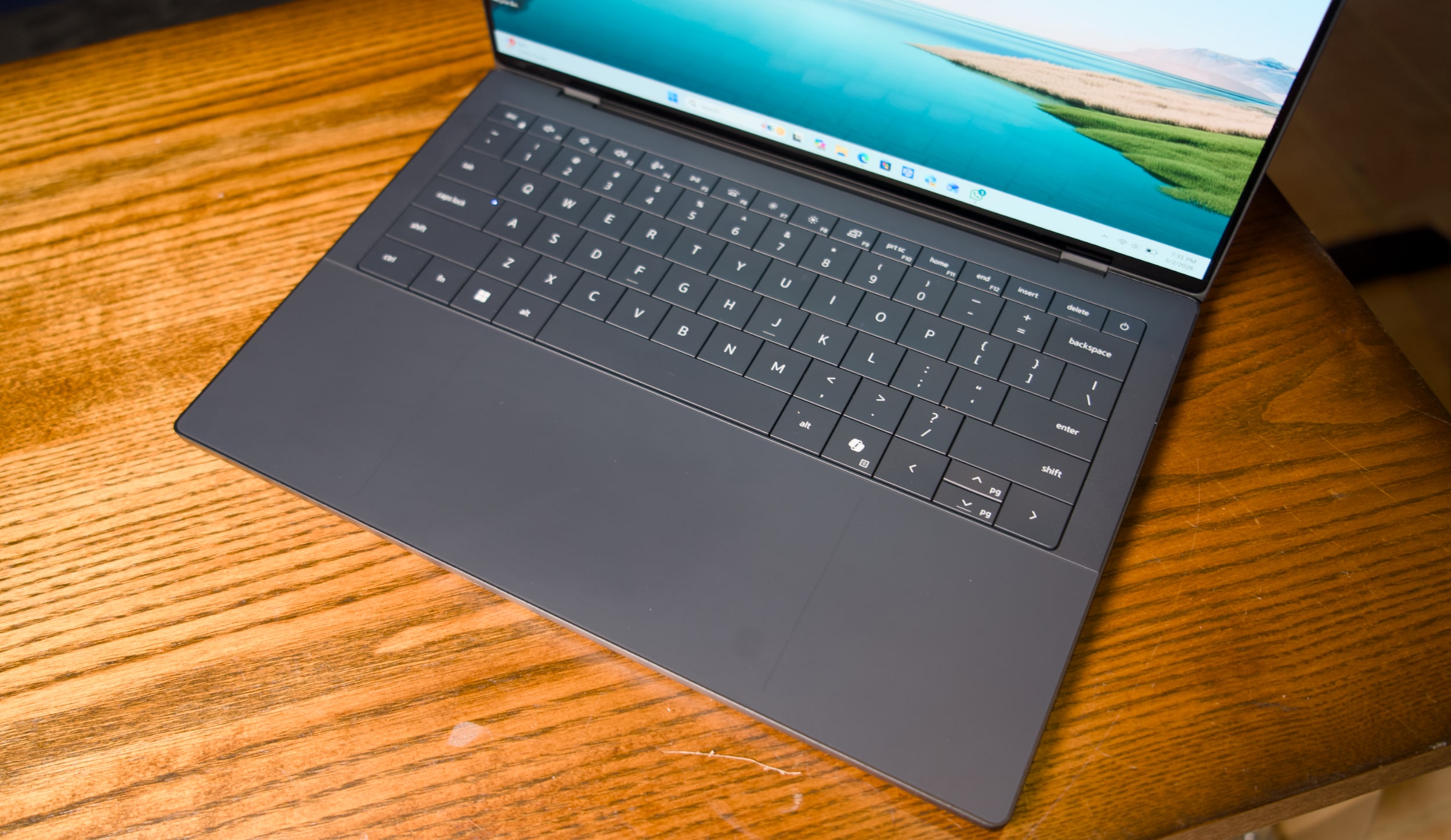
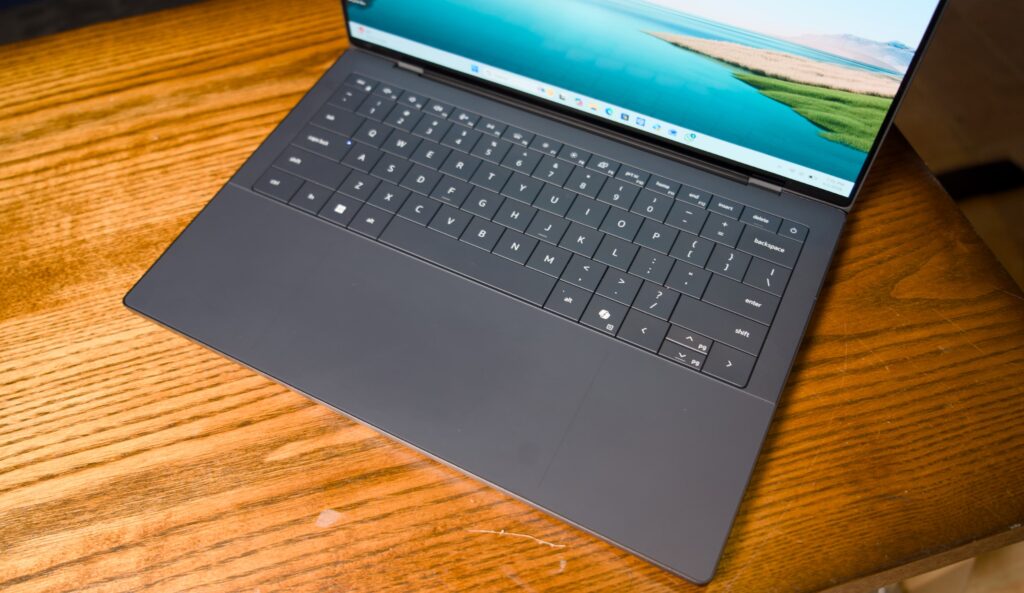
There is so much to love about Dell's new XPS 14, it's hard for me to discuss it without sounding like a total fanboy. Its new design makes it incredibly thin and light. And Intel's Panther Lake chips give it a ton of power, even when it comes to games. After reviving the XPS brand from last year's ignominious rebranding, it's as if Dell was laser-focused on fixing all the issues we've had with the XPS 14 so far.
Unfortunately, a shallow, unresponsive and hilariously error-prone keyboard kept me from truly loving the XPS 14. Simply put, it has trouble recognizing keys if you press them too quickly in succession. And for fast and demanding typists like myself, that leads to countless errors that disrupt your flow. In the last sentence alone, I counted ten times where I had to go back and make sure commas appeared before a space, or tweak simple spelling errors. What good is a fast, light and beautiful machine if I can't type a sentence in peace?
It's not unusual for laptop keyboards to require a bit of user training. But my issues with the XPS 14 aren't from a lack of practice — it simply doesn't recognize key presses as quickly as every other laptop I've tested. As you can see in the video below, quick key presses are almost always recognized in reverse, or sometimes aren't recognized at all. Those issues mostly go away if you type more slowly and deliberately, but that seems like a ridiculous compromise for a premium machine in 2026.
Dell engineers are currently testing one of the two review samples I received, both of which exhibited the exact same keyboard issue. Other reviewers have also noted that they need to type more slowly for the keyboard to work best. Gizmodo's Kyle Barr seems to be just as frustrated with the keyboard as I am, but he thinks it's due to Dell's seamless key design, which doesn't have any spaces between keys. My brother, who is an IT professional, also noticed the input issues when he typed on the XPS 14.
I'm not crazy, I swear!
According to Dell, its engineers believe a firmware fix could solve my issues, but it's unclear when that will actually arrive. Given that these laptops have been out in the wild for weeks, I decided to review the XPS 14 as is. TL;DR, it's the prettiest machine I've ever used that I hate to type on.
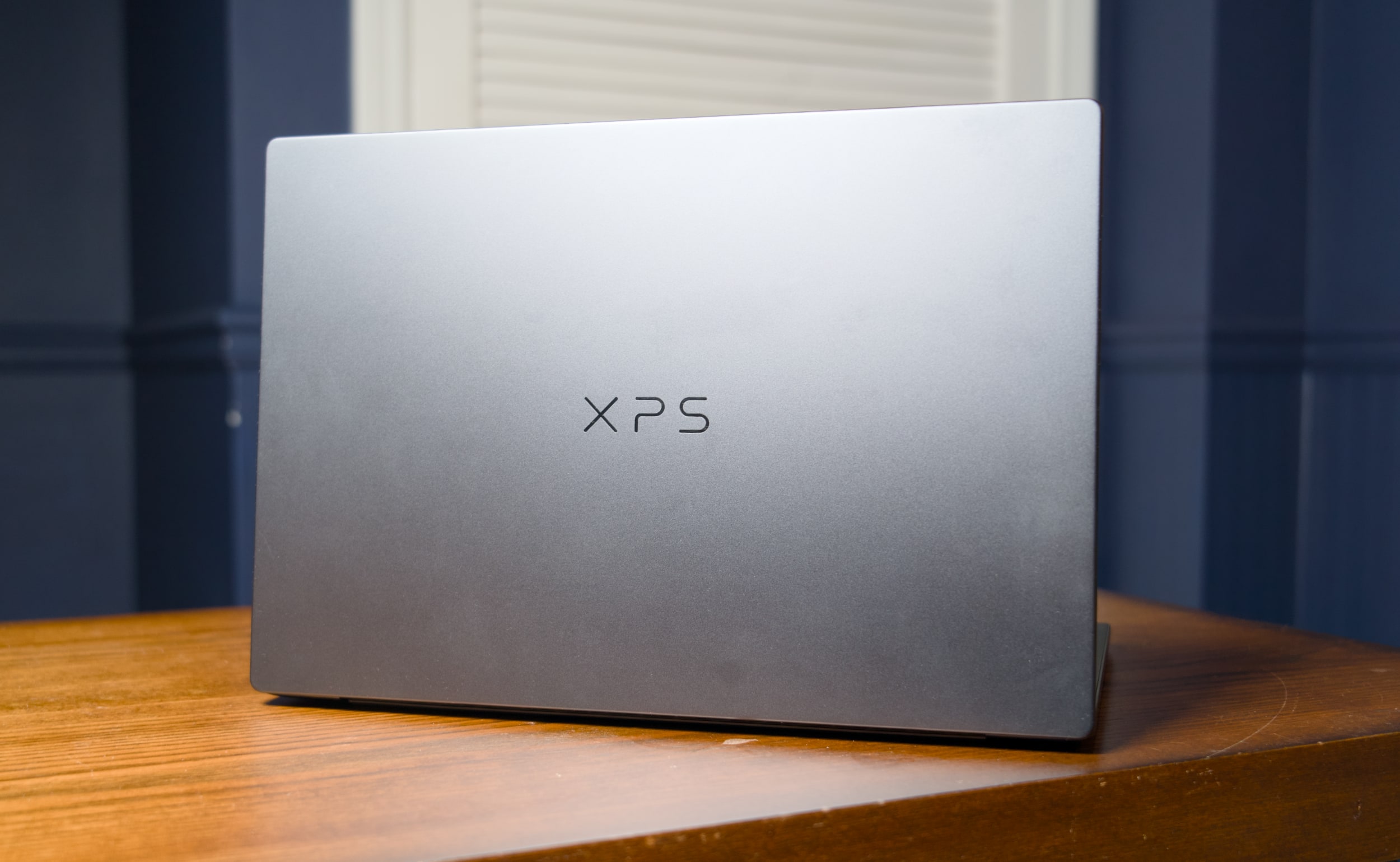
Seriously, this thing is gorgeous. Dell's designers outdid themselves with the machine's smooth metal case, which is more MacBook-like than its boxy predecessors. It's astonishing this system weighs just three pounds, putting it right between the 3.4-pound 14-inch MacBook Pro and the 2.7-pound 13.6-inch MacBook Air. It's also just a third of a pound heavier than the MacBook Neo, Apple's attempt at an underpowered entry-level laptop.
I'm also glad to see that Dell has heard my complaints about how over-designed the last XPS line was. For example, the company has stuck with its "invisible" trackpad, which sits flush with the laptop's wrist rest. But now there are two faint lines that designate where, exactly, the trackpad begins and ends. It's a solution reminiscent of Apple's MacBooks, which all feature large glass trackpads separated by a light border from their metal cases. Thanks to these two small lines, which don't detract from XPS 14's minimalist aesthetic, I feel more confident swiping around.
Dell also reversed course on the wonky capacitive function row from the previous models — which again, looked cool, but had some serious usability issues. It was tough to touch type with them, since they didn't feel as tactile as normal keys. And most crucially, the capacitive function row completely disappeared in direct sunlight. God forbid you were outside and wanted to change the volume level! This XPS 14 brings back a normal keyed function row, which is easier to touch type on and actually works in direct sunlight. (I sometimes wonder if Dell's designers ever went outside with the last XPS 14.)
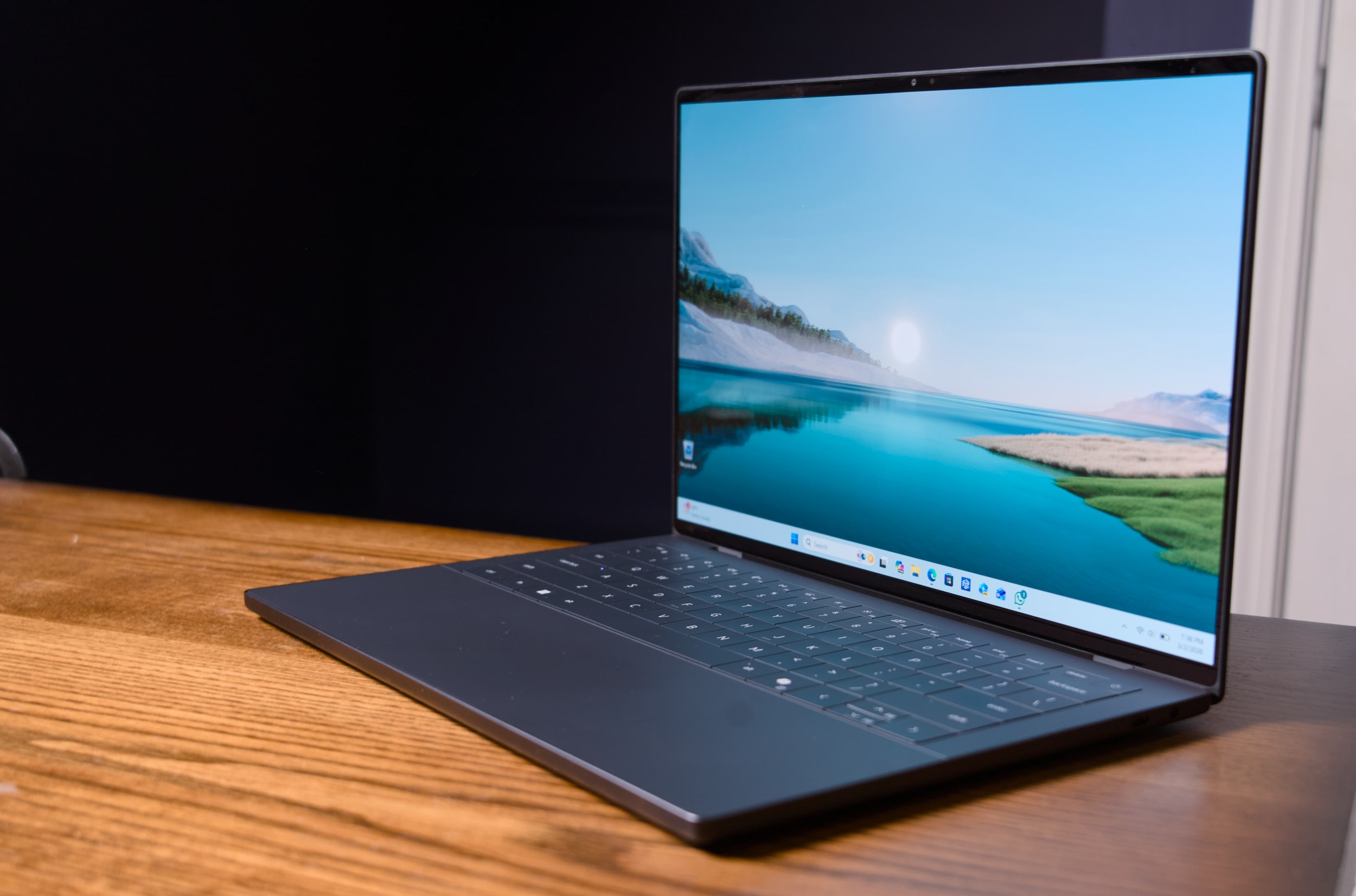
Our review model's 2.8K 14-inch OLED touchscreen looked spectacular, with bold colors and wonderfully deep black levels. But that's pretty much what I've come to expect from OLED by this point. I can't get enough of the extra eye candy OLED adds to photos and videos, and it makes a huge difference with games as well. But take note that OLED is only available for the priciest XPS 14, all other models get a standard non-touch 2K LCD.
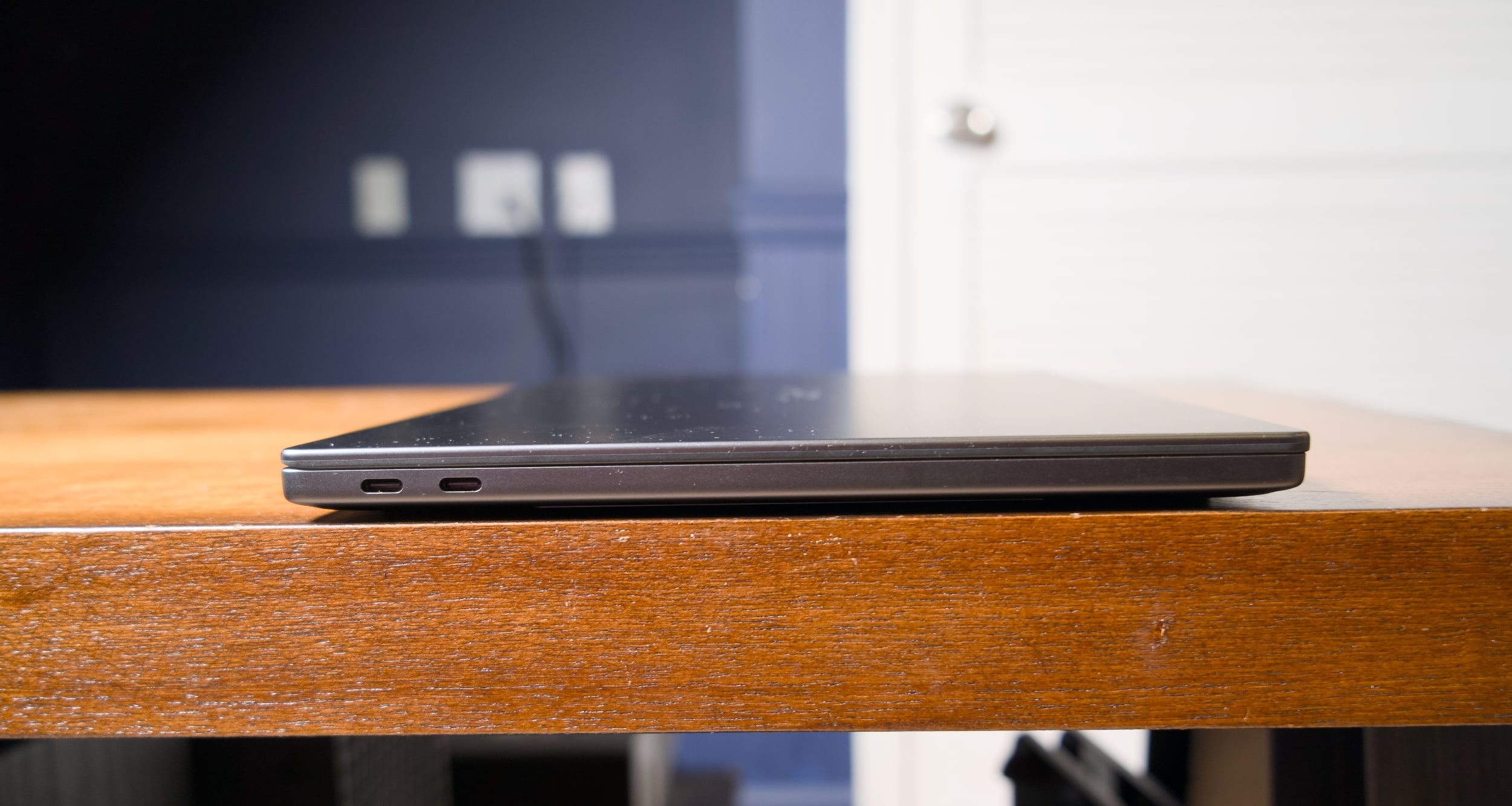
When it comes to connectivity, three USB-C ports and a headphone jack are all you get with the new XPS 14. The microSD card slot from the previous model is gone, and there's also no HDMI or USB Type A connections like you'd find on similar systems from ASUS and Acer. Apple's 14-inch MacBook Pro, notably, features three USB-C ports, a full-sized HDMI slot, a large SD card reader and a headphone jack.
Beyond Dell's redesign, the main star of the XPS 14 is Intel's new Panther Lake Core Ultra X7 358H chip, which offers some serious graphics upgrades over the last generation. Our review unit, which featured 32GB of RAM and Intel's built-in Arc B390 GPU, was able to reach 130fps in Arc Raiders while playing in 1080p with medium graphics settings, as well as XeSS upscaling and frame generation. I was able to play through a few rounds with no lag — my only distraction was the lingering realization I was playing so smoothly on an ultraportable's integrated graphics.
I certainly wouldn't recommend the XPS 14 for heavy gamers. But if you're forced to choose a new non-gaming system for work or school, it's certainly nice that it can play some modern titles well. I also saw 63fps while playing Cyberpunk 2077 in 1080p with medium graphics settings and XeSS tech active. Not bad for one of the most demanding PC games in recent memory!
|
Computer |
PCMark 10 |
Geekbench 6 |
Geekbench 6 GPU |
Cinebench 2024 |
|---|---|---|---|---|
|
Dell XPS 14 (Intel Core Ultra X7 358H) |
9,651 |
2,890/16,745 |
56,378 |
125/685 |
|
MSI Prestige 14 Flip AI+ (Intel Core Ultra X7 358H) |
10,169 |
2,864/16,633 |
56,425 |
117/719 |
|
Apple MacBook Pro 14-inch (M5, 2025) |
N/A |
4,310/18,003 |
48,840 |
197/1,034 |
|
Dell 16 Premium (Core Ultra 7 255H, NVIDIA RTX 5070) |
7,780 |
2,711/15,919 |
109,443 |
127/1,104 |
Benchmarks also point to plenty of power under the hood: The XPS 14 scored similarly to the MSI Prestige 14 AI+, which also has the Ultra X7 358H chip, in PCMark 10 and Geekbench 6. I was also surprised to see that its single-core Geekbench 6 score was higher than ASUS's ProArt PX13 GoPro Edition, a beastly machine with 128GB of RAM and a powerful AMD Ryzen AI Max+ 395 chip. The XPS 14 also scored 3,000 points higher than the Acer Predator Triton 14 AI gaming laptop (powered by a last-gen Core Ultra 9 288V chip) in Geekbench's multi-threaded CPU test.
Clearly, this was a growth year for Intel's hardware. Just keep in mind that all of our figures come from Dell's highest-end XPS 14 configuration, which currently starts at $2,250 with 64GB of RAM on the company's site. The lowest-end configuration, which starts at $1,450, comes with an Intel Core Ultra 7 355 chip, 16GB of RAM and 512GB of storage. When I briefly tested that system (it had to be sent back to Dell for that keyboard issue), it scored 2,000 points lower than the Ultra X7 model in PCMark 10. I didn't get to game on the entry-level XPS 14, but I wouldn't expect much, since Intel's beefy Arc graphics are reserved for its pricier X7 and X9 CPUs.
I was also surprised to see that the XPS 14 lasted just 10 hours and 21 minutes in PCMark 10’s Modern office battery test. The MSI Prestige 14 went for a whopping 22 hours and 15 minutes — that’s far more in line with Intel’s efficiency claims for Panther Lake systems. I tested both the XPS 14 and MSI Prestige 14 in Window’s “balanced” battery profile, so you may be able to eke out more life with more battery saving features turned on.
If I were to judge the XPS 14 based purely on its specs and design alone, it would be my favorite Windows laptop available today. But I swear, I can't live with its keyboard issues. I had to seriously slow down my typing just to get this review written, and even then I still had to back up and make more corrections than usual. Dell is so close to making a PC that’s a true MacBook Pro competitor, it's a shame a simple keyboard issue holds the XPS 14 back from true greatness.
This article originally appeared on Engadget at https://www.engadget.com/computing/laptops/dell-xps-14-2026-review-a-beautiful-laptop-that-excels-at-almost-everything-except-typing-130000656.html?src=rss
The Morning After: Apple takes on cheap Windows laptops and Chromebooks with the $599 MacBook Neo
6 Mar 2026, 12:15 pm by Mat Smith
Right off the back of the iPhone 17e, new iPads and MacBook Airs, Apple also announced a keenly priced new laptop. The MacBook Neo is a multi-colored low-cost Mac ($599), running on an iPhone chipset with most but not all of the hardware features you find on the MacBook Air and Pro. All models of the MacBook Neo ship with an extremely scant 8GB of RAM, which might be the main productivity bottleneck for demanding tasks.
The Neo has a 13-inch Retina display, a 1080p webcam, two USB-C ports, a headphone jack and optional Touch ID, if you're willing to pay a little more. A lot has been said about whether this is Apple marching to the beat of its own drum again, in a year of RAM shortages and AI obsessions. This is a direct attack on cheap Windows laptops and underperforming Chromebooks. Tempted? Check out our initial impressions from Apple's event earlier this week, right here. Oh, and for everything Apple announced – we've pulled all the news together here.
– Mat Smith
The other big stories this week
-
Sorry, first-party PlayStation games aren't coming to PC anymore
-
Google Pixel 10a review: Small changes, but still great value
Nothing's Phone 4a Pro has a premium unibody design
Design-wise, it seems a little safer than the company's usual.
There's no flagship Nothing Phone 4 this year, but the company has put a lot of effort into making its A-series almost flagship, including a notable design pivot with the Phone 4a Pro. The transparent back is now aluminum, and the trademark Nothing aesthetic has been boxed into the camera unit. It looks more grown-up, perhaps, but a little less fun? That said, the egregious camera bump on the Nothing 3a Pro last year is no more. Both 4a phones are sleek slabs of smartphones. The company has also substantially upgraded the devices, with better cameras, more batteryand improved screens. Only the 4a Pro will be coming to the US later this month.
Samsung Galaxy S26 Ultra review
The stealth upgrade.
While MWC 2026 offered us plenty of Chinese smartphones ready to wow us, established player Samsung managed to surprise us with its S26 Ultra the week before. Sure, it doesn't have a ton of major improvements, but it brings subtle upgrades across the board, along with a standout new display for anyone who cares about privacy.
The Privacy Display is the standout new feature – one we've never seen before on a smartphone. When you turn the Privacy Display on and view the phone from less than head-on, everything fades to black, like those privacy-sticker screen protectors, but at the hardware level.
The S26 ultra can even selectively activate Privacy Display under specific situations, turning on when you get notifications or open certain apps (like for banking or authenticators). The phone can also enable the feature when you need to enter a PIN, pattern, or password, though this is only for system-level prompts, such as your lock screen.
Netflix just bought an AI startup founded by Ben Affleck
The company promises to keep "filmmakers at the center of the process."
What could go wrong?
This article originally appeared on Engadget at https://www.engadget.com/general/the-morning-after-engadget-newsletter-121523538.html?src=rss
UK government delays AI copyright rules amid artist outcry
6 Mar 2026, 11:39 am by Steve Dent
The UK government is working on a controversial data bill that would allow AI companies like Google and OpenAI to train their models on copyrighted materials without consent. However, following a two month consultation, it looks like passage of the law will be delayed. "Copyright is going to be kicked down the road," a person with knowledge of the matter told The Financial Times.
Responses by stakeholders during the consultation period weren't favorable to any of the government's proposed ideas for use of copyrighted materials, the FT's sources said. There's no expectation now that an AI bill will be part of the King's Speech set for May this year.
As a result, Ministers have decided to go back to the drawing board and spend more time exploring other options. The House of Lords Communications and Digital Committee called on the government to develop a licensing-first regime "underpinned by robust transparency that safeguards creators' livelihoods while supporting sustainable AI growth."
The UK parliament's preferred position on the bill (also argued by tech giants like Google) has been that copyright holders need to formally opt-out if they don't want their materials used to train AI models. However, publishers, filmmakers, musicians and others have said that this would be impractical and an existential threat to the UK's creative industries.
The House of Lords took the side of artists and introduced an amendment that would require tech companies to disclose which copyright-protected works were used to train AI models. That addition, however, was blocked by the UK's House of Commons in May last year.
The UK's majority Labour government — already under fire for its handling of the economy — has taken hits from publishers, musicians, authors and other creative groups over the proposed law. Elton John called the government "absolute losers" while Paul McCartney said that AI has its uses but "it shouldn't rip creative people off." McCartney and others artists were part of a "silent album" meant to show the impact of IP theft by AI.
Baroness Beeban Kidron from the House of Lords has also ripped the government over the AI bill. "Creators do not deny the creative and economic value of AI, but we do deny the assertion that we should have to build AI for free with our work, and then rent it back from those who stole it," she said last year. "It's astonishing that a Labour government would abandon the labor force of an entire section."
This article originally appeared on Engadget at https://www.engadget.com/ai/uk-government-delays-ai-copyright-rules-amid-artist-outcry-113937154.html?src=rss
Anthropic says it will challenge Defense Department's supply chain risk designation in court
6 Mar 2026, 5:44 am by Mariella Moon
In a new blog post, Anthropic CEO Dario Amodei has admitted that it received a letter from the Defense Department, officially labeling it a supply chain risk. He said he doesn’t “believe this action is legally sound,” and that his company sees “no choice” but to challenge it in court. Hours before Amodei published the post, the Pentagon announced that it notified the company that its “products are deemed a supply chain risk, effective immediately.”
If you’ll recall, the Defense Department (called the Department of War under the current administration) threatened to give the company the designation typically reserved for firms from adversaries like China if it didn’t agree to remove its safeguards over mass surveillance and autonomous weapons. President Trump then ordered federal agencies to stop using Anthropic’s tech.
Amodei explained that the designation has a narrow scope, because it only exists to protect the government. That is why the general public, and even Defense Department contractors, can still use Anthropic’s Claude chatbot and its AI technologies. Microsoft told CNBC that it will continue using Claude after its lawyers had concluded that it can keep on working with Anthropic on non-defense related projects.
The CEO has also admitted that his company had “productive conversations” with the department over the past few days. He said that they were looking at ways to serve the Pentagon that adheres to its two exceptions, namely that its technology not be used for mass surveillance and the development of fully autonomous weapons, and at ways to “ensure a smooth transition if that is not possible.” That confirms reports that Anthropic is back in talks with the agency in an effort to reach a new deal. In addition, he apologized for a leaked internal memo, wherein he reportedly said that OpenAI’s messaging about its own deal with the department is “just straight up lies.”
This article originally appeared on Engadget at https://www.engadget.com/ai/anthropic-says-it-will-challenge-defense-departments-supply-chain-risk-designation-in-court-054459618.html?src=rss
X's Exclusive Threads feature lets creators paywall the end of tweet threads
6 Mar 2026, 12:02 am by Anna Washenko
Today, X announced some updates to its creator subscriptions platform. The leading change gives participating accounts the option to make part of tweet threads only visible to subscribers. This new Creator Subscriptions feature is called Exclusive Threads, an ironic name choice given X's main text-based social media posting competitor is called Threads.
Creator Subscriptions 2.0 is here: powerful new tools to grow your subscribers and earn more.
Introducing Exclusive Threads — lock any post in a thread for subscribers only. Tease in the parent, monetize the rest. Subscribe buttons are now embedded directly in the conversation. pic.twitter.com/j8Bg3bMDiW
— Creators (@XCreators) March 5, 2026
The new tool allows a creator to tease paywalled content, rather than keeping all of the material behind a subscribers-only gate. A gif shared both by the X Creators account and by the company's head of product, Nikita Bier, show how it will look in practice. Buttons to sign up as a subscriber will be embedded into the post chain, with the hope that the need to see the rest of the thread will be a big enough draw for readers to pay up. X has been making a push to draw content creators, offering other recent features like a 'paid partnership' label for sponsored posts.
This article originally appeared on Engadget at https://www.engadget.com/social-media/xs-exclusive-threads-feature-lets-creators-paywall-the-end-of-tweet-threads-000246204.html?src=rss
End of today’s Engadget roundup.