This digest compiles the latest from Engadget.
Today’s Engadget Roundup
Hyper Light Drifter studio workers form union after rounds of layoffs
9 Mar 2026, 4:58 pm by Andre Revilla
Workers at Heart Machine, the independent studio behind Hyper Light Drifter and Solar Ash, have formed a union with Communications Workers of America (CWA) Local 9003. The wall-to-wall unit covers all 13 frontline employees at the studio, which voluntarily recognized the union in February after a supermajority of eligible workers voted for the measure.
The organizing effort follows a rough stretch at Heart Machine, after the studio laid off employees in November 2024, then announced in October 2025 that it would end development on its early access title Hyper Light Breaker and cut further staff.
"I decided to get involved in organizing my studio because I've seen so many peers in the industry stand up to protect the craft we all care so deeply about. Watching that momentum grow made me realize that if we love this work, we have to protect it, especially now," said Steph Aligbe, a gameplay tools engineer at the studio.
Heart Machine joining the CWA extends the union's gaming footprint even further. The union counts thousands of employees at Microsoft subsidiaries among its members, as well as staff at EA, Id Software and others. CWA also runs the United Videogame Workers, a direct-join union that launched in 2025, allowing individual game workers in the US and Canada to sign up on their own without elections or employer consent. Large gaming studios like Ubisoft have been undergoing a seemingly endless string of layoffs, and workers are increasingly demanding to have their voices heard.
This article originally appeared on Engadget at https://www.engadget.com/gaming/hyper-light-drifter-studio-workers-form-union-after-rounds-of-layoffs-165828565.html?src=rss
Anthropic sues US government over supply chain risk designation
9 Mar 2026, 4:01 pm by Nathan Ingraham
Anthropic has filed a lawsuit to prevent the Pentagon from adding the company it a national security blocklist. This comes days after the Department of Defense sent a letter to Anthropic confirming the company was labeled a supply chain risk; at the time CEO Dario Amodei had all but guaranteed Anthropic would fight back with legal action.
The lawsuit claims the designation is unlawful and violated free speech and due process rights. “These actions are unprecedented and unlawful. The Constitution does not allow the government to wield its enormous power to punish a company for its protected speech," Anthropic said in a statement published by Reuters.
Engadget received the following statement from an Anthropic spokesperson:
“Seeking judicial review does not change our longstanding commitment to harnessing AI to protect our national security, but this is a necessary step to protect our business, our customers, and our partners. We will continue to pursue every path toward resolution, including dialogue with the government.”
The lawsuit characterizes the government’s actions as an “unprecedented and unlawful […] campaign of retaliation.” It goes on to say that “the Constitution does not allow the government to wield its enormous power to punish a company for its protected speech. No federal statute authorizes the actions taken here."
Today’s legal action comes after several weeks of back-and-forth between the AI company and the government. In late February, news broke that the Department of Defense and Defense Secretary Pete Hegseth were pressuring Anthropic to remove certain safeguards from its AI systems, but Amodei made it clear the company would refuse to allow its model to be used for mass surveillance or development of autonomous weapons.
On the February 27 deadline, Amodei refused to budge, leading Hegseth to threaten the company with the supply chain risk designation; he also said the US government would cancel its $200 million contract with the company. The same day, President Trump ordered all federal agencies to cease using Anthropic as well. Despite all this, according to the lawsuit, Anthropic had agreed to “collaborate with the Department on an orderly transition to another AI provider willing to meet its demands.”
Anthropic rival OpenAI stepped into this chaos and quickly made a deal with the Department of Defense. At the time, OpenAI CEO Sam Altman said that two of OpenAI’s most important safety principles are “prohibitions on domestic mass surveillance and human responsibility for the use of force, including for autonomous weapon systems” — the same issues that got Anthropic in hot water. OpenAI then doubled down on the surveillance issue, writing into its contract that “the AI system shall not be intentionally used for domestic surveillance of U.S. persons and nationals.”
Depsite this, OpenAI’s head of robotics hardware resigned from the company this weekend in response to the Defense Department deal. Caitlin Kalinowski wrote on X that “surveillance of Americans without judicial oversight and lethal autonomy without human authorization are lines that deserved more deliberation than they got.”
This article originally appeared on Engadget at https://www.engadget.com/ai/anthropic-sues-us-government-over-supply-chain-risk-designation-152838128.html?src=rss
Live Nation settlement avoids breakup with Ticketmaster
9 Mar 2026, 3:50 pm by Jackson Chen
To keep Ticketmaster, Live Nation is going to have to make some major changes. As first reported by Politico, Live Nation reached a settlement with the Department of Justice in its antitrust case that accused the live entertainment giant of monopolistic practices. Live Nation will reportedly pay at least $200 million in damages to states that were part of the lawsuit filed in May 2024, but avoid selling off Ticketmaster.
Live Nation will also be required to make a few changes to its business practices. According to NBC News, Ticketmaster, a subsidiary of Live Nation, will be required to create a “standalone ticketing system” that allows third-party competitors like SeatGeek and Eventbrite to sell tickets on.
The settlement aims to loosen some of Live Nation’s control over venues as well. According to NBC News, the company will have to divest up to 13 amphitheaters and be prohibited from retaliating against venues that choose another ticket seller over Ticketmaster.
The settlement comes less than a week after the case went to trial. While the matter may be concluded with the Justice Department, many of the states’ attorneys general who were part of the lawsuit will be continuing their legal action separately.
“The settlement recently announced with the U.S. Department of Justice fails to address the monopoly at the center of this case and would benefit Live Nation at the expense of consumers,” New York State Attorney General Letitia James wrote in a press release. “We will continue our lawsuit to protect consumers and restore fair competition to the live entertainment industry.” 26 other attorneys general signed onto continuing the lawsuit with James.
This article originally appeared on Engadget at https://www.engadget.com/entertainment/music/live-nation-settlement-avoids-breakup-with-ticketmaster-155031214.html?src=rss
Amazon’s Zoox will test its robotaxis in Dallas and Phoenix
9 Mar 2026, 2:38 pm by Andre Revilla
Amazon’s self-driving subsidiary Zoox announced on Monday that it will begin testing its autonomous vehicles in Dallas and Phoenix. The company will initially deploy retrofitted Toyota Highlander SUVs with human safety drivers to map the new cities before eventually rolling out its purpose-built robotaxis.
Zoox says these two cities will offer a chance to test its sensors and battery performance in unique conditions its cars haven't yet encountered in existing markets. Phoenix experiences extreme heat, dust and high-speed roads, while Dallas has more sprawling roads and varied weather compared to other cities where Zoox operates. The company is also opening new depots in both cities and a command hub in Scottsdale, Arizona which will handle fleet operations, remote guidance and rider support.
The move brings Zoox’s footprint (between actual launches and test markets) to 10 US cities. It's other areas of operation are Las Vegas, San Francisco, Seattle, Austin, Miami, Los Angeles, Atlanta and Washington, DC. Amazon acquired the self-driving startup for $1.3 billion in 2020 and has been steadily expanding its reach, with the company saying its fleet has driven over one million autonomous miles and served more than 300,000 riders to date.
Zoox’s expansion comes as competition in the robotaxi market intensifies. Alphabet-owned Waymo has continued its rapid spread across the US, while Tesla's Robotaxis launched last year, though those are currently limited to parts of Austin, Texas. US regulators are set to hold a self-driving safety forum on Tuesday, with the CEOs of Waymo, Zoox and Aurora all expected to attend.
The regulatory framework has dragged behind the rapid rollout of these vehicles as companies test and iterate the technology on public streets. Just in the last year, autonomous vehicles have struck a child near a school, blocked emergency services responding to a mass shooting and, at least in the case of Teslas, appear to be crashing at higher rates than human drivers.
This article originally appeared on Engadget at https://www.engadget.com/big-tech/amazons-zoox-will-test-its-robotaxis-in-dallas-and-phoenix-143828899.html?src=rss
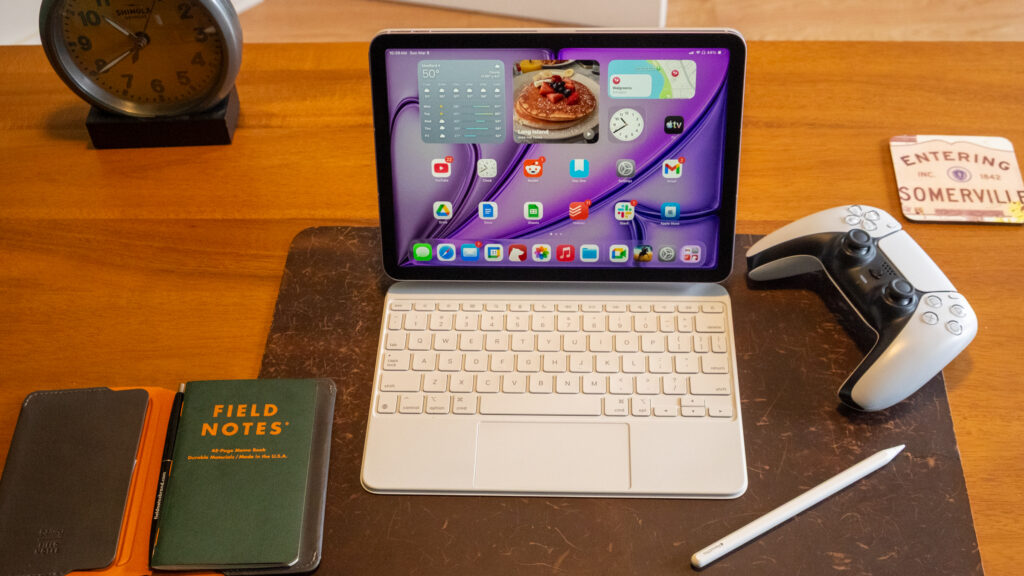
iPad Air M4 review: Still Apple's best overall tablet, with a few caveats
9 Mar 2026, 1:10 pm by Nathan Ingraham

Perhaps one of the most surprising things about the Apple Silicon era is how quickly Apple now updates its products. Take the iPad Air, for example. It’s been less than two years since the company released the M2-powered iPad Air in 11- and 13-inch sizes. We’re already on our third iPad Air iteration, one with the M4 inside. That’s the same chip that was inside the iPad Pro that was unveiled alongside that M2-powered Air in 2024. (The Pro was updated with an M5 last fall.)
Just as I said a year ago when Apple unveiled the iPad Air M3, this latest model doesn’t fundamentally change the formula. The Air is a notable step up over the basic iPad, with a more powerful processor, more RAM, a better display and superior accessories like the Apple Pencil Pro and Magic Keyboard. The Air line is also the only way to get a 13-inch iPad without spending $1,300 or more.
But without more substantial updates this year, I find myself less enthused by it than I was when the 13-inch model M2 model arrived in 2024. That’s primarily because Apple has stuck with the same display for another year. As best I can tell, the 11-inch iPad Air that I’m reviewing has the same screen in 2026 as it did when the redesigned version with no Home button was released in late 2020. Other features that feel like they should be table stakes at this point, like Face ID, are also restricted to iPads that cost at least $1,000. For better or worse, the Air is a very mature product with few surprises. But on the other hand, if you have an iPad older than the 2024 refresh, the iPad Air M4 will provide a solid performance improvement.
The M4 still has power to spare
Before we start answering existential questions, though, let’s quickly recap what’s new with the iPad Air. It still starts at $599 for an 11-inch version with 128GB of storage; the 13-inch models starts at $799. The one I tested came in an extremely light purple color with 1TB of storage and 5G connectivity and costs $1,249. Seriously Apple, don’t be afraid of putting a little more saturation in these colors next time! As mentioned, the iPad Air now has a more powerful M4 chip as well as 50 percent more system memory (12GB, up from 8GB on last year’s model). If you’re coming from an iPad older than the 2024 model, you’ll likely notice solid performance gains, and the M4 is so performant that I imagine this iPad will be more than powerful enough for years to come.

I ran some Geekbench 6 benchmarks to quantify the difference between the iPad Air M4 and last year’s M3 model — unsurprisingly, the biggest gains came in the GPU. Single-core and multi-core scores were 23 percent and 12 percent higher, respectively. But the GPU score was a whopping 39 percent higher with the M4 compared to the M3. Don’t get me wrong, the single-core and multi-core performance improvements the M4 offers are impressive. But tasks that hit the GPU hard, like gaming and AI (of course) should see notable improvements.
In practice, the iPad Air M4 feels quite similar to the M3 model. That’s due in large part to my relatively modest workflow. I jump between numerous apps all day, but none of them are exactly taxing to a chip like the M4. My day mostly consists of Slack, Google Docs, a ton of Safari tabs, utilities like Messages and Todoist, constant streaming music and other lightweight apps like Gmail and Trello. But if you’re coming from an M1 iPad Air, the M4 should feel significantly faster for almost everything you do.

Unsurprisingly, the iPad Air flies through games from the App Store as well. I tried my usual more casual fare like Balatro, Mini Motorways and Powerwash Simulator from Apple Arcade and those were all quite smooth. But I wanted to push things a bit more, so I downloaded Resident Evil 2 as well as a pre-release build of Control Ultimate Edition which is slated to hit iOS in the coming months. Both games looked and played great, with highly detailed environments and pretty quick action that didn’t slow the iPad Air down in the least. I could tell the graphics aren’t as sharp as on my PS5, but both games were impressive considering they’re running on extremely portable hardware with no fans.
I also tried some generative AI apps, even though that’s not really something I’m interested in. For apps like Apple’s own Image Playground, the M4 is extremely speedy. It ripped through my goofy queries (an orange kitten dressed up like an astronaut) in a matter of seconds. When I compared it to the iPad Pro M5, the Air barely lagged behind it. However, the M4 couldn’t quite keep up with more advanced image generation tools. The Draw Things iPad app lets you download and run a host of local models to create images, and the M4 definitely couldn’t keep up with the M5. The iPad Pro M5 was typically more than twice as fast as the Air. We already knew the M5 was an AI beast, so I’m not knocking the Air for its performance at all — it’s just worth knowing that if you really want to push the envelope, you’ll probably be better off with an iPad Pro.

The other main change is Apple’s in-house networking chips are on board here. The N1 covers Wi-Fi 7, Bluetooth 6 and Thread, while the C1X handles cellular connectivity if you buy a 5G-capable model. Again, this doesn’t change the experience of using the iPad Air in any major way, but having the newest Wi-Fi and Bluetooth protocols on board is good for future usage, regardless of who built the chip. In my testing, the C1X on Verizon’s 5G network was extremely fast around the suburbs of Boston and didn’t seem any slower (or any faster) than other devices I have running on the same carrier. That’s fine, as other Apple devices I’ve tried with the C1X (like the iPad Pro) are solid and reliable, which is the most important thing.
A very familiar experience
Other than these new chips, the iPad Air is identical to the last two models I’ve reviewed. (This year, Apple sent an 11-inch Air M4 to review, while the last two were the newer 13-inch. But other than the larger screen, those tablets are the same.) Same screen, same cameras, same 10-hour estimated battery life, same USB-C 3 port. Naturally, it supports the $129 Pencil Pro that Apple introduced alongside it in 2024, and it works with the revamped Magic Keyboard Apple released last year. That keyboard remains quite expensive at $269 ($319 for the 13-inch model), but for me it’s a must-buy accessory if I want to use my iPad for any “real work.” The Pencil, on the other hand, is not something I personally need, but it’s an excellent tool for anyone interested in visual art or written notes. There are a plethora of excellent apps in both categories, and the iPad app ecosystem at large remains unmatched.
Battery life also hits what I’d expect out of an iPad. I don’t get 10 hours the way that I test it — I used the iPad Air as my main machine, all day for several days. In that scenario, I got between seven and eight hours of battery life. That’s more than enough that I’d take it with me for half a day or more and not worry about charging, but not so long that I’d be totally comfortable without a charger for much longer. In a more casual, mixed-use setup, most iPads get closer to the 10-hour mark and I expect that’ll be the case here as well. Of course, if you’re playing games, editing videos or doing heavier generative AI tasks, expect battery life to drop noticeably.
I’d be remiss if I didn’t quickly mention iPadOS 26, which arrived last fall. It runs on iPad Air models all the way back to 2019, so it’s not a reason alone to upgrade. But, it improved the multitasking experience on iPads to a significant degree. It still feels native to the iPad, but there are so many Mac-like flourishes that it’s a lot easier for me to use as my main computer now. That said, it really shines on larger-screen iPads; the 11-inch model still feels best to me when running an app fullscreen or two apps side-by-side feels most comfortable to me.

My major lament for the iPad Air remains the screen. Apple’s LCD Retina display still looks great in a vacuum — it’s a lovely standard screen, with bright colors and sharp text. But Apple’s continued insistence on gatekeeping a screen with a higher refresh rate for iPads that cost $1000 or more gets more frustrating every year. It bothers me less on a product like the MacBook Air. But with an iPad, you’re literally touching and interacting with that screen as the main interface. Having the fluidity of a 120Hz refresh rate simply makes everything feel more responsive to your touch.
The consolation is that even Apple’s standard displays still feel very smooth, so unless you’re directly comparing an iPad Air to an iPad Pro you likely won’t notice the difference. I mostly forgot about it in my time reviewing this device, only reminded of it when I went back to the iPad Pro.
I also wish that Apple would implement more advanced display tech. Last year, I imagined that the mini-LED display used in the iPad Pro in 2021 and 2022 would be a great step up for the Air. It wouldn’t be as good as the tremendous OLED screen in the iPad Pro, but it would still offer HDR and significantly increased brightness and contrast. Alas, we’re stuck with a plain old LCD again this year. Again, that’s mostly fine, but playing games like Control made me wish for more contrast, and movies do not have nearly the same visual pop on the Air as they do on the Pro.

Wrap-up
If it’s not obvious, I very much wish that Apple would bring some of its more advanced technology to the iPad Air. But at this point, I have to accept that the Air is what it is. In the same way that the MacBook Air hasn’t changed substantially since the M2 model arrived in 2022, the same goes for the iPad Air. Both products still have displays that haven’t been cutting edge for years, and that’s just the way it is.
Once I started comparing the iPad Air to its Mac counterpart, my negative feeling mostly subsided. I think the MacBook Air is a great laptop and wouldn’t hesitate to recommend it to many people. Sure, its screen isn’t cutting edge, but it’s good enough for its target audience. And the many positives that it has outweigh a few places where Apple cut corners. The same can be said for the iPad Air.
The iPad Air offers a lot of important upgrades over the basic $349 iPad, which is saddled with the A16 chip from 2022. The Air will be a better performer for much longer, and other niceties like a better screen and accessory support are worth considering. And it doesn’t threaten the iPad Pro, which costs $400 more; between its screen, improved performance, superior industrial design and numerous other small benefits, it’s pretty easy to see what you get for your money in all cases.
So while I wish Apple would push the envelope with the iPad Air and give me something that feels more like a Pro-lite, I understand why it hasn’t yet. The iPad Air isn’t an exciting gadget at this point, but I still think it’s the best iPad for most people.
This article originally appeared on Engadget at https://www.engadget.com/mobile/tablets/ipad-air-m4-review-still-apples-best-overall-tablet-with-a-few-caveats-130000409.html?src=rss
iPhone 17e review: The economical choice
9 Mar 2026, 1:00 pm by Cherlynn Low

By introducing the iPhone 17e just a year after the iPhone 16e, Apple is closing some gaps. Before, the company would only roll out a new entry-level iPhone every few years, with the iPhone 5c (2013), iPhone XR (2018) and iPhone SE (2016, 2020, 2022) all having two to four years between their releases. But Apple is getting into an annual groove now, and having renamed the device to integrate better with the rest of the iPhone lineup, Apple is making a clear statement: It cares about the midrange now.
With the current state of global economics, Apple’s focus on lower cost devices like the iPhone 17e and newly launched MacBook Neo is timely. Most people probably don’t make full use of the high-powered machines in their pockets and on their laps, and might be reconsidering whether they need to spend as much money on the Pros and the Airs of Apple’s product lineup. At $599, the iPhone 17e is about half the price of an iPhone 17 Pro or the iPhone Air. It’s $200 cheaper than the base iPhone 17, too.
Since I reviewed the iPhone 16e last year, I’ve been using it as a work phone, mostly for Slack, email and light editing in Docs. The way I see it, most people considering the iPhone 17e are likely in a similar situation — either thinking of getting a supplementary device or looking for a good enough phone for a child or other dependent. For this review, I’ve tried to cover most of those scenarios whether it be a person that would spend most of their phone time on social media and games like a teenager or someone that’s largely using it for administrative work purposes. I mostly want to answer this question: If you’re getting your first iPhone or buying one for someone else, should you get the iPhone 17e or the iPhone 17?
iPhone 17e vs iPhone 16e, for testing’s sake
It’s very clear from Apple’s website that it doesn’t want you comparing the iPhone 17e to the iPhone 16e. The company doesn’t allow you to do so in the comparison tool on the iPhone 17e product page, limiting you to the iPhone 11, iPhone 12 and the iPhone SE (second and third generations). Sure, I understand that no one is really thinking about getting an iPhone 17e after just buying the 16e last year. But for the purposes of this review, it makes sense for me to shout out what’s new from the previous generation. The most significant additions this year are the A19 chip, double the storage, improved Portrait photography and MagSafe with faster wireless charging. Oh, and a new pink color option, adding an ever so subtle splash of color to the previously monochromatic lineup.
The A19 chip is supposed to make AI processes faster, thanks to the neural accelerators in its GPU. In my testing so far, the difference has been negligible at best. Initially I was seeing the iPhone 17e perform slower than the 16e, but after a software update, the iPhone 17e caught up. In Apple Intelligence-powered tools like Cleanup, the iPhone 17e was a split second faster at identifying unwanted objects in photos and erasing them than the 16e. If you’ve just received your iPhone 17e and run into issues where image generation or cleanup is slow or stalling, give it a day or so for the software to stabilize.
Oddly, in some side-by-side Image Playground testing, the iPhone 17e and iPhone 16e were neck and neck. Sometimes, the iPhone 16e was faster. Occasionally, the iPhone 17e was ahead. I’ll continue to keep an eye on how both phones do here, as it could still be due to some early software issues, but for now the improvements from the A19’s GPU seem to be hit or miss.
Improved portraits on the iPhone 17e
Of all the improvements to the iPhone 17e, to me, one of the most important is in portraits. In my review of the iPhone 16e, I said that the majority of my grievances with the single camera setup was the fact that Apple ended up using an older version of Portrait mode.
That version was much more limited and didn’t allow for applying a background blur to pictures of non-human subjects. This time, Apple borrowed the algorithms it developed for the iPhone Air for the iPhone 17e’s rear and front cameras. This not only delivers a general improvement to portraits, with better segmentation and a more natural-looking bokeh effect, but also allows for depth information to be captured when applicable. For instance, when a person, cat or dog is detected, the iPhone 17e will automatically capture depth information so you can apply a blur after the picture is taken, even if you didn’t use Portrait mode initially.
Importantly, these “next-gen portraits” also allow you to edit the level of blur and change up the focal point of the picture after you’ve taken the shot. In some photos of my neighbor’s grumpy shih-poo, I was shocked that my colleagues actually preferred the samples I shared from the iPhone 16e over the ones from the iPhone 17e. But their critique was fair: the newer phone blurred out Oreo’s tail, keeping only his face in focus. I was able to address this by going into the editing tools and dragging the slider for aperture to bring more of the dog into focus. I also played around and tapped on Oreo’s tail to make it clear, and the iPhone 17e blurred up his face instead.

When using Portrait mode to photograph people, the iPhone 17e did indeed deliver more pleasant bokeh than its predecessor. In pictures of my friend Brenda Stolyar, with the “depth” or aperture set to f/4.5 across both devices, there was more softness in the brick wall behind her on the new phone. I was slightly confused since it seemed like the older iPhone actually delivered a sharper picture, until I realized it was actually just softer bokeh.
For those coming from older phones like the iPhone 11, 12 or SE, the addition of next-gen portraits should feel like a major step up. Even when compared to the iPhone 16e, the fact that I was now able to apply the effect on photos of food and other inanimate objects with no faces made me happier. It makes the camera more versatile, and feels like a noteworthy update that makes your photos feel more modern.
But that is definitely because I like pictures with the artificial depth of field effect. If you don’t care for bokeh and really only want a phone’s cameras to be good enough to snap pictures of menus or receipts, for instance, the 17e’s improvements here won’t mean much.
MagSafe and wireless charging

What might matter more, then, is this generation’s wireless charging speeds. While the iPhone 16e could only support up to 7.5W, the iPhone 17e goes up to 15W (with adapters of 20W or higher) and also works with MagSafe accessories. I can’t imagine anyone considering a new iPhone 17e already has magnetic cases or stands, but if you decide to invest in those accessories, you’ll find them convenient and satisfying.
I placed both models on my wireless charging stand — the 17e snapped on and started charging, while the 16e clattered helplessly off the stand. I placed it on the charging pad at the base instead and noted how much power each of them gained in 15 minutes. The improvement is clear: the iPhone 17e went up by 16 percent (30 percent to 46 percent), while the 16e only gained 3 percent (69 percent to just 72 percent).
Beyond the numbers, what this means is that when you’re in a pinch and trying to quickly top up your phone on, say, a wireless charger you found at a cafe, you won’t need to sit around as long with the iPhone 17e. For those of you that simply leave your phone on a stand overnight, this is less likely to meaningfully impact you.
There are a few other updates that I haven’t really tested in this review, like the improved durability with Ceramic Shield 2 on the iPhone 17e’s screen. The new display also has a treatment that is supposed to reduce glare, and considering the week of wonderfully gloomy weather we’ve had here in New York, this isn’t something I’ve truly had a chance to evaluate. Also, while I do appreciate the doubled storage, which is sure to please the media hoarders among us, I will say I’ve already been served warnings about my iCloud storage running out. It still feels like something else Apple might need to address, but for newcomers to the iOS world, the higher base storage is absolutely a positive.
Elsewhere, there are virtually no differences between the iPhone 17e and iPhone 16e. They have the same size displays with the same resolution, brightness, refresh rate, contrast ratio and color gamuts. Both are rated IP68 for dust and water resistance, and have similar battery lives (up to 26 hours of video playback, according to Apple). They also have the exact same dimensions of 5.78 x 2.82 x 0.31 inches, although the iPhone 17e does weigh a whole 2 grams (0.8 ounces) more than the 16e, which is almost definitely attributable to the addition of MagSafe. Unless you have weighing scales for hands, though, this difference is negligible.

Should you get the iPhone 17e or the iPhone 17?
Where you might find more meaningful distinctions is when comparing the iPhone 17e to the iPhone 17. For $200 more, you’ll get longer battery life and slightly better performance thanks to one more GPU core. The iPhone 17 also has a larger, sharper and brighter display that’s 6.3-inches, with higher refresh rates and a full-screen design incorporating the Dynamic Island. It also supports the Always On Display and has an 18MP front camera with the Center Stage feature that allows for easy switching between landscape and vertical orientations in your selfies without having to rotate your phone.
In fact, the camera upgrades alone on the iPhone 17 might be worth the money. On top of getting the additional ultrawide camera, you’ll also gain the dedicated camera control button on the right edge, the latest generation of Photographic Styles, support for macro photography, Cinematic mode and Dual Capture in videos as well as spatial and macro recording capabilities. It also comes with sensor-shift optical image stabilization, which is more advanced than the OIS on the iPhone 17e. Rounding out that long list of differences is higher recharge speeds (with compatible chargers) and Apple’s second-generation Ultra Wideband chip for more precise Find My support. The iPhone 17 also offers dual-frequency GPS and works with the latest standards in connectivity, like Thread, Wi-Fi 7 and Bluetooth 6 (whereas the iPhone 17e only gets to Wi-Fi 6 and Bluetooth 5.3).
Sure, the iPhone 17 is slightly taller and heavier, but considering all the bonuses and the extra camera, that feels like a tradeoff that is more than fair. It’s a lot more advanced for $200, and feels like a better starter phone than the iPhone 17e. But if your budget is tight and camera performance isn’t a priority, you’ll get a great experience from Apple’s latest.

Wrap-up
In 2026, it feels like Apple has done the impossible. It’s managed to serve up multiple iPhones at various price points with enough meaningful differentiations to justify each tier. Meanwhile, each iPhone 17 in the full lineup is a capable and satisfying device for its price. Upgrading to the iPhone 17e from the iPhone 11, 12 or SE will certainly feel significant, although getting almost any current-gen phone will feel modern compared to those.
In fact, if you’re platform agnostic and wouldn’t mind an Android device, there are options out there with significantly superior screens and cameras. The Pixel 10a, for instance, offers a larger display with a 120Hz refresh rate and a dual-camera system all for $100 less. With Apple seeming to be setting its sights on the midrange market, it should seriously consider stepping up in those two areas in the next e-series iPhone.
But of course, the name “iPhone” carries its own premium, and the iPhone 17e is a solid entry-level handset for those who need a basic, no-frills path into the Apple ecosystem.
This article originally appeared on Engadget at https://www.engadget.com/mobile/smartphones/iphone-17e-review-the-economical-choice-130000647.html?src=rss
The 10 best sleep apps and gadgets for a better night's sleep in 2026
9 Mar 2026, 12:01 pm by Amy Skorheim
Tech has a bad (and deserved) reputation as a sleep killer. Blue light, incessant scrolling and information onslaught conspire to keep us on edge and exiled from dreamland. But a few gadgets and apps out there may actually help us sleep. We’ve tried many such products over the years and have gathered the ones that actually did some good in this list. But first, take the arguably most important step towards good sleep: Use the sleep schedule on your phone (Android, iPhone). Once you’ve done that, check out the best sleep gadgets below and prepare to shuffle off to the land of nod.
Best sleep apps and gadgets
This article originally appeared on Engadget at https://www.engadget.com/the-10-best-sleep-apps-and-gadgets-for-a-better-nights-sleep-in-2026-114742582.html?src=rss
The best air purifier for 2026
9 Mar 2026, 12:00 pm by Amy Skorheim
As houses and apartments get more energy efficient, they also get more airtight, limiting air exchange with the outside world. That’s partly why indoor air is often far more polluted than outdoor air. Synthetic building materials, cleaning products, pet dander, cooking emissions and smoke all conspire to muck up what we breathe in. In our tests, the best way to get the green light from our air quality monitors was opening the windows. But bad weather, wildfires and high pollen-count days mean you can’t always do that. Air purifiers are your next best option. Their combination of specialized filters, fans and sensors suck in particulate matter, VOCs, dust and odors. We tested more than a dozen models to come up with the best air purifier for your home.
Best air purifiers for 2026
What an air purifier can and can’t do
There are three key categories of air pollution that adversely affect the quality of the air you breathe: volatile organic compounds (VOC), particulate matter (PM2.5 and PM10) and carbon dioxide. VOCs are emitted gasses that can come from cleaners, off-gassing plastics, paint, solvents, fragrances, cooking food and, ironically, air fresheners. VOCs are most closely related to odors you can smell. High levels can irritate your breathing passages, cause headaches and may become cancer-causing over time. Air purifiers with activated charcoal components can help clean VOCs from the air.
Particulate matter is usually discussed as PM2.5 and PM10, with the numbers indicating particle size in microns. This is dust, dirt, mold, smoke and, again, emissions from cooking food. Higher levels of PM can lead to respiratory irritation, allergy symptoms, respiratory infections and potentially lung cancer. Air purifiers that include a HEPA or particle filter can help remove airborne particles from your space.
Carbon dioxide is what humans and pets breathe out. Elevated levels can cause dizziness and lethargy. But no air purifier can reduce CO2 levels because the molecules are so small. Plants can help to some extent, but really the only solution is opening a window or otherwise ventilating the space.
There are no federal standards for air purifiers, but the state of California does require all air cleaners sold in the state to be certified by the California Air Resources Board (CARB). All of our top picks here have met that certification.
What to look for in an air purifier
HEPA filters and other filter types
An air purifier isn’t an overly complicated device. Smart modes and app connectivity aside, they’re not much more than a filter and a fan, which you can certainly DIY. The fan pulls air through the filter to capture particulate matter and other unhealthy elements so you don’t breathe them in. The type of fan can make some difference — it should be powerful enough to pull in air quickly, but also quiet enough on its low speed so it can unobtrusively clean all day long.
Filters, on the other hand, are more varied. Most have two or more layers, typically a pre-filter, an activated carbon filter and sometimes a particle or even a true HEPA filter. The pre-filter is made from a fine mesh that captures big stuff like pet hair and larger chunks of dust. Sometimes this part is separate from the more technical filters — which means you can remove and clean it without needing to swap out the whole thing. For all-in-one filters, you can vacuum the outside of it to remove larger particles.
An activated carbon or activated charcoal layer is extremely porous, tightly packed coal that presents a vast amount of microscopic surface area to the passing air. Gaseous chemicals, VOCs and other molecules become lodged in the crannys and stick. This is the layer that gets rid of odors.
Nearly all types of air purifiers include a particle filter. Some of those can be called "true HEPA" (high-efficiency particulate air) filters — meaning they conform to the standards set out by the DOE. Particle filters are made up of pleated masses of ultrafine fibers that force air to take a convoluted path in order to pass through. This traps and absorbs tiny molecules of smoke and dust, allergens like dander and pollen, and some viruses and bacteria.
Since all of these air filters physically trap particulates, they’ll eventually fill up and become less effective. Most manufacturers recommend replacing the filter every six months, while others claim a year-long life span. Most smart air purifiers will let you know in the app when it’s time to replace. When you’re considering a unit’s cost, be sure to factor in the expense of replacement filters, which you may end up buying twice a year.
Room size
Air purifiers list their air filtration capabilities in terms of room size and frequency of air exchanges, sometimes listed as clean air delivery rate (CADR) or you may see a number for cubic feet per minute (CFM). A smaller unit might say it can exchange the air in a 500-square-foot room twice per hour. So that model should be able to pass all of the air in a 250-square-foot room through the filter every 15 minutes, but a 1,000-square-foot room would probably be outside its effective range. Of course, there’s no standard for manufacturers to adhere to when it comes to these calculations, but typically, larger air purifiers can handle large rooms.
Controls
In our testing, we focused on Wi-Fi-connected “smart” air purifiers with companion apps that can monitor air quality and adjust the fan settings as needed. Within the apps, you can control auto-clean settings, set timers and schedules and check the health of the filter as well. Most will remind you when it’s time to get a replacement, and let you order one directly from the manufacturer through the app. You can also see the current and historical readings from the internal air quality (AQ) sensor. Most determine air quality through an optical particle meter, though some brands like Dyson and Molekule also include chemical sensors for VOC measurements. When levels of particulates become elevated, the fans switch up to high speed to move more air through until the quality improves.
Most smart purifiers also work with voice assistants, so if asking Alexa to turn on your air purifier makes your life easier in some way, you can do so. If you don’t want to talk to an AI or grab your phone to control your purifier, getting a unit with simple on-board controls is a good idea. These can be as basic as buttons with indicator lights or as elaborate as a touchscreen panel. At minimum, it’s good to have a way to control the fan speed and turn on or off auto mode on the device itself.
Design
As we mentioned, sticking the device as close to the middle of the room is helpful for getting the best performance. That means you’ll be looking at it a lot, so design considerations matter. Most purifiers are cylindrical towers with fan vents up top. Units meant for larger rooms are not small, weighing between 12 and 20 pounds and reaching two feet tall (or in the case of the Dyson Purifier Cool, three and a half feet). Some, like Coway’s Airmega IconS, take on more furniture-like designs to blend in. Others, like Dyson's, are conspicuously designed to stand out.
How to set up an air purifier
Even the best air purifier can’t do much without airflow. So ideally, you won’t shove your air purifier off in a corner right next to a wall. Most manufacturers recommend at least a foot of clearance between the machine and anything that could block circulation — walls, couches, cabinets and the like. Most cylindrical models have intake vents all around the outside, but box models may have them on just one side, so make sure you point the vents outwards towards the center of the room. Smaller air purifiers work better if they’re up off the ground by a couple feet, such as on top of a stool or end table. And of course, make sure the cord isn’t stretching across trafficked areas to avoid tripping.
Before you plug your air purifier in, make sure to check that the filter isn’t wrapped in plastic inside the machine. I probably don’t need to tell you how I know this is a very important first step. The purifiers we recommend are smart home models, so the next step will usually involve downloading the manufacturer’s app to your phone and connecting the air purifier to the app as well as your home’s Wi-Fi.
Additional steps for clearing the air
Air purifiers, as the name suggests, clean the air. Once dust, dander and smoke settle onto surfaces, there isn’t much these machines can do to eradicate them. So vacuuming and good old-fashioned dusting are important steps to keep allergens and particulate matter at bay. If you have an HVAC system, changing or even upgrading your system’s air filters can help keep bad air in check. The American Lung Association recommends filters with at least a MERV-13 rating. The association also recommends not burning candles in your home, foregoing air fresheners and opting for homemade cleaning supplies over chemical cleaners.
When an air purifier just isn’t enough
The most striking bit of knowledge I picked up from testing air purifiers is how effective opening windows can be on indoor air quality. What took an air purifier a half hour to clear out took mere minutes when I opened my front door and a few windows. Every variable measured by the air quality sensors, including VOCs, PM, and particularly CO2 levels (which air purifiers can’t alleviate), improved dramatically after exposure to fresh air — significantly faster and better than any machine we tested.
Letting in fresh air for just fifteen minutes each day can help, according to the Lung Association. On very cold days, do it midday. When it’s hot, open windows in the early morning when it’s coolest. When I did it in the middle of winter, my HVAC system had to work a little overtime afterwards, but venting a room was the most surefire way of getting air quality quickly back in the green.
Of course, if the air outside is unhealthy from wildfire smoke or run-of-the-mill pollution, or if you're dealing with seasonal allergies, throwing open the windows won’t work and an air purifier might be the best way to consistently clean things up.
How we test air purifiers
My living room is not a science lab; there’s far too much pet hair for that to be the case. Still, I went beyond just turning stuff on and sniffing the air by acquiring two consumer-grade indoor air quality monitors that performed well in laboratory assessments, the Element from Awair and the uHoo Smart Air Monitor. I conducted burn tests in this medium-sized room by measuring the ambient air quality, then burned a brick of piñon incense for twenty minutes and measured the air again. Then I ran one purifier at its highest speed for thirty minutes and recorded levels, then ran the unit on the lowest setting for a half hour and remeasured. I made note of the sound levels using a simple iPhone app to compare one machine’s noise level to the next.
Over the course of a month, I used each unit in different scenarios (such as in the basements where the cat litter box is) and tried out each device’s smart features, controls and auto modes. I also just lived with them and evaluated how they fit into everyday life. As new purifiers come on the market we continue to acquire units that seem worthy of inclusion. Most recently, we tested purifiers from Blueair, IQAir, Windmill and others, adding our findings to this guide.
Other air purifiers we tested
AirThings Renew
The AirThings Renew is supposed to look like a piece of high-end audio equipment, complete with audio-grade fabric on the side. I can see the resemblance, but it also looks like a PC tower sitting in the middle of the room. You can mount it on a wall, however, which could help with its aesthetic appeal.
The companion app is simple and clean, and it’s also where you’ll check in on the optional AirThings View Plus AQ monitor, which is one of the most attractive AQ monitors I’ve tried. The auto mode is effective and it’s relatively quiet. Its purification performance wasn’t as good as other purifiers on this list, however, particularly on low.
Blueair Mini Restful
I appreciate a good multi-tasker. The Blueair Mini Restful combines a small-room air purifier with a sunrise alarm clock and night light. It reminds me of a grown up version of Levoit’s Sprout purifier, which is geared towards kids with its white noise and night light functions. The Mini Restful is definitely small enough to pop on a night stand so it would be pretty handy if it could replace your alarm clock up there.
Unfortunately, those secondary functions feel a little incomplete. There’s no timer function for the night light, only manual control. The clock readout is on the top, making it impossible to view from bed if it's on your nightstand. The sunrise alarm clock will start lighting up at either 15 minutes or a half hour before the sound kicks in, but if the light happens to be enough to wake you, there’s no way to stop the alarm from sounding without getting out your phone.
It performed well enough in its primary function, and got a smoky bedroom back to breathable in around a half an hour of running on high. (There’s no built-in sensor, so you have to manually adjust the fan through the app or onboard controls.) It’s also quiet enough to run all night on low — I’m fairly sensitive to noise and was able to sleep.
IQAir HealthPro Plus SE
The IQAir HealthPro Plus SE is a formidable piece of equipment. The boxy tower looks like something you’d see in a hospital and weighs 35 pounds, making me appreciate the included wheels when I needed to move it around. It’s designed and made in Sweden and each unit comes with an impressive certificate of performance. I’m certain the testing processes IQAir employs are more scientific than my tests — after all, the company is probably best known for its air quality monitors — but I found the filtration efficiency to be on par with and, in one test, worse than that of other models I tested.
I was also disappointed that a $1,000-plus air purifier from an air monitor device company was only capable of measuring particulate matter — and not VOCs — to trigger the auto-clean function. That said, setup was simple and the app can integrate data from public air quality sources as well as other AQ monitors you may have set up.
Coway’s Airmega Icon S
Coway’s Airmega Icon S was our previous pick for best design. It looks more like a tiny mid-century-modern credenza than an air purifier and the little shelf up top doubles as a wireless phone charger. The PM2.5 sensor reliably kicked in the auto mode as I used it and the three-speed fan is quiet, even on high, yet powerful. I had a little trouble getting the app to connect, but the onboard touch controls worked better anyway. It’s expensive at $699, too, but it does have a washable pre-filter.
Sensibo Pure
At $229, and nearly always on sale for $130, I had the Sensibo Pure pegged as a contender for a budget pick. Unfortunately, replacement filters are $99 unless you subscribe to automatic shipments and many of the app features are behind a paywall as well. It’s not certified by CARB and underperformed many of the other units in the burn test, though it did return the air back to a “good” rating according to the air monitors after 30 minutes. The design is inoffensive, it’s not overly loud and it does integrate with Sensibo’s smart AC devices, so if you’re already happy with one of those, this may be a decent option.
Dyson Purifier Cool
Like all Dyson products, this air purifier is dripping with design. It looks like no other unit on the market and it’s up to you to decide whether you like that or not. I was indifferent to the looks, but appreciated the slick and informative app, which not only displays indoor air quality, it also shows what conditions are like outside, using a clever house graphic to differentiate the two sets of numbers. I also like that it detects VOCs as well as particulates and the auto mode seemed to read the room accurately. The air coming out of the fan did indeed feel cool, though at first had a strong plastic odor. Unfortunately, it was the lowest performing unit during two separate burn tests and had repeated connectivity issues.
Molekule Air Pro
The Molekule Air Pro comes from a brand that pays keen attention to aesthetics. It and the app have that Instagrammable, muted-modern look that countless clothing and bedsheet brands emulate these days. That style doesn’t come cheap as the Air Pro costs over $1,000 and requires $140 filters. The company came under fire for and had to stop making many of its claims about its filtration system, which may have led to it filing for bankruptcy in 2023. Molekule is still able to tout its patented photoelectrochemical oxidation, which the company says destroys pollutants at a “molecular level.” In my tests, it performed almost as well as the others in improving VOC and PM2.5 levels. But it’s also very loud: When auto mode kicked the fan into high gear, it would make me tense. Also, I found the unit often indicated “bad” or “very bad” levels when my two monitors indicated the air quality was actually pretty good.
Air purifier FAQs
What settings should you run an air purifier on?
There aren’t many settings to adjust on an air purifier. Most have low, medium and high fan speeds and possibly an auto-mode that detects impurities in the air and increases the fan speed on your behalf. Air circulates through a purifier faster at higher fan-speed settings so it cleans the air more efficiently. Higher speeds also make the air purifier louder. That means you typically want to find the balance between cleaning power and noise levels.
Other settings like timers and dimming the LED lights make the unit more comfortable to live with, particularly if you use yours in your bedroom. For everyday cleaning of the air, you’re probably best off leaving the air purifier running on low, only kicking it up to high at certain times when the air is murkier, like after you cook.
What is a HEPA filter?
A HEPA filter is a type of particle filter. Every air purifier has a particle filter, but not all are considered “true HEPA” filters. The specifications are determined by the US Department of Energy and require a minimum efficiency of 99.97 percent when filtering airborne particles of 0.3 microns. HEPA filters can remove dust, pollen, mold and bacteria.
Check out more from our spring cleaning guide.
This article originally appeared on Engadget at https://www.engadget.com/home/smart-home/best-air-purifier-120040002.html?src=rss
Qualcomm's new Arduino Ventuno Q is an AI-focused computer designed for robotics
9 Mar 2026, 11:30 am by Steve Dent
Qualcomm, which purchased microcontroller board manufacturer Arduino last year, just announced a new single-board computer that marries AI with robotics. Called the Arduino Ventuno Q, it uses Qualcomm's Dragonwing IQ8 processor along with a dedicated STM32H5 low-latency microcontroller (MCU). "Ventuno Q is engineered specifically for systems that move, manipulate and respond to the physical world with precision and reliability," the company wrote on the product page.
The Ventuno Q is more sophisticated (and expensive) than Arduinio's usual AIO boards, thanks to the Dragonwing IQ8 processor that includes an 8-core ARM Cortex CPU, Adreno Arm Cortex A623 GPU and Hexagon Tensor NPU that can hit up ot 40 TOPs. It also comes with 16GB of LPDDR5 RAM, along with 64GB of eMMC storage and an M.2 NVME Gen.4 slot to expand that. Other features include Wi-Fi 6, Bluetooth 5.3, 2.5Gbps ethernet and USB camera support.
The Ventuno Q includes Arudino App Lab, with pre-trained AI models including LLMs, VLMs, ASR, gesture recognition, pose estimation and object tracking, all running offline. It's designed for AI systems that run entirely offline like smart kiosks, healthcare assistants and traffic flow analysis, along with Edge AI vision and sensing systems. It also supports a full robotics stack including vision processing combined with deterministic motor control for precise vision and manipulation. It's also ideal for education and research in areas like computer vision, generative AI and prototyping at the edge, according to Arduino.
"With Ventuno Q, AI can finally move from the cloud into the physical world," Qualcomm wrote. "This platform enables building machines that perceive, decide, and act — all on a single board. Our goal is to make advanced robotics and edge AI accessible to every developer, educator, and innovator." The Arduino Ventuno Q will be available in Q2 2026 from the Arduino Store and elsewhere and is expected to cost under $300.
This article originally appeared on Engadget at https://www.engadget.com/ai/qualcomms-new-arduino-ventuno-q-is-an-ai-focused-computer-designed-for-robotics-113047697.html?src=rss
End of today’s Engadget roundup.