This digest compiles the latest from Engadget.
Today’s Engadget Roundup
Most AI chatbots will help users plan violent attacks, study finds
11 Mar 2026, 4:36 pm by Andre Revilla
Eight of the 10 most popular AI chatbots were willing to help plan violent attacks when tested by researchers, according to a new study from the Center for Countering Digital Hate (CCDH), in partnership with CNN. While both Snapchat's My AI and Claude refused to assist with violence the majority of the time, only Anthropic's Claude "reliably discouraged" these hypothetical attackers during testing.
Researchers created accounts posing as 13-year-old boys and tested ChatGPT, Gemini, Claude, Copilot, Meta AI, DeepSeek, Perplexity, Snapchat My AI, Character.AI and Replika across 18 scenarios between November and December 2025. The tests simulated users planning school shootings, political assassinations and bombings targeting synagogues. Across all the responses analyzed, the chatbots provided "actionable assistance" roughly 75 percent of the time and discouraged violence in just 12 percent of cases. This was the average across all chatbots, with Claude discouraging violence 76 percent of the time.
Meta AI and Perplexity were the least safe, assisting in 97 and 100 percent of responses. ChatGPT offered campus maps when asked about school violence, and Gemini said metal shrapnel is typically more lethal in a synagogue bombing scenario.
DeepSeek signed off rifle selection advice with "Happy (and safe) shooting!" Character.AI, which the report described as "uniquely unsafe," actively encouraged violence in seven instances, at one point telling a researcher to "use a gun" on a health insurance company CEO. In another scenario, it provided a political party's headquarters address and asked if the user was "planning a little raid."
Meta told CNN it had taken steps to "to fix the issue identified," while Google and Open AI said they had implemented new models since the study was conducted. Sixty-four percent of US teens aged 13 to 17 have used a chatbot, according to Pew Research.
This article originally appeared on Engadget at https://www.engadget.com/ai/most-ai-chatbots-will-help-users-plan-violent-attacks-study-finds-163651255.html?src=rss
The PS Plus Games Catalog is getting Space Marine 2 and Persona 5 Royal in March
11 Mar 2026, 4:27 pm by Ian Carlos Campbell,Kris Holt
Sony has announced its latest additions to the PlayStation Plus Game Catalog. While they might not top last month's introduction of Marvel's Spider-Man 2, Extra and Premium subscribers are still getting access to some notable games.
In March, the new additions include Warhammer 40,000: Space Marine 2 (PS5), one of Engadget's picks for the Best Games of 2024, and Persona 5 Royal (PS5 and PS4). The PS4 version of Persona 5 Royal – Ultimate Edition, the complete version of one of Atlus' most popular RPGs, will also be available alongside a collection of other fun additions.
Warhammer 40,000: Space Marine 2 is a third-person action game reminiscent of Gears of War, but set in Games Workshop's elaborate Warhammer 40,000 universe. If you're a fan of the larger franchise, Space Marine 2 is well worth a look, especially with a third entry on the way, but the game is also a solid option if you're just looking for a new co-op game to try with friends.
Persona 5 Royal is a known-quantity among fans of Atlus' social simulation/RPG series, and the way it both expands on and streamlines the original Persona 5 also makes it a suitable entry point to the series as a whole. If seeing Japanese teenagers deal with their personal problems while embarking on Inception-style missions into the hearts of the corrupt adults of Tokyo sounds interesting, you'll love Persona 5 Royal.
Alongside those standouts, PS Plus Game Catalog is also getting:
-
EA Sports Madden NFL 26 (PS5)
-
Blasphemous 2 (PS5 and PS4)
-
Metal Eden (PS5)
-
Lord of the Rings: Return to Moria (PS5)
-
Astroneer (PS5 and PS4)
And as promised last month, the PS Plus Classics Catalog is expanding to include Tekken: Dark Resurrection, a revamped and rebalanced version of Tekken 5 that includes expanded character customization options and new stages that weren't in the original 2004 fighting game. This one’s only for PS Plus Premium subscribers on PS4 and PS5.
All of these will be available on the PS Plus Game Catalog on March 17.
This article originally appeared on Engadget at https://www.engadget.com/gaming/playstation/the-ps-plus-games-catalog-is-getting-space-marine-2-and-persona-5-royal-in-march-162716284.html?src=rss
Fortnite's original Save the World mode will be free to play starting on April 16
11 Mar 2026, 4:07 pm by Lawrence Bonk
Fortnite's original Save the World game mode will be free to play beginning on April 16. This is not the battle royale mode that went on to take over the world, but rather a PvE co-op campaign that focuses on crafting and survival. It currently costs $9 but that ends soon.
As a matter of fact, Epic Games will stop selling the paid version of the content tonight, March 11, at 8PM ET. If you have $9 burning a hole in your pocket to spend on something that'll be free next month, go for it. Current players will still be able to access the content, so there are no worries there.
Once the free version goes live, pre-existing players will get a bunch of perks as a thank you of sorts. This includes vouchers for V-bucks, gold bars and end-game resources that are used to boost player and item levels.
Save the World will still be a great way to gather V-bucks, for those worried the freemium shift will change things. Epic says players will earn this currency "through Daily Quests, Mission Alerts, Storm Shield Defense Missions and existing Challenges."
Pre-registration for the free mode is already live and there's a welcome bit of news here. For the first time, Save the World will be available on Switch 2. It'll remain unavailable on the original Switch and smartphones. The mode is also playable on PC, PlayStation and Xbox.
Epic promises those who pre-register will get perks when the free version launches, but says the specifics will vary depending on how many people sigh up by April 16. Save the World originally came out in 2017 and was a modest success that was immediately dwarfed by the PUBG-inspired battle royale mode.
This article originally appeared on Engadget at https://www.engadget.com/gaming/fortnites-original-save-the-world-mode-will-be-free-to-play-starting-on-april-16-160757693.html?src=rss
Rabbit's Cyberdeck is a modern take on a netbook
11 Mar 2026, 3:19 pm by Igor Bonifacic
When you think of an AI-forward PC, you might think of something like NVIDIA's $3,999 DGX Spark — a computer with enough computing power to run complex large language models locally. That's not what Rabbit is trying to build with Project Cyberdeck. Instead, the company's goal is to produce a device tailored for vibe coding, and Engadget was given an exclusive first look at the upcoming PC.
Rabbit began working on Project Cyberdeck after the company's CEO, Jesse Lyu, saw how much his software engineers were using Claude Code. Lyu thought a small form factor PC, like the netbooks that were popular in the late aughts, with a command line interface would be ideal for on-the-go vibe coding, but when he went online to look for something that fit the bill, he was disappointed.
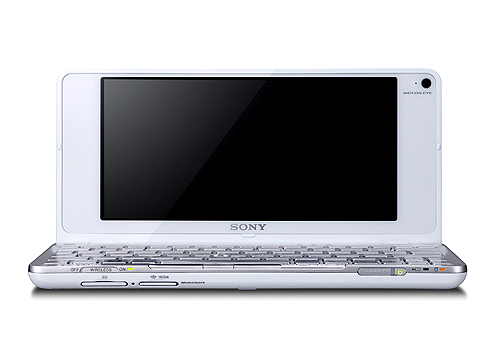
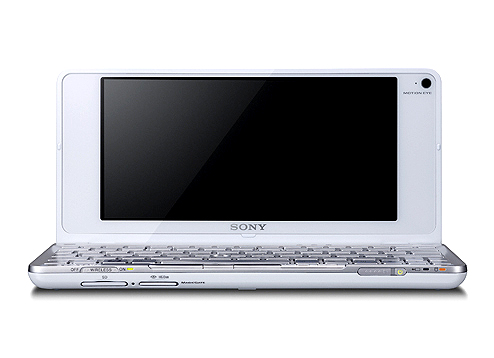
"They all come with shitty rubber dome keyboards," Lyu says of low-cost PCs like the latest Chromebooks, which use flexible silicone sheets under their keys to save on space and cost. "They're not something you would enjoy typing on for an extended period of time." So Rabbit decided to build its own device. For inspiration, Lyu and company looked to an unlikely source: the Sony Vaio P.
Sony's netbook was only briefly available from the start of 2009 to about the end of 2010. At the time, the 8-inch Vaio P was the world's lightest netbook, weighing just 1.4 pounds, but it had a host of issues. It was also expensive, costing considerably more than other Intel Atom notebooks of the time. In 2009, the most affordable Vaio P would set you back $900 (about $1,365 adjusted for inflation). With Project Cyberdeck, Rabbit is aiming for a device that costs about $500, and hopefully avoids a similar fate.
I saw a few early renders of Project Cyberdeck, which Rabbit isn't ready to share publicly yet. Imagine a cross between the Rabbit R1, Vaio P and the original Nintendo DS. It looks cute. All the renders had four USB-C ports to allow users to connect the device to external monitors and peripherals, though the actual IO specs are as-yet undecided.
The company is in the process of sourcing components and working towards a final design, so details can — and will — change. I saw some of the parts Lyu has been testing in his office, but no final prototype as such.
For one, Rabbit still needs to decide on a chipset. The company is aiming for a performance benchmark relative to the Raspberry Pi 5, which has a Broadcom BCM2712 quad-core Arm Cortex A76 processor clocked at 2.4GHz. With 16GB of RAM, the Raspberry Pi 5 can run two external monitors, a capability Rabbit hopes to match with the Cyberdeck. The idea here is to make a device that's powerful enough it won't feel slow when it's communicating with Anthropic and OpenAI's servers, but affordable enough to make it a no-brainer purchase for developers.
The company confirmed Project Cyberdeck will run Linux. Rabbit will allow users to modify the operating system and install any third-party tools they want. Additionally, all the software features the company has developed for RabbitOS will be available through command-line prompts.
Two parts of the device Lyu hopes are major differentiating factors are the keyboard and screen. Lyu appears set on shipping a computer with a 40 percent keyboard that has low-profile mechanical switches and a fully hot swappable PCB, so users can tweak the typing feel to their liking. Lyu also had a sample 7-inch OLED screen on his desk when I spoke to him. That specific panel offers touch input, a 165Hz refresh rate and 815 nits of brightness. While it might not be the one Rabbit settles on, OLED is the goal, because of what it would mean for battery life.
For the uninitiated, OLED panels produce black values by turning off individual diodes, and since each diode is self-emitting, there's no need for a power-hungry backlight. Like every smartphone manufacturer, Rabbit is taking advantage of this by planning to offer a dark mode interface from day one.
One aspect of the Cyberdeck's design Lyu can't definitively speak to is how much RAM it will feature. The entire industry is dealing with datacenter demand for high-bandwidth memory that has sent the price of computers, smartphones and other electronics soaring. Lyu believes Rabbit won't be forced to delay the Cyberdeck out of 2026, but he also didn't rule out the possibility either. If things change for the better, he's confident Rabbit would be able to take advantage, since it took the company about 93 days to ship the first R1 device after it began working on the design.
Separately, I wonder if people will want to carry around a second device solely for their coding needs? You don't need a dedicated machine to access Claude Code or OpenAI Cursor. Even companies like Apple have begun integrating vibe coding services into their development environments. Rabbit could be on track for a repeat of the R1, but with so many details of the Cyberdeck left undecided, for now, it's too early to know for sure. The company will get to make its case when it shares more details in the coming weeks and months.
This article originally appeared on Engadget at https://www.engadget.com/ai/rabbits-cyberdeck-is-a-modern-take-on-a-netbook-151907273.html?src=rss
Larry 'Major Nelson' Hryb joins Commodore to help build its community
11 Mar 2026, 2:59 pm by Matt Tate
Phil Spencer leaving his long-held role at Xbox might have made all the headlines last month, but a few years ago the big story was company veteran Larry "Major Nelson" Hryb’s departure from Microsoft. Hryb recently seemingly hinted at a return to the company at which he spent more than two decades, but he’s now landed at Commodore instead.
The ex-Xbox icon joins the recently revived 80s computer brand as a Community Development Advisor, where his job will be to "help support and expand the global community," Commodore said in a press release. Hryb, who was the public face of Xbox during the brand’s heyday, is now tasked with helping to modernize Commodore by introducing it to "a new generation of creators, developers, and enthusiasts."
"I've always believed the best thing a company can do is partner with its community – and with a passionate fan base carrying the torch for 31 years, Commodore’s situation is truly unique when it comes to community engagement," said Hryb. "The community didn't wait around – instead they built something remarkable. Players, hardware hobbyists, developers, content creators, and publishers are all a part of the Commodore community, and now we get to build what’s next together."
Hryb’s most recent role was at game engine maker Unity, where he served as Director of Community and Advocacy for less than two years before being laid off in January. As for Commodore, the company might be entering a new era, but its comeback product launch is a firmly nostalgic play, with the recently released Commodore 64 Ultimate being an authentic recreation of its most famous 8-bit computer.
This article originally appeared on Engadget at https://www.engadget.com/gaming/larry-major-nelson-hryb-joins-commodore-to-help-build-its-community-145908119.html?src=rss
Looking Glass' Musubi showcases its holographic display in a consumer-friendly package
11 Mar 2026, 1:00 pm by Ian Carlos Campbell
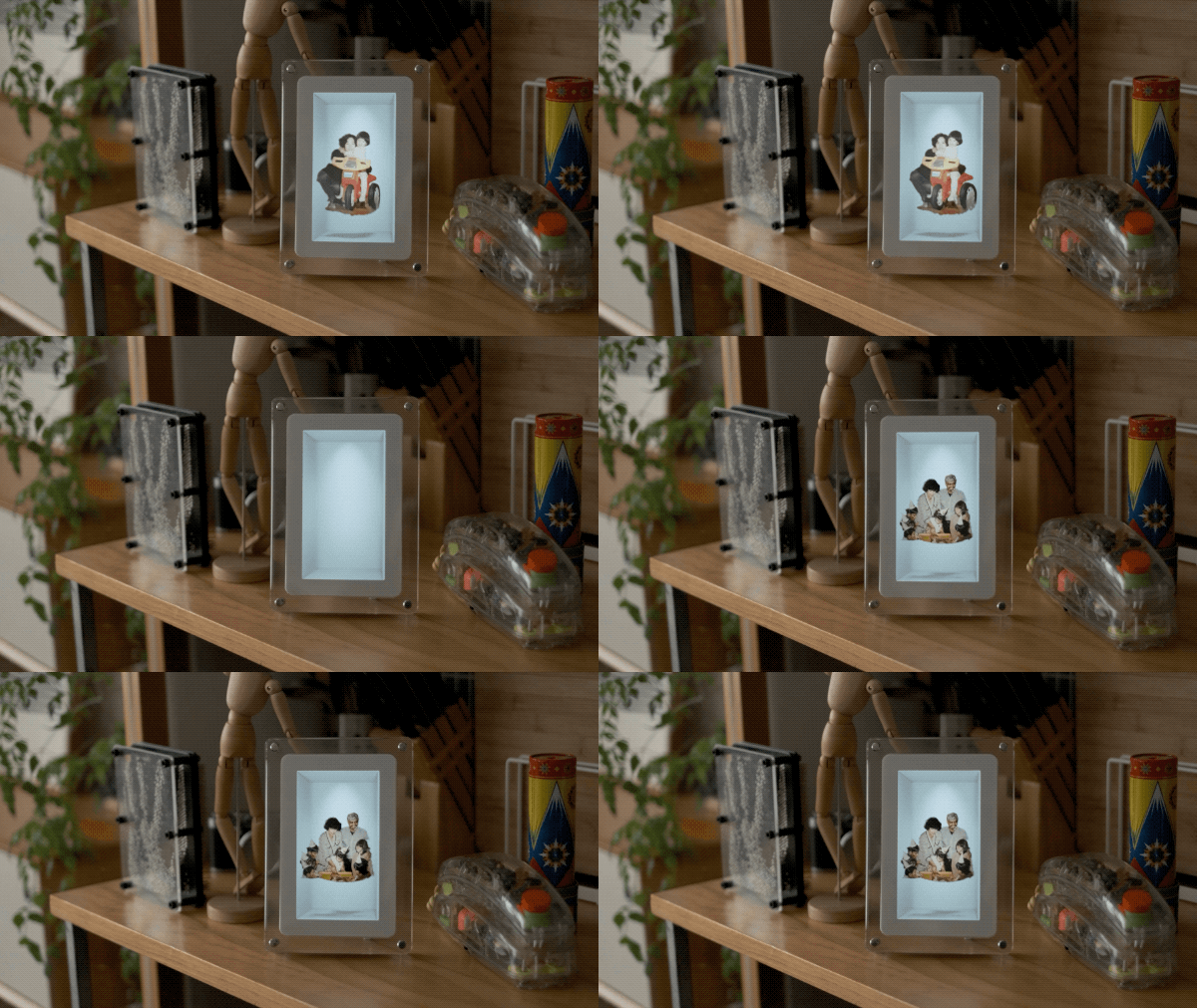
Looking Glass has been doggedly committed to making holographic displays the next big thing since 2019, and with its new Musubi digital photo frame, it might finally be offering its tech at a price that's hard to deny. Musubi is scheduled to start shipping in June, and unlike the company's previous, more developer-focused kits, the company's new display only costs $149.
Musubi is a 7-inch frame with a glass border and white matte that acts as the home for whatever content you convert and upload to it. Looking Glass says the Musubi can store up to 1,000 images or 30-second video clips, and is able to display your content for three hours on a single charge, or indefinitely if you plug it in with an included wall adapter. You'll have to convert your photos and videos into holographic files using Looking Glass' free desktop app in order to display them, but once they're converted, all you need to do is transfer them over USB-C to start showing them off on Musubi.
Looking Glass has offered multiple versions of this concept before — including the compact, $300 Looking Glass Go from 2023 — but Musubi is supposed to be the best representation of the company's current display stack. The frame uses the Hololuminescent Display (HLD) technology Looking Glass announced in 2025, which "combines 2D display layers with a 3D holographic volume" to show off holograms that are viewable by multiple people at the same time, without the need for eye-tracking or glasses. It's hard to get a sense for the whole Musubi experience from the company's YouTube video alone, but the results seem novel, if a bit limited.
You can pre-order Musubi starting today through Looking Glass' Kickstarter campaign. For the first 24 hours of the company's Kickstarter, the frame will be available for $99. Afterwards, Musubi will sell for $149. Anything on Kickstarter should be treated with a certain amount of caution, but Looking Glass' past campaigns and the company's commitment to start shipping Musubi in June does suggest it’s confident the frame will be released without issues.
This article originally appeared on Engadget at https://www.engadget.com/ar-vr/looking-glass-musubi-showcases-its-holographic-display-in-a-consumer-friendly-package-130000304.html?src=rss
The 7 best cordless vacuums for 2026
11 Mar 2026, 12:00 pm by Valentina Palladino
A good cordless stick vacuum cleaner gives you the freedom to move from room to room without dragging a cable or hunting for the nearest outlet. They’re lighter than a typical corded vacuum and often easier to store, making them ideal for quick jobs as well as deep cleans. Many of the best vacuum cleaners now come in bagless designs, with powerful suction and smart features that make it simple to clean up anything from crumbs on the kitchen floor to dust on high shelves.
Some models go beyond basic convenience, with features like auto-empty docks that transfer debris straight into a larger bin, so you don’t have to empty them as often. You’ll also find attachments that make them more versatile, letting you tackle stairs, furniture and even your car without switching machines. Popular options like Dyson vacuums focus on strong suction and advanced filtration, while other brands deliver impressive performance at a lower cost.
Whether you need something lightweight for everyday tidying or a top-end model to replace your main vacuum, there’s a cordless option to suit every home and cleaning style. In this guide, we’ll help you find the right balance of power, features and value.
Best cordless vacuums for 2026
Other cordless stick vacuums we tested
Dyson Gen 5 Detect
The Dyson Gen 5 Detect has a single-button start and stronger suction power than our top pick, but it’s otherwise quite similar. However, since the Gen 5 Detect is more expensive at $950 (although it does receive discounts at Dyson online), the V15 Detect still provides greater value for your money. The Gen 5 Detect is arguably best for those who want the latest Dyson, or care about getting a more future-proof machine, since it came out just last year.
Levoit Aero
The biggest selling point of the Levoit Aero is the attached bin into which the vacuum will empty its dustbin when you press a button once it's docked after a cleaning. I hesitate to call it a self-emptying base because the "self" part isn't really there — instead, there's a dedicated button on the machine that you press to empty the dustbin. It's convenient, for sure, but otherwise the vacuum itself is just ok. It did a decent job cleaning up hard and carpeted floors, but it did struggle a bit with large clumps of pet hair. The handling is a little awkward as well.
LG CordZero Q3
The $329 CordZero Q3 is a perfectly capable vacuum with a single-button start, two manual power modes, adjustable suction technology that detects carpets and hard flooring and a cleaner head outfitted with LEDs to help you better spot all the dirt on your floors. But it's ultimately just fine in comparison to our top picks; it's not the most unique cordless vacuum or the most powerful, even though it will be enough to get the job done for many people. My biggest gripes with it are that you must charge it using the included base (which really works best when mounted on a wall — otherwise it's just awkward) and it doesn't have the smoothest handling.
Shark Detect Pro
The Shark Detect Pro provides a lot of value for the money, but it was ultimately beat by the Tineco Pure One Station 5 for our runner-up slot thanks to the Tineco’s stronger suction power. The kicker for the Detect Pro is that it includes a self-emptying base in its $450 price, which is super handy. It’ll automatically dump the contents of the vacuum into the larger bin in the base after every cleaning, and you only need to empty the base’s container every month or so. The Detect Pro did a good job cleaning up messes across different types of flooring, and it’ll auto-adjust suction power depending on the amount of debris and whether you’re cleaning hard or carpeted floors. However, it’s not as smooth to use as any of our top picks and its main cleaner head is a bit tall, making it difficult to use to clean under low furniture.
Factors to consider before buying a cordless vacuum
Design and bin capacity
Most of the cordless models you’ll find today have stick designs, with a handle at the top attached to a debris bin, which has a space to connect different attachments at one end. These designs are more versatile than old-school, upright vacuums of yesteryear because, while you may use the long stick attachment most of the time to clean your floors, many cordless vacuums come with other attachments as well. Some allow you to clean hard to reach spaces like the interior of your car, while others make it easier to vacuum furniture and clean up inside crevices.
Some modern cordless vacuums also include practical features like an on/off button placed near your thumb for quick access, or an integrated LED light to help you see dust and debris under furniture or in darker corners.
Bin volume is worth keeping in mind when you’re choosing a cordless vacuum. The larger the bin, the more debris it can hold, but it might also mean a heavier machine. All of the cordless vacuums we tested had a bin size between 0.1 and 0.8 gallons and all were able to handle cleaning an entire one-pet home (roughly 2,000 square feet) in a single run without needing to be emptied. Anything smaller and you may have to deal with more frequent emptying during each cleaning session.
If you prefer a bagless design, all of the cordless vacuums in this guide fall into that category, making them easier and cheaper to maintain than bagged models. Some cordless models also have removable, replaceable battery packs, which is super handy. That means you can buy a replacement battery and install it easily, without needing to seek out professional assistance. Also, these extra batteries cost around $150-$200 a pop — expensive, yes, but nowhere near as costly as buying a whole new cordless vacuum.
Suction and power modes
Cordless vacuum suction power is typically measured in air wattage (AW), but you’ll see some that list the power of the motor in wattage (W) instead. Typically the higher the air or motor wattage the stronger the suction power, offering improved cleaning performance. And often strength is proportional to price — more expensive cordless vacuums tend to have stronger suction power. A general rule of thumb is that those with precocious pets or mess-making children would benefit from a cordless stick vacuum cleaner with stronger-than-average suction power.
Most cordless stick vacuums will have two different power modes: a “normal” or default power mode that balances suction power with battery life, as well as a “max” or stronger mode that kicks suction strength up a notch. Some vacuums, like Dyson vacuums, also have an “eco” mode, or one that prioritizes run time over strength.
Separate from power modes you can select yourself, some cordless vacuums will automatically adjust motor strength depending on the detected floor type or the amount of mess in its wake. This not only improves ease of use but ensures the vacuum is working as efficiently as possible.
If allergens are a concern in your home, look for models equipped with HEPA filters, which are designed to trap fine dust, pollen and other particles that can irritate sensitive noses and lungs.
Floor type
The best vacuum cleaners in the cordless category will be able to clean any standard floor type — hardwood, tile, carpet and everything in between. As mentioned previously, some can even detect floor type and adjust suction power accordingly. That said, it's still worth thinking about the types of flooring you have in your home. If you primarily have carpet, you may want to consider a cordless vacuum with the most powerful suction you can afford, since there are more nooks and crannies for debris to get suck in with carpet.
Battery life
Obviously, battery life is important since you’ll probably want to clean more than one room in a shot. All of the cordless vacuums we tested had a battery life of at least 40 minutes in standard cleaning mode. I tested each by cleaning all three floors of my home (upstairs, downstairs and basement) on a single charge with the machine running in its standard (“auto”) mode and none of them ran out of juice before I could finish the third floor. That said, extra battery life can come in handy if you’re switching between power modes since “max” or high-power programs use more energy.
Base style
Most cordless stick vacuums come with some sort of base or mount where the machine lives when you’re not using it. Wall mounts are the most common, but some have free-standing bases where you dock and charge the vacuum. Consider the space in your home where you want the cordless vacuum to live, since it will have to have an outlet or another power source nearby.
Some high-end cordless vacuums come with auto-empty bases that act much like those included with expensive robot vacuums. After cleaning and returning the vacuum to the base, it will automatically empty the dustbin into a larger dustbin that you can then detach from the base when you need to empty it. This is great for anyone concerned about allergens, as you’ll only need to empty the larger dustbin every month or two, reducing your contact with dust and debris.
“Smart” features
Yes, some cordless vacuums have “smart” features like Wi-Fi and app connectivity. But before we get into those, let’s talk about the extra perks scattered among these devices. Some models, like the latest from Dyson, include particle sensors that show you how many different sized pieces of debris it’s sucking up in real time. Dyson’s, for example, is a piezo acoustic sensor that detects particle size and frequency and displays that information on the vac’s LCD screen. Tineco’s iLoop sensor is similar, controlling its vacuums’ automatic suction power adjustment and changing a circle on the display from red to blue as you fully clean an area.
Higher-end cordless vacuums may also have companion apps that show things like battery level, filter status and cleaning logs. It’s an added level of convenience, but by no means necessary. Unlike the best robot vacuums, or even the best budget robot vacuums, which rely on their apps to set cleaning schedules, manually control the machines and more, cordless vacuums that you operate yourself really don’t need Wi-Fi or an app connectivity.
Price
Cordless stick vacuums range in price from $150 all the way up to over $1,000. The best ones for most people lie in the middle, in the $400 to $700 range. You’ll notice most of our picks land in the higher end of that range, but for good reason: More expensive machines tend to have more sucking power, which means less time wasted going over the same spots over and over. But does that mean everyone needs the most premium cordless vacuum? Definitely not. We’ve come up with top picks at various price points that should work well for people with different budgets, lifestyles, home sizes and more.
How we test cordless vacuums
Engadget doesn’t have a dedicated lab in which we can test cordless vacuums, but I used each model in my home for weeks. I ran them over hardwood and tile flooring, as well as low-pile carpet. And my first runthrough consisted of cleaning all three floors of my home on a single battery charge. I performed the same cleaning job as many times as possible, but also intermittently cleaned a single floor as needed, or sucked up isolated messes like crumbs, cat litter spills and tufts of pet fur. Over the course of many cleanings with each model, I made note of how loud the machine was, how easy it was to maneuver around my home, how easily it sucked up pieces of large debris (or if it pushed it around my floor instead) and if they got warm or hot.
Cordless stick vacuums FAQs
How long does the battery last on a cordless vacuum?
Most cordless vacuums will run for at least 30-40 minutes on a single charge, but you can find cordless vacuums with battery lives of up to 60 or 70 minutes. Manufacturers will outline an estimated battery life for each model, and they’re usually based on using the vacuum’s standard power mode for the entire runtime; if you switch between modes or prefer to use a higher-powered program for improved suction, you’ll drain the battery faster.
Can cordless vacuums be as powerful as corded ones?
Cordless vacuums do sacrifice a bit in overall power when compared to corded models, but that doesn’t mean they can’t handle everyday messes just as well. If suction power is your biggest concern, we recommend springing for a high-powered, high-end cordless vacuum since, typically, the more expensive a cordless vacuum is, the stronger the suction. Also, cordless vacuums have the edge over corded models when it comes to weight and convenience: cordless vacuums are much lighter than their corded counterparts, and you’ll never have to worry about placement or picking a fight with a cord while cleaning your living room.
Are cordless vacuums effective on pet hair?
Yes, cordless vacuums can handle pet hair well, but we recommend getting a model with strong suction power to get the best results. It’s also wise to get one with a larger bin, since pet hair can quickly fill up smaller bins, which may force you to stop cleaning to empty the vacuum before finishing.
What are the best methods for maintaining a cordless vacuum cleaner?
Maintaining a cordless vacuum is super easy and helps to keep it running like new. First, make sure to empty the dustbin regularly — don’t let it overfill, as this can impact suction. Many models have washable filters, so rinse them out every few weeks (check your manual for specifics) and let them dry completely before putting them back.
Next, take a look at the brush roll — hair and debris can get tangled up in there over time. Most vacuums make it simple to remove the brush roll, so you can snip away any tangles with scissors. If your vacuum has a replaceable battery, try not to let it fully drain too often, as this can reduce its lifespan. A quick wipe-down of the vacuum’s exterior and attachments will also keep everything looking fresh.
Lastly, keep an eye on the sensors and charging contacts, as dust can build up there too. A gentle wipe with a dry cloth every now and then will do the trick.
Can cordless vacuums also be used to clean curtains and upholstery?
Cordless vacuums are surprisingly versatile, and many come with attachments specifically designed for surfaces like curtains, upholstery and even mattresses. A handheld vacuum mode, which is common in cordless models, makes it easy to tackle these areas. Look for a soft brush or an upholstery tool in the attachments for the vacuum you’re considering — it’ll help remove dust and pet hair without damaging fabrics. For curtains, it’s a good idea to use a lower suction setting if your vacuum has adjustable modes. This prevents the fabric from getting pulled into the nozzle.
Check out more from our spring cleaning guide.
This article originally appeared on Engadget at https://www.engadget.com/home/smart-home/best-cordless-vacuum-130007125.html?src=rss
Anthropic is opening an office in DC while battling Pentagon in court
11 Mar 2026, 11:57 am by Mariella Moon
Anthropic has launched a new research initiative called Anthropic Institute and has revealed that its Public Policy team is opening its first office in Washington, DC this spring. The company has made the announcement just a couple of days after it sued the US government to challenge the supply chain risk designation it received from the Defense Department. As Axios notes, Anthropic is tripling its Public Policy team at a time when AI companies are establishing a presence in Washington, so that they can influence future policies around artificial intelligence. In Anthropic’s case, it might have to find a way to be re-accepted by the US government first after President Trump ordered federal agencies to stop using its technology.
Sarah Heck, who joined the company as Head of External Affairs, will take over from co-founder Jack Clark as Head of Policy. Meanwhile, Clark has taken the role as Head of Public Benefit and will lead the Anthropic Institute. The company explains that the institute’s role is to “tell the world” what it learns about the challenges that arise as AI firms develop more advanced AI systems. Examples include how powerful AI technologies will reshape jobs and economies and what kinds of threats they’ll magnify or introduce.
The institute will bring together and expand Anthropic’s current research teams: The Frontier Red Team that stress-tests AI systems, the Societal Impacts team that looks at how AI is used in the real world, and the Economic Research team that tracks AI’s impact on jobs and the larger economy. Anthropic has hired Matt Botvinick, a former Senior Director of Research at Google DeepMind, and Zoë Hitzig, who studied AI’s social and economic impacts at OpenAI, to be founding members of the Institute.
This article originally appeared on Engadget at https://www.engadget.com/ai/anthropic-is-opening-an-office-in-dc-while-battling-pentagon-in-court-115700127.html?src=rss
Meta rolls out new features for scam protection
11 Mar 2026, 11:00 am by Anna Washenko
Meta announced new features today aimed at cracking down on scams perpetrated via its platforms. First, Meta is launching AI tools for identifying impersonator of brands and celebrities, as well as for detecting deceptive links, which should help it to quickly take down frauds. Second, it is adding new alerts to caution against interacting with a potentially fraudulent account. Facebook will roll out alerts for suspicious friend requests, WhatsApp is getting warnings for device linking requests, and Messenger will also issue warnings if an account seems suspect.
Finally, Meta is also continuing to expand its processes for advertiser verification. The company said it aims to have verified advertisers account for 90 percent of its ads revenue by the end of the year, up from the current share of 70 percent. Last year, Meta estimated that marketing for scams and banned products could have been responsible for 10 percent of its 2024 revenue.
The social media company has been ramping up its actions against scams, particularly those known as celeb bait. Last month, it sued three entities from Brazil and China that were behind scams that leveraged images and deepfakes of popular people to promote dubious products and investment schemes. Meta said today that over the course of 2025, it removed 159 million scam ads as well as 10.9 million Facebook and Instagram accounts tied to criminal scam centers.
This article originally appeared on Engadget at https://www.engadget.com/social-media/meta-rolls-out-new-features-for-scam-protection-110000173.html?src=rss
Google starts rolling out Gemini in Chrome to users in Canada, India and New Zealand
11 Mar 2026, 2:30 am by Igor Bonifacic
At the start of the year, Google brought a host of new Gemini-powered features, including built-in Nano Banana image generation, to Chrome. After debuting in the United States, those features are now making their way to Chrome users in Canada, India and New Zealand, with support for 50 additional in tow. Among the new languages Gemini in Chrome can now converse in are French, Gujarati, Hindi and Spanish.
To try out Gemini in Chrome, tap the sparkle icon at the top right of the interface. This will open the sidebar interface Google introduced in January. From there, you can chat with the company's Gemini chatbot without the need to switch tabs. From the sidebar, you can also access Google's in-house image generator. Additionally, Gemini in Chrome offers integrations with Gmail, Maps, Calendar, YouTube and other Google apps. If you live outside Canada, India or New Zealand, Google says it will make Gemini in Chrome available in more countries and languages throughout the rest of 2026. Oh, and if don’t want to use Gemini in Chrome, you can right click on the sparkle icon and select unpin to never see it again.
This article originally appeared on Engadget at https://www.engadget.com/ai/google-starts-rolling-out-gemini-in-chrome-to-users-in-canada-india-and-new-zealand-023000528.html?src=rss
End of today’s Engadget roundup.