Introduction to Seedance 2.0 and the AI Video Landscape
The advent of Seedance 2.0 marks a significant milestone in the AI video generation landscape, pushing the boundaries of hyper-realism and sparking intense debate over copyright and ethical considerations. This blog post delves into the intricacies of Seedance 2.0, its capabilities, and the broader implications of AI-generated video content on the creative industry and legal frameworks.
Understanding Seedance 2.0
Seedance 2.0 is an advanced AI model designed to generate highly realistic video content based on minimal input, such as text prompts or basic video clips. This technology leverages deep learning algorithms to understand and replicate the nuances of human movement, facial expressions, and environmental interactions, resulting in videos that are often indistinguishable from those captured in real life.
Hyper-Realism in AI-Generated Videos
The hyper-realistic capabilities of Seedance 2.0 and similar AI models are transforming the video production landscape. These technologies enable the creation of complex scenes, characters, and storylines without the need for extensive filming, editing, or even the presence of human actors. This not only reduces production costs and time but also opens up new avenues for creative expression and innovation.
Copyright Controversy and Ethical Concerns
Despite the technological marvels presented by Seedance 2.0, the use of AI-generated video content raises significant copyright and ethical concerns. Questions about ownership, authorship, and the potential for misuse of AI-generated content are at the forefront of legal and ethical debates. The ability to create realistic videos of individuals without their consent or to replicate copyrighted material with ease challenges existing copyright laws and necessitates a reevaluation of how we protect intellectual property in the digital age.
The AI Video Arms Race
The development and refinement of AI video generation technologies like Seedance 2.0 have sparked an arms race of sorts within the tech industry. Companies and research institutions are investing heavily in AI research, aiming to outdo one another in terms of realism, efficiency, and applicability of their models. This race is driven by the vast potential of AI-generated video content to revolutionize entertainment, education, advertising, and beyond.
Applications and Implications
The applications of Seedance 2.0 and similar technologies are diverse and far-reaching. In the entertainment industry, AI-generated videos can be used to create special effects, resurrect deceased actors, or even produce entire movies with minimal human intervention. In education, these technologies can enhance learning experiences through interactive, personalized video content. However, each application also comes with its set of challenges and ethical dilemmas, particularly concerning privacy, consent, and the spread of misinformation.
Legal and Regulatory Challenges
The legal and regulatory landscape surrounding AI-generated video content is complex and evolving. Existing laws often struggle to keep pace with the rapid advancements in AI technology, leaving gray areas regarding the use, distribution, and ownership of AI-generated content. There is an urgent need for clearer guidelines and regulations that balance the promotion of innovation with the protection of rights and prevention of misuse.
Conclusion: Navigating the Future of AI Video Generation
Seedance 2.0 represents a pivotal moment in the development of AI video generation technologies, offering unprecedented capabilities for creating hyper-realistic content. However, as we embrace the potential of these technologies, it is crucial that we address the accompanying challenges with diligence and foresight. This includes fostering open dialogue among technologists, policymakers, and stakeholders to establish ethical standards, update legal frameworks, and ensure that the benefits of AI video generation are realized while minimizing its risks.
Recommendations for the Future
- Invest in Ethical AI Research: Encouraging research that prioritizes ethical considerations and the development of AI technologies that can be used responsibly.
- Update Legal Frameworks: Advocating for the revision of copyright laws and regulations to account for AI-generated content and protect both creators and users.
- Promote Transparency and Accountability: Implementing measures to ensure transparency in the use of AI-generated content and holding individuals and organizations accountable for misuse.
                // Example of AI-generated video code
                import numpy as np
                from tensorflow import keras

                # Define the model architecture
                model = keras.Sequential([
                    keras.layers.Dense(64, activation='relu', input_shape=(784,)),
                    keras.layers.Dense(32, activation='relu'),
                    keras.layers.Dense(10, activation='softmax')
                ])

                # Compile the model
                model.compile(optimizer='adam', loss='sparse_categorical_crossentropy', metrics=['accuracy'])
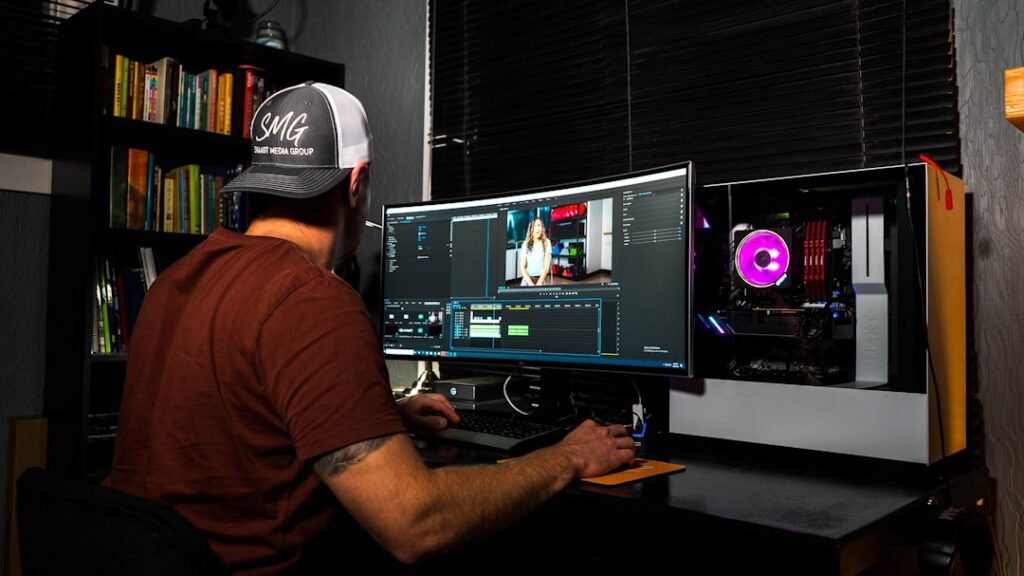
Photo by Ryan Snaadt on Unsplash
Share via: