This digest compiles the latest from Engadget.
Today’s Engadget Roundup
The first season of Amazon's Fallout show is now free on Youtube
30 Jan 2026, 4:29 pm by Matt Tate
Fallout’s second season is coming to a close, and it’s been well worth the wait. But if a reluctance to add yet another subscription to your streaming rotation means you haven’t watched Amazon’s surprisingly excellent adaptation yet, you might be interested to know that the company is currently releasing season one for free on the Prime Video YouTube channel.
Whether driven by Amazon wanting even more people to watch what has become one of its biggest TV success stories, or a move that speaks to how few people are actually signed up for Prime Video, it’s good news for anyone who hasn’t seen the show yet. Fallout’s first season did a great job of taking everything that’s great about the long-running post-apocalyptic RPG series and weaving it into a wildly entertaining live-action show, elevated by excellent performances from Ella Purnell as a hopelessly naive but endearingly optimistic vault-dweller, and Walton Goggins as the Ghoul.
Amazon is currently adding a new episode each day ahead of next week’s season two finale, presumably hoping a whole new set of fans hop straight into that once they’re done. But here’s the catch: you only have until February 11 to watch the whole lot. After that, the show will be for Prime Video subscribers only once again.
And that isn't the the only Fallout freebie up for grabs right now. Between now and February 5, Bethesda’s MMORPG, Fallout 76, is free-to-play on Xbox and PC, while PlayStation players have until February 4. Fallout 76 first launched in 2018, and as a fully multiplayer-focused game it represented a new direction for the series. It was, to put it bluntly, a bit of a mess for quite a while, but Bethesda has never abandoned the title or its player-base, and if you have Fallout on the brain, this is the perfect opportunity to see how it’s looking in 2026.
This article originally appeared on Engadget at https://www.engadget.com/entertainment/streaming/the-first-season-of-amazons-fallout-show-is-now-free-on-youtube-162920615.html?src=rss
Amazon discovered a 'high volume' of CSAM in its AI training data but isn't saying where it came from
30 Jan 2026, 4:05 pm by Anna Washenko
The National Center for Missing and Exploited Children said it received more than 1 million reports of AI-related child sexual abuse material (CSAM) in 2025. The "vast majority" of that content was reported by Amazon, which found the material in its training data, according to an investigation by Bloomberg. In addition, Amazon said only that it obtained the inappropriate content from external sources used to train its AI services and claimed it could not provide any further details about where the CSAM came from.
Amazon provided Engadget with the following statement to explain why it doesn’t have data that can provide any further action on the
“When we set up this reporting channel in 2024, we informed NCMEC that we would not have sufficient information to create actionable reports, because of the third-party nature of the scanned data. The separate channel ensures that these reports would not dilute the efficacy of our other reporting channels. Because of how this data is sourced, we don't have the data that comprises an actionable report.”
"This is really an outlier," Fallon McNulty, executive director of NCMEC’s CyberTipline, told Bloomberg. The CyberTipline is where many types of US-based companies are legally required to report suspected CSAM. “Having such a high volume come in throughout the year begs a lot of questions about where the data is coming from, and what safeguards have been put in place.” She added that aside from Amazon, the AI-related reports the organization received from other companies last year included actionable data that it could pass along to law enforcement for next steps. Since Amazon isn’t disclosing sources, McNulty said its reports have proved “inactionable.”
Amazon provided Engadget with these additional details, which were first reported in Bloomberg:
“Amazon is committed to preventing CSAM across all of its businesses, and we are not aware of any instances of our models generating CSAM. In accordance with our commitments to responsible AI and the Generative AI Principles to Prevent Child Abuse, we take a deliberately cautious approach to scanning foundation model training data, including data from the public web, to identify and remove known CSAM and protect our customers. While our proactive safeguards cannot provide the same detail in NCMEC reports as consumer-facing tools, we stand by our commitment to responsible AI and will continue our work to prevent CSAM.”
The company also reiterated that “we intentionally use an over-inclusive threshold for scanning, which yields a high percentage of false positives” to explain the high volume of content the company reported.
Safety questions for minors have emerged as a critical concern for the artificial intelligence industry in recent months. CSAM has skyrocketed in NCMEC's records; compared with the more than 1 million AI-related reports the organization received last year, the 2024 total was 67,000 reports while 2023 only saw 4,700 reports.
In addition to issues such as abusive content being used to train models, AI chatbots have also been implicated in several dangerous or tragic cases involving young users. OpenAI and Character.AI have both been sued after teenagers planned their suicides with those companies' platforms. Meta is also being sued for alleged failures to protect teen users from sexually explicit conversations with chatbots.
Update, January 30, 2026, 11:05AM ET: This story has been updated with several statements from Amazon.
This article originally appeared on Engadget at https://www.engadget.com/ai/amazon-discovered-a-high-volume-of-csam-in-its-ai-training-data-but-isnt-saying-where-it-came-from-224749228.html?src=rss
Monarch Money deal: New users get one year of access for only $50
30 Jan 2026, 4:01 pm by Ian Carlos Campbell
The start of the new year is a great time to get your finances in order, and a good budgeting app can help with that. Instead of laboring over a spreadsheet, you can try one of our favorite budgeting apps for less than usual. Monarch Money is running a sale that gives new users 50 percent off one year of the service, bringing the final cost down to just $50. Just use the code NEWYEAR2026 at checkout to get the discount.
Monarch Money makes for a capable and detailed budgeting companion. You can use the service via apps for iOS, Android, iPadOS or the web, and Monarch also offers a Chrome extension that can sync your Amazon and Target transactions and automatically categorize them. Like other budgeting apps, Monarch Money lets you connect multiple financial accounts and track your money based on where you spend it over time. Monarch offers two different approaches to tracking budgeting (flexible and category budgeting) depending on what fits your life best, and the ability to add a budget widget on your phone so you can know how you're tracking that month.
How budgeting apps turn your raw transactions into visuals you can understand at a glance is one of the big things that differentiates one app from another, and Monarch Money offers multiple graphs and charts to look at for things like spending, investments or categories of your choice based on how you've labelled your expenses. The app can also monitor the spending of you and your partner all in one place, to make it easier to plan together.
The main drawbacks Engadget found in testing Monarch Money were the app's learning curve, and the differences in features (and bugginess) between Monarch's web and mobile versions. Still, for 50 percent off, the Monarch Money is well worth experimenting with if you're trying to save money in 2026, especially if you want to do it collaboratively with a partner.
Follow @EngadgetDeals on X for the latest tech deals and buying advice.
This article originally appeared on Engadget at https://www.engadget.com/deals/monarch-money-deal-new-users-get-one-year-of-access-for-only-50-204507285.html?src=rss
Super Bowl 2026 TV deals: The best sales on OLEDs and other smart TVs ahead of kickoff
30 Jan 2026, 3:10 pm by Engadget
Whether you’re having people over to watch the Patriots and the Seahawks battle it out in Super Bowl 2026, or you’re more interested in the Bad Bunny halftime show, your TV will be an important part of the puzzle of putting together an excellent big-game party. If you’ve been thinking about upgrading your current TV, now’s a decent time to do it. The weeks leading up to the Super Bowl are typically awash with TV deals to consider.
Generally, TV prices steadily decrease after a new model comes out. Some 2026 TV models were announced at CES and are forthcoming things year, making now a good time to look for discounts on 2025 sets. Aside from the holiday shopping season, now is one of the best times of the year to save on a TV. Here, we’ve curated the best Super Bowl TV deals we could find this year, from already affordable sets discounted even further to high-end OLEDs that are hundreds of dollars off.
Super Bowl 2026 TV deals for less than $500
You can easily find solid 1080p and 4K TV sets within this budget-friendly price range. What you’ll be more limited in is size — most TV deals under $500 we’re seeing right now are on sets up to 55 inches. There are a few 65- and 75-inch models in there, but the pickings are slim.
Hisense 32-inch Class A4 1080 FHD smart TV for $98 (18 percent off)
Roku 24-inch 720p smart TV for $100 (18 percent off)
Roku 55-inch 4K smart TV for $248 (29 percent off)
Roku 55-inch Mini LED 4K smart TV for $348 (30 percent off)
TCL 75-inch Class S5 4K smart TV for $480 (26 percent off)
OLED TV deals
This is where you want to look if you want your new TV to have the richest colors, deepest blacks and excellent contrast performance. Of course, that all comes at steeper prices — it can be difficult to find a good OLED set for less than $1,000, even on sale.
LG 55-inch B5 OLED 4K smart TV for $847 ($50 off)
Sony 55-inch Bravia XR8B 4K smart TV for $998 (9 percent off)
Samsung 65-inch Class OLED S95F 4K smart TV for $2,298 (23 percent off)
Sony 77-inch Bravia XR A95L OLED 4K smart TV for $3,498 (30 percent off)
Super Bowl 2026 TV deals for $500 and up
This will likely be the sweet spot for many people when it comes to TV features, performance and price. Good 4K sets are common in this price range, and you’ll also find some Mini LED sets available here as well.
TCL 65-inch Class T7 4K smart TV for $500 (29 percent off)
Hisense 65-inch Class U6 Mini LED 4K smart TV for $550 (35 percent off)
Amazon 65-inch Fire TV Omni Mini LED 4K smart TV for $920 (16 percent off)
TCL 65-inch Class QM8K Mini LED 4K smart TV for $998 (33 percent off)
Streaming and home entertainment deals
A good TV is key, but having the right peripherals and accessories to go along with it will complete your home theater setup. Deals we’re tracking right now include discounts on streaming devices, soundbars and projectors.
Roku Ultra streamer for $78 (22 percent off)
Samsung HW B400F soundbar with built-in subwoofer for $100 (29 percent off)
Anker Nebula Capsule 3 projector for $540 (28 percent off)
Valerion VisionMaster Max 4K projector for $3,999 (20 percent off)
This article originally appeared on Engadget at https://www.engadget.com/deals/super-bowl-2026-tv-deals-the-best-sales-on-oleds-and-other-smart-tvs-ahead-of-kickoff-160000929.html?src=rss
How to watch the 2026 Grammy Awards: TV channel, start time, where to stream, nominations list and more
30 Jan 2026, 3:00 pm by Danica Creahan,Liz Kocan
The 2026 Grammy Awards honor music's biggest achievements of the year, and some of the biggest stars on the planet are nominated this year. Kendrick Lamar leads the way with nine nominations, including for Record and Song of the Year for "luther," his collaboration with SZA. Other top nominees this year include Lady Gaga, Jack Antonoff, and Cirkut with seven nominations apiece, and Bad Bunny, Sabrina Carpenter, and Leon Thomas, who have six. The 2026 Grammy Awards will be hosted by comedian Trevor Noah, who also happens to be a nominee this year in the Best Audio Book, Narration & Storytelling category.
The 2026 Grammys will take place at Crypto.com Arena in Los Angeles, and the broadcast will air this Sunday, Feb. 1, at 8PM ET/5PM PT on CBS, streaming live on Paramount+ (for Premium subscribers only). The 2026 Grammy Awards Premiere Ceremony — where the majority of the Grammys are actually awarded — will take place earlier that same day, from 3:30PM ET/12:30PM PT, and streams live free on YouTube.
Here’s how to watch the 2026 Grammy Awards live this Sunday.
When are the 2026 Grammy Awards?
The 68th Grammy Awards will be held this Sunday, Feb. 1, 2026.
Grammys start time
The Grammy Awards live TV broadcast begins at 8PM ET/5PM PT. It's scheduled to run until 11:30PM ET.
Prior to the main broadcast, the 2026 Grammy Awards Premiere Ceremony (this is where you can watch the awards for categories like Musical Theater, Americana, Reggae, Metal, Gospel and more) will take place from 3:30PM ET/12:30PM PT. The Grammys Premiere Ceremony will stream live for free at live.GRAMMY.com and on YouTube.
Grammy Awards TV channel
The 68th Grammy Awards will air on CBS and stream live on Paramount+ for Premium subscribers. The awards show will also be available the following day on demand for Paramount+ Essential subscribers.
How to watch the Grammys without cable
How to watch the 2026 Grammys free
Who is performing at the 2026 Grammy Awards?
Among this year's Grammy's performers are Justin Bieber, Sabrina Carpenter, Album of the Year nominees Clipse and Pharrell Williams, and every Best New Artist nominee, including Addison Rae, Alex Warren, KATSEYE, Leon Thomas, Lola Young, Olivia Dean, SOMBR, and The Marías.
This year's In Memorium honoring artists we've lost this year will include a musical tribute from Reba McEntire, Brandy Clark and Lukas Nelson, a performance from Ms. Lauryn Hill in honor of D'Angelo and Roberta Flack, and an Ozzy Osbourne tribute from artists like Post Malone, Andrew Watt, Chad Smith, Duff McKagan, and Slash.
Who is hosting the Grammys this year?
Trevor Noah will return to host the Grammys for the sixth and final year.
Who is presenting at the 2026 Grammys?
While the full list of Grammys presenters has yet to be released, we do know that Harry Styles and Doechii will be presenting.
Grammy Awards new categories
This year’s Grammys will see the return of the award for Best Album Cover (after 53 years!). This year, the category of Best Country Album will now be split into two awards: Best Contemporary Country Album and Best Traditional Country Album.
Grammys eligibility window
The 2026 Grammy Awards will recognize music released from August 31, 2024 to August 30, 2025.
2026 Grammy nominations
Here are the nominees for the 68th Grammy Awards.
Album of the Year
-
Bad Bunny — Debí Tirar Más Fotos
-
Justin Bieber — Swag
-
Sabrina Carpenter — Man’s Best Friend
-
Clipse, Pusha T & Malice — Let God Sort Em Out
-
Lady Gaga — Mayhem
-
Kendrick Lamar — GNX
-
Leon Thomas — Mutt
-
Tyler, the Creator — Chromakopia
Record of the Year
-
Bad Bunny — “DtMF”
-
Sabrina Carpenter — “Manchild”
-
Doechii — “Anxiety”
-
Billie Eilish — “Wildflower”
-
Lady Gaga — “Abracadabra”
-
Kendrick Lamar feat. SZA — “Luther”
-
Chappell Roan — “The Subway”
Song of the Year
-
Lady Gaga — “Abracadabra”
-
Doechii — “Anxiety”
-
ROSÉ & Bruno Mars — “APT.”
-
Bad Bunny — “DtMF”
-
HUNTR/X (EJAE, Audrey Nuna, REI AMI) — “Golden”
-
Kendrick Lamar feat. SZA — “Luther”
-
Sabrina Carpenter — “Manchild”
-
Billie Eilish — “Wildflower”
Best New Artist
-
Olivia Dean
-
KATSEYE
-
The Marías
-
Addison Rae
-
sombr
-
Leon Thomas
-
Alex Warren
-
Lola Young
Best Pop Solo Performance
-
Justin Bieber — “Daisies”
-
Sabrina Carpenter — “Manchild”
-
Lady Gaga — “Disease”
-
Chappell Roan — “The Subway”
-
Lola Young — “Messy”
Best Pop Vocal Album
-
Justin Bieber — Swag
-
Sabrina Carpenter — Man’s Best Friend
-
Miley Cyrus — Something Beautiful
-
Lady Gaga — Mayhem
-
Teddy Swims — I’ve Tried Everything But Therapy (Part 2)
Best Alternative Music Album
-
Bon Iver — Sable, Fable
-
The Cure — Songs of a Lost World
-
Tyler, the Creator — Don’t Tap the Glass
-
Wet Leg — Moisturizer
-
Hayley Williams — Ego Death at a Bachelorette Party
Best Rock Album
-
Deftones — Private Music
-
HAIM — I Quit
-
Linkin Park — From Zero
-
Turnstile — Never Enough
-
YUNGBLUD — Idols
Best Rap Album
-
Clipse, Pusha T & Malice — Let God Sort Em Out
-
GloRilla — Glorious
-
JID — God Does Like Ugly
-
Kendrick Lamar — GNX
-
Tyler, the Creator — Chromakopia
Best R&B Album
-
GIVĒON — Beloved
-
Coco Jones — Why Not More?
-
Ledisi — The Crown
-
Teyana Taylor — Escape Room
-
Leon Thomas — Mutt
Best Contemporary Country Album
-
Kelsea Ballerini — Patterns
-
Tyler Childers — Snipe Hunter
-
Eric Church — Evangeline vs. The Machine
-
Jelly Roll — Beautifully Broken
-
Miranda Lambert — Postcards From Texas
Best Traditional Country Album
-
Charley Crockett — Dollar a Day
-
Lukas Nelson — American Romance
-
Willie Nelson — Oh What a Beautiful World
-
Margo Price — Hard Headed Woman
-
Zach Top — Ain’t In It for My Health
Producer of the Year, Non-Classical
-
Dan Auerbach
-
Cirkut
-
Dijon
-
Blake Mills
-
Sounwave
Songwriter of the Year, Non-Classical
-
Amy Allen
-
Edgar Barrera
-
Jessie Jo Dillon
-
Tobias Jesso Jr.
See the full list at Grammy.com.
This article originally appeared on Engadget at https://www.engadget.com/entertainment/streaming/how-to-watch-the-2026-grammy-awards-tv-channel-start-time-where-to-stream-nominations-list-and-more-150015179.html?src=rss
Engadget Podcast: What do prediction markets like Kalshi cost us?
30 Jan 2026, 2:31 pm by Devindra Hardawar
Somehow, we live in a world where people can bet on practically anything using sites like Polymarket and Kalshi. In this episode, Devindra and Engadget Senior Reporter Karissa Bell dive into the world of prediction markets. How did we get here? And is endless betting having an effect on the real world? Also, we chat about the new American version of TikTok, which stumbled during its first weekend with a litany of errors and reported censorship.
Subscribe!
Topics
-
Who’s going to buy the Samsung Galaxy Z Tri-fold for $2900? – 1:18
-
Tesla is killing off the Model X and S lines to focus on its Optimus robot moonshot – 6:46
-
Amazon plans to cut 16,000 jobs and close its grocery stores in another round of restructuring – 10:45
-
Most of the UK will lose access to Pornhub in a fight over age verification and privacy – 21:16
-
Internal messages from Meta about Instagram being ‘a drug’ for teens could be bombshell evidence at trial – 26:59
-
What are prediction markets and why are they suddenly so popular? – 32:11
-
As TikTok US stumbles, users ask ‘is it server problems or censorship?’ – 46:55
-
Around Engadget – 59:11
-
Pop culture picks – 1:01:23
Credits
Hosts: Devindra Hardawar and Karissa Bell
Producer: Ben Ellman
Music: Dale North and Terrence O’Brien
This article originally appeared on Engadget at https://www.engadget.com/general/engadget-podcast-what-do-prediction-markets-like-kalshi-cost-us-143113799.html?src=rss
Pick up this Samsung microSD Express card while it's on sale for $40 off
30 Jan 2026, 2:05 pm by Andre Revilla
If you're looking to expand the storage on your Switch 2, the 512GB Samsung P9 microSD Express card is on sale right now for 33 percent off, marked down to $80 from $120. With component prices skyrocketing these days, it's getting increasingly rare to see good storage on sale, and 512GB for $80 is a much better deal than you'll currently find directly from Nintendo.
The P9 boasts transfer speeds of up to 800MB/s, making moving games to the card that much faster. As for load times, in our testing we found that any microSD Express, the standard the Switch 2 requires, will offer roughly the same performance. This format is pretty new, so there aren't a ton of cards on the market. As such, the P9 makes our list of best microSD cards for the Nintendo Switch 2.
The P9 microSD Express is also compatible with the Steam Deck or any other gaming console that accepts the format, as well as cameras and more. If you were hoping to spend a bit less, the 256GB version of Samsung's card is on sale for $40, while this 256GB Lexar microSD Express card is on sale for $50.
Follow @EngadgetDeals on X for the latest tech deals and buying advice.
This article originally appeared on Engadget at https://www.engadget.com/deals/pick-up-this-samsung-microsd-express-card-while-its-on-sale-for-40-off-143849979.html?src=rss
The Disney+ and Hulu bundle is on sale for $10 for one month
30 Jan 2026, 1:46 pm by Valentina Palladino,Georgie Peru
You have the best chance to save on streaming services during the holiday shopping season, but throughout the year, the occasional deal pops up that's worth considering. Case in point: this new Disney+ deal. New and eligible returning subscribers can sign up for the Disney+ Hulu bundle (with ads) for $10 for one month of access. That's $3 off the usual price of the bundle for one month, and more than 58 percent off if you consider the cost of each service individually (Disney+ at $12 per month and, separately, Hulu also at $12 per month).
We'd be remiss if we didn't mention that this isn't quite as good as the Black Friday deal we saw last year, which offered the same bundle for $5 per month for one year. However, if you missed that offer or just want to try out Disney+ and Hulu for a brief period of time, this is a good way to do so.
Disney+ and Hulu make one of the most balanced streaming pairs available, blending family-friendly favorites with acclaimed originals and network TV staples. Disney+ brings a vast library of animated classics, blockbuster franchises and exclusive content from Marvel, Pixar, Star Wars and National Geographic. It’s the place to stream nearly every Star Wars film and series, plus the full Marvel Cinematic Universe lineup and Disney’s most recent theatrical releases.
Hulu balances things out with a more adult-oriented lineup of current TV shows, next-day network episodes and a growing roster of award-winning originals. The platform hosts series like The Bear, The Handmaid’s Tale and Only Murders in the Building, alongside comedies, thrillers and documentaries that regularly feature in awards conversations. It’s also the home for next-day streaming of ABC and FX shows, making it especially useful if you’ve already cut the cable cord but still want to keep up with primetime TV.
The Duo Basic bundle ties these two services together under a single subscription, offering a simple way to expand your library without juggling multiple accounts. This tier includes ads on both platforms, but the trade-off is significant savings compared with paying for each service separately. For many households, that’s an acceptable compromise when it means access to such a wide range of content.
Follow @EngadgetDeals on X for the latest tech deals and buying advice.
This article originally appeared on Engadget at https://www.engadget.com/deals/the-disney-and-hulu-bundle-is-on-sale-for-10-for-one-month-192814872.html?src=rss
Get TurboTax Deluxe for 44 percent off before tax season
30 Jan 2026, 1:15 pm by Igor Bonifacic
With the spring approaching, it's time to start thinking about how you'll file your taxes. Unfortunately, with the recent demise of Direct File, there isn't a free, government-provided alternative to TurboTax in 2026, and you'll need to look to other federal programs, including IRS Free File, to file your paperwork. If you don't qualify for Free File, chances are you'll need to dish out cash for Intuit's software. And while we hate to suggest you give money to a company that has spent decades lobbying to ensure America's tax system remains a nightmare, we can at least save you some money if TurboTax is your only option.
Right now, Amazon has discounted the deluxe desktop edition of TurboTax by 44 percent. That gets you $35 off software that normally costs $80, which you can use to file both your individual state and federal taxes. For most Americans, that should cover their needs.
However, if you're self-employed, you'll need to pony up for the more expensive Business version of TurboTax, which is currently 42 percent off, or $54 off. One last thing to note: you'll need a PC with either Windows 11 or macOS Sonoma to run the software, so an older machine won't do, unfortunately.
Follow @EngadgetDeals on X for the latest tech deals and buying advice.
This article originally appeared on Engadget at https://www.engadget.com/deals/get-turbotax-deluxe-for-44-percent-off-before-tax-season-204848381.html?src=rss
The latest 45W Anker Nano charger with smart display is $10 off right now
30 Jan 2026, 1:07 pm by Lawrence Bonk
Anker rolled out a bunch of new chargers and other gear at CES 2026, including a cute one that’s already on sale. The new Nano charger with smart display, which is an upgrade to the existing Nano charger in Anker’s lineup, is on sale for $30 right now when you clip an on-page coupon on Amazon. That’s $10 off the regular price.
The 45W charger includes a smart display that shows real-time data like power flow, temperature and charging status. It also features “fun animations to keep things cheerful.” Anker says it can recognize what’s being charged and automatically adjust certain metrics to ensure a longer battery lifespan.
To that end, it works with just about everything. The company advertises that this charger is a good fit for the iPhone, Apple Watch, AirPods and Samsung devices, among others. The new Nano Charger is on the smaller side, with dual folding prongs that rotate to fit most outlets.
Follow @EngadgetDeals on X for the latest tech deals and buying advice.
This article originally appeared on Engadget at https://www.engadget.com/deals/the-latest-45w-anker-nano-charger-with-smart-display-is-10-off-right-now-160707685.html?src=rss
Sony A7 V review: Awesome speed and photo quality
30 Jan 2026, 1:00 pm by Steve Dent

Sony A7 series camera launches are eagerly anticipated by camera lovers, as those models are typically a showcase for the company’s latest imaging tech. The new A7 V is a great example of that: it’s equipped with Sony's new 33-megapixel partially-stacked sensor — the most advanced in any midrange full-frame mirrorless model.
The A7 V’s resolution is higher than rivals like Panasonic’s S1 II and the Nikon Z6 III in this category while matching Canon’s R6 III. However, Sony trumps the latter with a faster sensor that promises lower rolling shutter distortion in electronic mode. Sony also boasts that it offers the highest dynamic range of any of its cameras to date.
Unlike Canon with the R6 III, Sony didn’t bend over backwards to accommodate creators, though. Video resolution is limited to 4K, and the A7 V lacks any RAW video capability, compared to 7K and RAW for Canon’s latest model. All of that means the A7 V may be great for some buyers, but fall short for others.
Design and handling
Like other recent Sony cameras, I didn’t find the A7 V comfortable to hold for long periods of time. That’s because the grip, while deep, is a bit short and too small for large hands. At the same time, it has harder exterior materials than Canon’s cameras and is a bit heavier than the A7 IV at 1.53 pounds (698 grams) compared to 1.45 pounds (653 grams) for its predecessor.
The handling makes up for the lack of comfort, though. It has two dials for the primary controls (shutter speed and aperture), along with a third for exposure compensation. There’s a dual dial with a shooting mode on top and video/photo/S&Q below, plus a rear joystick, rear dial and nine buttons. The main controls fell nicely to my hands, which made camera control a cinch.
The A7 V has the same well-organized menu system as other recent Sony models and it's easy to customize dials, buttons and quick menus to your liking. Overall, Sony’s menus are now among the best, and functions are easier to access than on Canon’s R6 III, for example.
The 3.69-million dot EVF display is relatively sharp and on par with the R6 III, but falls short of 5.76-million-dot EVF on the significantly cheaper Nikon Z6 III. The 3.2-inch rear display fully articulates as before, but it also tilts now, so I was able to easily shoot from high and low angles. It’s also slightly bigger and has 2.1 million dots, up from 1.65 million dots on the A7 IV.
The A7 V has a dual-slot card system with two SD UHS II slots and a faster CFexpress Type A slot. However, Type A CFexpress cards are less than half as fast as the CFexpress B cards used in other cameras. The A7 V includes a full-sized HDMI port for external display, 3.5mm mic and headphone ports, and two USB-C ports — one for charging and one for 10Gbps data transfers. Battery life is decent with up to 630 shots on a charge or 100 minutes of continuous 4K 30 fps capture. The camera isn’t constrained much by temperature limits, as I was able to shoot 4K 30p video for 90 minutes straight with no issues.
Performance
The 33MP partially-stacked sensor has made a big difference in the A7 V’s speed and autofocus accuracy. It can now hit 30 fps blackout-free RAW burst speeds with the electronic shutter (with autofocus and auto exposure enabled), compared to an anemic 10 fps with the A7 IV. That makes it a surprisingly good choice for sports and wildlife photography, or just shooting fast-moving kids or pets. Speeds drop to 10 fps in mechanical shutter mode, which is on par for this category.
Rolling shutter distortion is only an issue when shooting super fast subjects like airplane propellers or golf swings. And unlike Canon’s R6 III and other rivals, the A7 V maintains full 14-bit RAW quality during electronic shutter bursts instead of dropping to 12-bit RAW, which allows for higher dynamic range.
As you’d expect with Sony, autofocus is fast and extremely accurate, delivering the best in-focus hit rate of any camera in this price range. When tracking moving subjects like bikes, birds or kids, I rarely saw a blurry shot. This applied even in tricky lighting and chaotic situations with multiple subjects. The A7 V also nailed auto exposure and auto white balance, even when I shot at dusk with a mix of indoor and outdoor lighting.
Sony’s latest AI features make it easy to track nearly anything. Face, eye and body tracking are supported for people, and you can also follow animals, birds, insects, cars, trains and airplanes. The AI has been trained to track people in any position, even if they’re partially obscured or disappear in the frame. This proved to be convenient when I shot street photos in crowds with a specific subject in mind.
This does bring up one sore point with the A7 V. When using third-party lenses, the burst rate speeds drop from 30 fps to 15 fps. In addition, you may not be able to use some lenses at all in AF-C (continuous) mode without applying a firmware update.
In-body stabilization is improved significantly over the A7 IV from 5.5 to 7.5 stops with compatible lenses, but falls short of all rivals that hit at least eight stops. Still, I was comfortably able to shoot at shutter speeds as low as a half second handheld without any camera blur.
Image quality
Photo quality is where the A7 V shines. Dynamic range is superior to rival cameras, both in the real world and specialized testing. This is due to Sony’s latest dual gain output tech that combines two ISO levels at once integrated with the new 33MP partially-stacked sensor (when using the mechanical shutter).
I noticed this when taking photos at twilight in several of Paris’ squares. After shooting a statue against a bright sky, I was able to extract noise-free shadow detail from RAW files and easily adjust bright areas. When shooting ducks in water that reflected a bright sky, I saw similarly high levels of detail in both dark and bright picture areas. There is one thing to keep in mind, though: As Photons to Photos noted, there’s a slight drop in dynamic range below ISO 1,000 when using the electronic shutter.
Should you need even more detail and dynamic range, Sony’s new Composite RAW feature that’s borrowed from the A9 III combines four, eight, 16, or 32 RAW images to reduce noise and improve image quality. I used it to photograph some high-contrast scenes on a sunny Paris day and it dramatically reduced noise, but isn’t a good option for moving subjects.
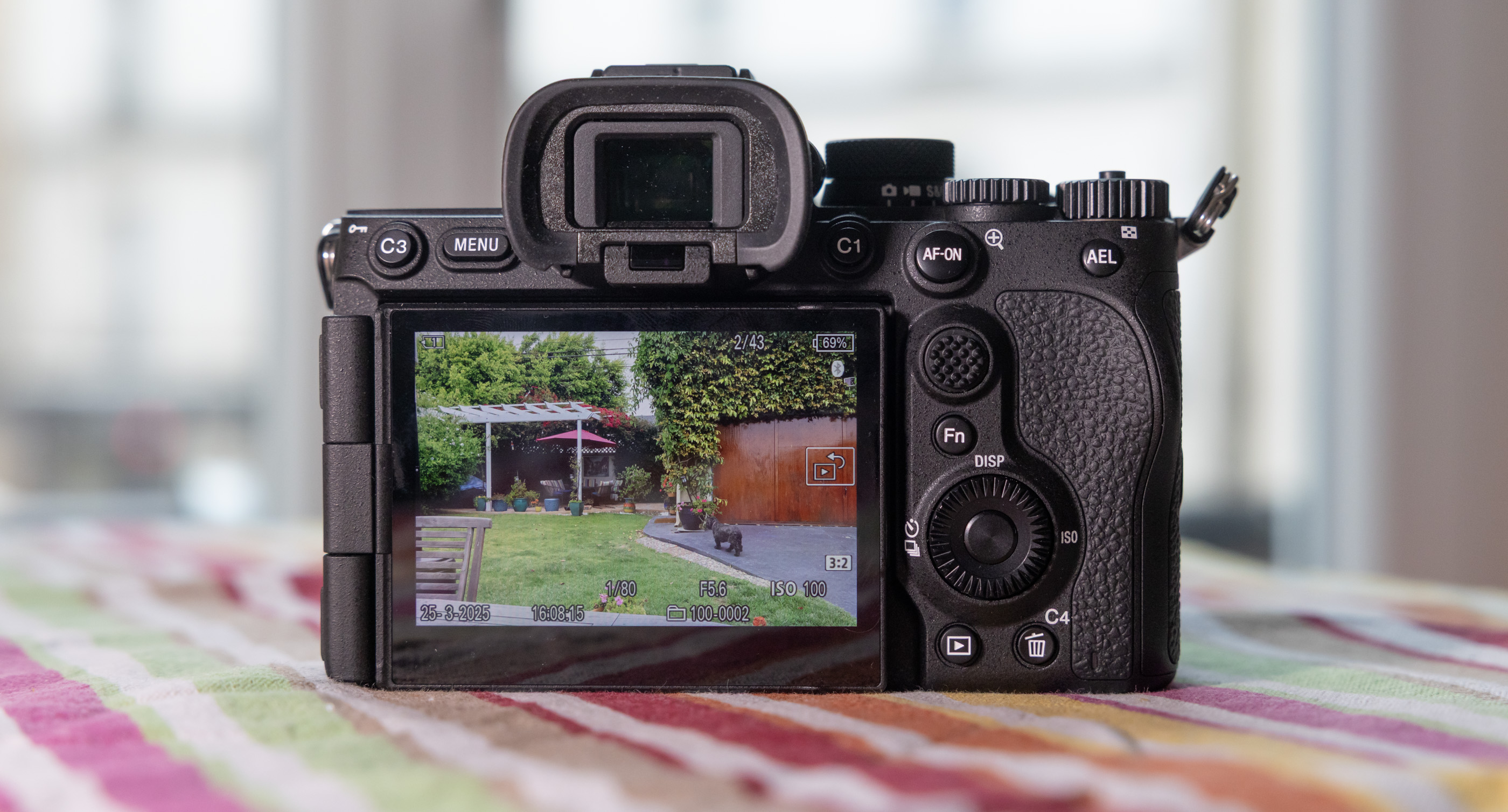
JPEGs look great straight out of the camera with excellent detail, though noise reduction can be a bit excessive at high ISOs. Sony’s color science has improved over the last model, so colors are accurate and the magenta-hue issues seem to be largely resolved. However,I still find Canon’s cameras capture more accurate skin tones.
The A7 V is a low-light marvel, with relatively noise-free photos all the way up to ISO 12,800 and usable shots at ISO 25,600. What’s remarkable is that the A7 V beats all its 24MP rivals in this regard, despite the nearly 50 percent higher resolution.
Sony added a new “Compressed RAW HQ” mode with the A7 V, designed to deliver better compressed RAW quality while keeping files smaller than “Lossless RAW.” Note that this new mode is not currently supported by Adobe Lightroom, so I’d avoid using it for now.
Video
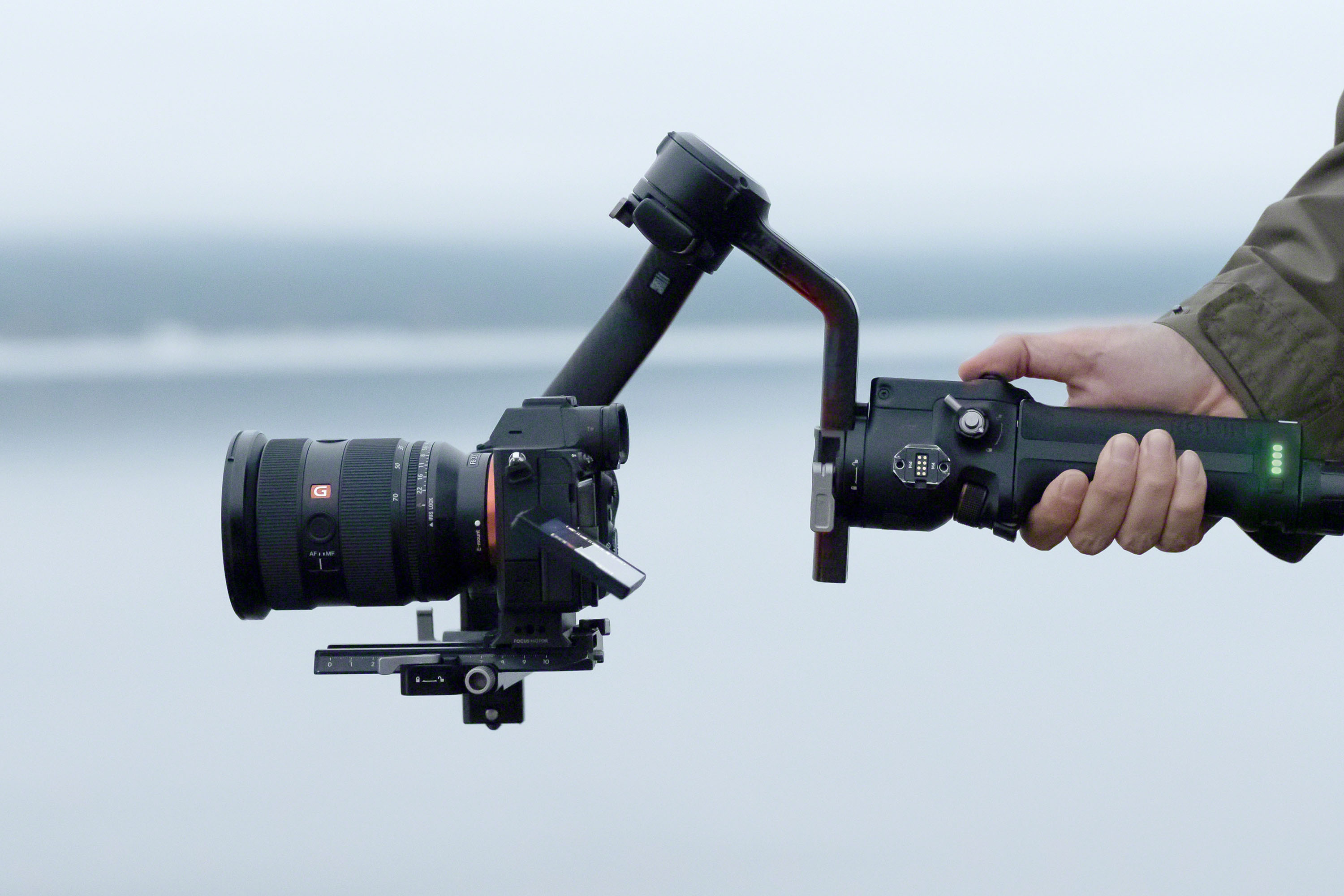
Two or three years ago, the A7 V would have been fine for video but not in 2026. While all its rivals are embracing internal RAW video at 6K or 7K, Sony is sticking with 10-bit 4K MP4 at up to 60 fps, or 4K 120 with an APS-C crop. The video is oversampled from a 7K sensor size so it’s very sharp though, and S-Log3 is available to boost dynamic range.
Sony likely thinks that creators using this camera will mostly shoot 4K MP4 (as I do), so it didn’t feel that RAW was a must. However, users who do need the benefits of RAW — like minimal degradation when editing, flexible white balance and improved dynamic range — can’t even do external RAW capture. The 4K max resolution and lack of open gate 3:2 is also a downside for creators who like to reframe shots in post or output to social media.
With that all said, you can capture high-quality 10-bit 4K 60 fps video with the A7 V. The S-Log3 Cine/S-Log 3 option and high data rate 4:2:2 HS video provide flexibility in post, letting you easily correct over- or under-exposed video or tweak colors. As with photos, color accuracy is nearly on par with Panasonic and other rivals. Shooting in low-light is a breeze, especially when you know that noise levels will be minimal even at high ISO speeds.
Sony has some extra video tricks like focus breathing compensation that eliminates zooming when focusing from a near to a far subject. And the A7 V comes with a new AI Auto Framing mode, which recognizes and crops in on humans, keeping them centered in the frame. I was able to keep subjects centered (while stabilizing the shot) as long as I didn’t move the camera excessively.
Autofocus is just as excellent for video as photos, with the same level of speed and accuracy. AI-powered autofocus supports all the same modes (people, animals, etc.) and usually nails focus of human or animal eyes, like when I captured footage of some ducks and dogs.
Video stabilization is also very good, just behind Panasonic’s S1 II and ahead of the Canon R6 III. In regular optical-only mode, it removes shaking from handheld video without too much movement. When you engage the “Active” mode, it adds electronic stabilization with a small crop for panning or tilting, and “Dynamic Active” lets you walk with surprisingly smooth results. Rolling shutter is rarely an issue for most types of shooting, including walking, unless you really whip the camera around. The lack of rolling shutter skew also makes it easier to apply stabilization in post with Adobe Premiere or DaVinci Resolve.
Wrap-up

The A7 V is an incredible camera for photography, with speeds, autofocus accuracy and image quality ahead of rivals, including the Canon R6 III, Panasonic S1 II and Nikon Z6 III.However, Sony isn’t keeping up with those models for video. The A7 V is missing RAW, native resolution and open gate capture, all of which can be found on the aforementioned cameras. That makes it hard to recommend for serious video users or creators who use full-frame open gate to export high-quality vertical video.
There’s one intangible, though. I enjoyed taking pictures with the A7 V more than other cameras I’ve tested lately because of the AF accuracy and image results. For anyone who wants a fast, reliable and easy-to-use camera for photography, I can’t recommend it enough. For video creators, though, I’d look at Canon’s R6 III, the Panasonic S1 II, or if you’re on a budget, Nikon’s Z6 III.
This article originally appeared on Engadget at https://www.engadget.com/cameras/sony-a7-v-review-awesome-speed-and-photo-quality-130000592.html?src=rss
iPhone Fold rumors: Everything we know so far, including the leaked design
30 Jan 2026, 1:00 pm by Georgie Peru
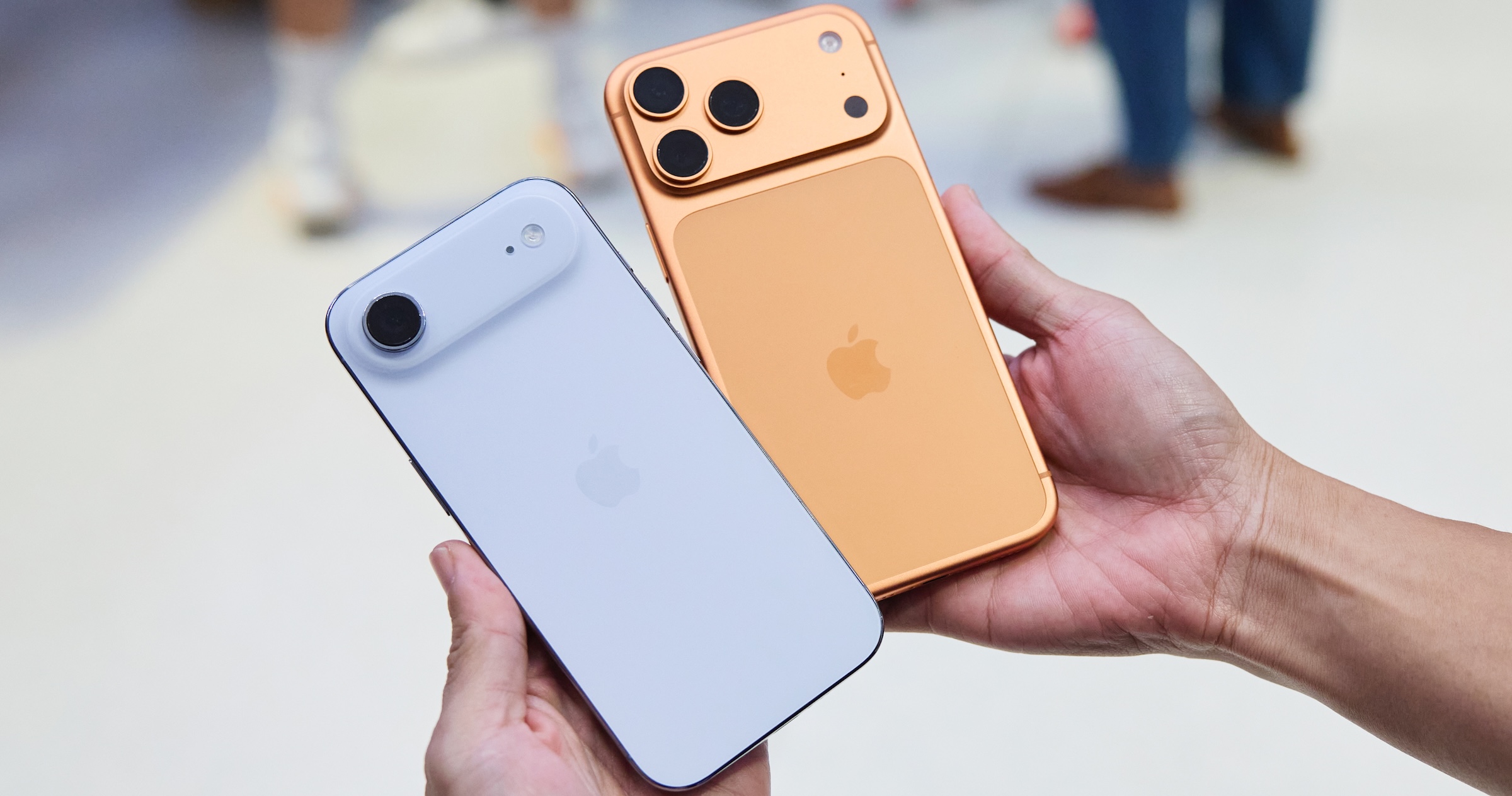
Apple has yet to announce a foldable iPhone, but after years of speculation, the outlines of what’s often referred to as the iPhone Fold are starting to come into focus. Multiple analysts and leakers now agree that Apple is targeting a late-2026 launch window for its first foldable phone, positioning it as a premium flagship rather than a niche experiment.
As with all pre-launch Apple products, nothing here is official. Plans can change, features can be dropped and timelines can slip. Still, recent reports paint the clearest picture yet of how Apple might approach a foldable iPhone and how it plans to differentiate itself from rivals like Samsung and Google.
Below is a roundup of the most credible iPhone Fold rumors so far, covering its possible release timing, design, display technology, cameras and price. We’ll continue to update this post as more rumors and details become available.
When could the iPhone Fold launch?
Rumors of a foldable iPhone date back as far as 2017, but more recent reporting suggests Apple has finally locked onto a realistic window. Most sources now point to fall 2026, likely alongside the iPhone 18 lineup.
Mark Gurman has gone back and forth on timing, initially suggesting Apple could launch “as early as 2026,” before later writing that the device would ship at the end of 2026 and sell primarily in 2027. Analyst Ming-Chi Kuo has also repeatedly cited the second half of 2026 as Apple’s target.
Some reports still claim the project could slip into 2027 if Apple runs into manufacturing or durability issues, particularly around the hinge or display. Given Apple’s history of delaying products that it feels aren’t ready, that remains a real possibility.
What will the iPhone Fold look like?
Current consensus suggests Apple has settled on a book-style foldable design, similar to Samsung’s Galaxy Z Fold series, rather than a clamshell flip phone.
When unfolded, the iPhone Fold is expected to resemble a small tablet like the iPad mini (8.3 inches). Based on the rumor mill, though, the iPhone Fold may be a touch smaller, with an internal display measuring around 7.7 to 7.8 inches. When closed, it should function like a conventional smartphone, with an outer display in the 5.5-inch range.
CAD leaks and alleged case-maker molds suggest the device may be shorter and wider than a standard iPhone when folded, creating a squarer footprint that better matches the aspect ratio of the inner display. Several reports have also pointed to the iPhone Air as a potential preview of Apple’s foldable design work, with its unusually thin chassis widely interpreted as a look at what one half of a future foldable iPhone could resemble.
If that theory holds, it could help explain the Fold’s rumored dimensions. Thickness is expected to land between roughly 4.5 and 5.6mm when unfolded, putting it in a similar range to the iPhone Air, and just over 9 to 11mm when folded, depending on the final hinge design and internal layering.
Display and the crease question
The display is arguably the biggest challenge for any foldable phone, and it’s an area where Apple appears to have invested years of development.
Multiple reports say Apple will rely on Samsung Display as its primary supplier. At CES 2026, Samsung showcased a new crease-less foldable OLED panel, which several sources — including Bloomberg — suggested could be the same technology Apple plans to use.
According to these reports, the panel combines a flexible OLED with a laser-drilled metal support plate that disperses stress when folding. The goal is a display with a nearly invisible crease, something Apple reportedly considers essential before entering the foldable market.
If Apple does use this panel, it would mark a notable improvement over current foldables, which still show visible creasing under certain lighting conditions.
Cameras and biometrics
Camera rumors suggest Apple is planning a four-camera setup. That may include:
-
Two rear cameras (main and ultra-wide, both rumored at 48MP)
-
One punch-hole camera on the outer display
-
One under-display camera on the inner screen
Several sources claim Apple will avoid Face ID entirely on the iPhone Fold. Instead, it’s expected to rely on Touch ID built into the power button, similar to recent iPad models. This would allow Apple to keep both displays free of notches or Dynamic Island cutouts.
Under-display camera technology has historically produced lower image quality, but a rumored 24MP sensor would be a significant step up compared to existing foldables, which typically use much lower-resolution sensors.
iPhone Fold’s hinge and materials
The hinge is another area where Apple may diverge from competitors. Multiple reports claim Apple will use Liquidmetal, which is a long-standing trade name for a metallic glass alloy the company has previously used in smaller components. While often referred to as “liquid metal” or “Liquid Metal” in reports, Liquidmetal is the branding Apple has historically associated with the material.
Liquidmetal is said to be stronger and more resistant to deformation than titanium, while remaining relatively lightweight. If accurate, this could help improve long-term durability and reduce wear on the foldable display.
Leaks from Jon Prosser also reference a metal plate beneath the display that works in tandem with the hinge to minimize creasing — a claim that aligns with reporting from Korean and Chinese supply-chain sources.
Battery and other components
Battery life is another potential differentiator. According to Ming-Chi Kuo and multiple Asian supply-chain reports, Apple is testing high-density battery cells in the 5,000 to 5,800mAh range.
That would make it the largest battery ever used in an iPhone, and competitive with (or larger than) batteries in current Android foldables. The device is also expected to use a future A-series chip and Apple’s in-house modem.
Price
None of this will come cheap, that’s for certain. Nearly every report agrees that the iPhone Fold will be Apple’s most expensive iPhone ever.
Estimates currently place the price between $2,000 and $2,500 in the US. Bloomberg has said the price will be “at least $2,000,” while other analysts have narrowed the likely range to around $2,100 and $2,300. That positions the iPhone Fold well above the iPhone Pro Max and closer to Apple’s high-end Macs and iPads.
Despite years of rumors, there’s still plenty that remains unclear. Apple hasn’t confirmed the name “iPhone Fold,” final dimensions, software features or how iOS would adapt to a folding form factor. Durability, repairability and long-term reliability are also open questions. For now, the safest assumption is that Apple is taking its time and that many of these details could still change before launch.
This article originally appeared on Engadget at https://www.engadget.com/mobile/smartphones/iphone-fold-rumors-everything-we-know-so-far-including-the-leaked-design-130000516.html?src=rss
DeepSeek reportedly gets China's approval to buy NVIDIA's H200 AI chips
30 Jan 2026, 1:00 pm by Mariella Moon
The Chinese government has given DeepSeek its approval to purchase NVIDIA’s H200 AI chips, according to Reuters. ByteDance, Alibaba and Tencent have also reportedly received permission from Beijing to buy a total of 400,000 H200 GPUs. Reuters says Chinese authorities are still finalizing the conditions they’re imposing on the companies to be able to proceed with their orders, so it may take a while before they’re able to receive their shipments. In addition, NVIDIA CEO Jensen Huang told reporters that his company has yet to receive orders from the aforementioned firms and that he believed China is still finalizing their licenses.
In December 2025, the US government allowed NVIDIA to sell its second-best H200 processors to vetted Chinese companies in addition to its H20 model in exchange for a 25 percent tariff on those sales. China previously dissuaded local companies from purchasing NVIDIA's H20 chips, but it recently agreed to import hundreds of thousands of H200 units after Huang’s visit to the country. While Chinese companies are striving to rely on local manufacturers, such as Huawei and Baidu, for AI chips, NVIDIA’s technology is still more advanced. The H200 is only second to NVIDIA’s B200 and is around six times more powerful than the H20.
China’s National Development and Reform Commission is the agency in charge of determining the conditions Chinese companies have to meet in order to buy H200 units. Stateside, DeepSeek’s purchase could lead to questions from authorities. As Reuters notes, a lawmaker has just accused NVIDIA of helping DeepSeek develop AI models that were subsequently used by the Chinese military.
This article originally appeared on Engadget at https://www.engadget.com/ai/deepseek-reportedly-gets-chinas-approval-to-buy-nvidias-h200-ai-chips-130000933.html?src=rss
The Morning After: The Nex Playground channels the spirit of Xbox's Kinect
30 Jan 2026, 12:15 pm by Mat Smith

You might not have heard of the Nex Playground, but it’s a tiny gaming system built entirely around Kinect-like games. With its camera and computer vision processing, the $249 Nex Playground can track up to four players as effectively as Microsoft’s old Xbox motion tracker, according to Engadget’s Devindra Hardawar.
The hardware is cute and well-designed, there are plenty of games, and it works offline. The only issue is the ongoing subscription needed to access most games. Check out our full review to learn more.
— Mat Smith
The biggest stories you might have missed
-
Samsung Galaxy Unpacked 2026: Everything we think the company will unveil
-
Native Instruments enters insolvency proceedings, leaving its future uncertain
-
Mark Zuckerberg says Reality Labs will (eventually) stop losing so much money
Tesla is killing off its Model S and X cars to make robots
Even if demand for Optimus is still unknown.

Tesla is going to wrap up production of its Model S and X EVs next quarter, CEO Elon Musk has announced. It’s less of a major shift for the company than it sounds: The newer Model 3 and Y now make up the bulk of the company’s sales. Tesla delivered over 1.5 million Model 3 and Y vehicles but sold under 450,000 Model S and X units. Musk added that Tesla’s long-term goal is to manufacture 1 million Optimus robots in the current Model S and X production space.
Snap makes its AR glasses into a separate business
It’ll still be under the umbrella of Snap.
Snap’s augmented reality glasses business will now be its own company called Specs Inc. It’ll still be fully owned by Snap, though. The company has been trying to figure out ways to raise outside money for its AR glasses to better compete with Meta, which has a lot more money to spend on development. Earlier this week, Mark Zuckerberg said his Reality Labs will (eventually) stop losing so much money as it doubles down on AI glasses and shifts away from virtual reality. According to the Meta boss, the company’s smart glasses sales “more than tripled” in 2025.
How can Snap’s Specs match the might of Meta? Well, its next pair will apparently be lighter, smaller and more capable than its older smartglass model, which was pretty dev-focused. One request: make them not look awful.
The best TV deals ahead of Super Bowl 2026
Maybe it’s time for an upgrade.
Hosting a Super Bowl party? Maybe you’ve been thinking about replacing an aging set, or you’re itching for a full refresh of your home theater setup — either way, if you’re looking for a good deal on a new TV, we’ve got you covered. TV prices steadily decrease after a new model comes out. The 2026 TV models were announced at CES and are expected to arrive this year, making now a good time to look for discounts on 2025 sets. Aside from the holiday shopping season, this is one of the best times of the year to save on a TV — it’s like the manufacturers know there’s a Super Bowl.
This article originally appeared on Engadget at https://www.engadget.com/general/the-morning-after-the-nex-playground-channels-the-spirit-of-xboxs-kinect-121500965.html?src=rss
The best power banks and portable chargers for every device in 2026
30 Jan 2026, 10:01 am by Amy Skorheim
To find the best power bank out there, I tested more than 60 portable chargers and batteries from big brands like Anker, Belkin, UGreen and Mophie — as well as from smaller players such as Biolite, Nimble and Satechi. I tested the batteries on a number of devices including iPhones, Galaxy phones, an iPad, a MacBook and even my ereader and a PlayStation controller. If you just want a brick that can charge anything, go for Anker’s 25kmAh Laptop Power bank. It has two built-in USB-C cables, a massive capacity and super fast charging speeds. But if that’s not quite what you’re looking for, you can check out our other picks for the best power banks below.
Best power banks for 2026
What to look for in a portable battery pack
Battery type
Nearly every rechargeable power bank you can buy (and most portable devices) contain a lithium-ion battery. These beat other current battery types in terms of size-to-charge capacity, and have even increased in energy density by eight fold in the past 14 years. They also don’t suffer from a memory effect (where a battery's lifespan deteriorates due to partial charges).
Flying with portable batteries
You may have heard about lithium ion batteries overheating and catching fire — a recent Hong Kong flight was grounded after just such a thing happened in an overhead bin. Current restrictions implemented by the TSA still allow external batteries rated at 100Wh or less (which all of our recommendations are) to fly with you, but only in your carry-on luggage — they can’t be checked.
Recently, Southwest Airlines was the first in the industry to take that rule one step further. Now, flyers on that airline must keep power banks in clear view when using them to recharge a device. If the portable charger isn’t actively in use, however, it can stay in your carry-on bag in the overhead bin.
Capacity
Power bank manufacturers almost always list a battery’s capacity in milliamp hours, or mAh. Smaller batteries with a 5,000mAh capacity make good phone chargers and can fill a smartphone to between 50 and 75 percent. Larger batteries that can recharge laptops and tablets, or give phones multiple charges, can exceed 25,000mAh and we have a separate guide that covers that entire category.
Unsurprisingly, the prices on most batteries goes up as mAh capacity increases, and since batteries are physical storage units, size and weight go up with capacity as well. If you want more power, be prepared to spend more and carry around a heavier brick.
You might think that a 10,000mAh power bank could charge a 5,000mAh phone to 100 percent twice, but that’s not the case. In addition to simple energy loss through heat dissipation, factors like voltage conversion also bring down the amount of juice that makes it into your phone. Most manufacturers list how many charges a battery can give a certain smartphone. In our tests, 10,000mAh of battery pack capacity translated to roughly 5,800mAh of device charge. 20,000mAh chargers delivered around 11,250mAh to a device, and 25,000mAh banks translated to about 16,200mAh of charge. That’s an average efficiency rate of around 60 percent.
Wireless
Wireless charging, whether through a bank or a plugged-in charging pad, is less efficient than wired connections. But it is convenient — and in most cases, you can carry around and use your phone as it refills with a magnetically attached power bank.
Power banks with wireless charging are far better than they once were. Just a couple years ago, the ones I tested were too inefficient to recommend in this guide. When batteries adhering to the Qi2 wireless charging standard started arriving in 2023, performance markedly improved.
To gain Qi2-certification, a device has to support speeds of up to 15 watts and include magnetic attachment points. The MagSafe technology on iPhones were once the only handsets that were Qi2-compatible, but now Google’s Pixelsnap tech brings both the higher speed and magnetic grip to Pixel 10 phones. Samsung may follow up with its own version in future releases.
The latest wireless charging standard, Q12 25W, is supported by the new iPhone 17 phones as well as the Google Pixel 10 Pro XL. Battery packs that are Qi2 25W-enabled are starting to hit the market as well, and the Ugreen MagFlow was the first on the scene.
Ports
USB-C ports can deliver faster charges than USB-A ports, and most of the portable chargers we recommend here have Type-C connections. But Type-A jacks are still handy if you need to use a specialized cable for a certain device (my camera’s USB-A to micro USB cable comes to mind).
There’s also variation among USB-C ports. Larger banks with more than one port will sometimes list different wattages for each. For example, a bank with three ports may have two 65W ports and one 100W port. There will also be at least one in/out port on the bank, which can be used to charge the battery itself or to deliver a charge to your device. Wattages and in/out labels are printed right next to the port — and always in the tiniest font possible (remember, your phone is an excellent magnifying glass if you ever have trouble reading them).
As with standard wall chargers, the port’s wattage will determine what you can charge. A phone will happily charge off a 100W connection, but a 15W plug won’t do much for your laptop. And remember, the cable has to match the maximum wattage. A cable rated for 60W won’t deliver 100W speeds.
Luckily, some of the best power banks include a built-in USB-C cable. That’ll not only ensure you have the right cord, it’s one less thing you have to remember to bring along.
Design
Once, most rechargeable batteries were black with a squared-off, brick-like design, but now they come in different colors and shapes with attractive finishes and detailing. While that doesn’t affect how they perform, it’s a consideration for something you’ll interact with regularly. Some portable power banks include extra features like MagSafe compatibility, a built-in wall plug or even a kickstand. Nearly all have some sort of indicator to let you know how much available charge your power bank has left, usually expressed with lighted pips near the power button. Some of the newer banks take that a step further with an LED display indicating remaining battery percentage.
How we test best power banks
First, I considered brands Engadget reviewers and staff have tried over the years and checked out customer ratings on retail sites like Amazon and Best Buy. Then, I acquired the most promising candidates and tested them in my home office.
For testing, I used each battery to charge both an iPhone and an Android phone, as well as an iPad and a MacBook Pro for the larger portable chargers. I let the devices get down to between zero and five percent and charged them until the devices were full or the power bank died.
For reference, here are the battery capacities of the device I've used for testing over the years:
-
iPhone 11: 3,110 mAh
-
iPhone 14 Plus: 4,325 mAh
-
iPhone 15: 3,349 mAh
-
iPhone 16: 3,561*
-
Galaxy S22 Ultra: 4,855mAh
-
iPad Air: 7,729mAh
-
16-inch M1 Pro MacBook Pro: 27,027mAh
*The iPhone 17 has a slightly larger battery at 3,692mAh
I continuously update this guide as companies release new products.
Other power banks we tested
Here are a few picks that didn't quite make the cut, but are worth mentioning.
Belkin Stage PowerGrip
If you’re into iPhonography, this clever accessory could be worth a look. Belkin’s Stage PowerGrip is a 9,300mAh power bank that has both a wireless charging pad and built-in cable. But it’s also a Bluetooth shutter with a quarter-inch tripod thread. The design resembles a standard digital camera and provides a sturdy grip once you magnetically attach your phone (make sure you’re either using a MagSafe case or no case to ensure a solid connection).
The shutter is conveniently placed and the remote speed was quick enough to capture the cute things my cat was doing. The accessory can even act as a stand while it charges in either landscape or portrait orientation. As a power bank, it’s slow, taking about two hours to get my iPhone 16 from three to 98 percent, but it has enough juice for a full refill plus a little more, which could help if you’re out taking pictures all day.
Anker MagGo for Apple Watch power bank
The Anker MagGo for Apple Watch power bank combines a 10K battery with a built-in USB-C cable and a pop-up Apple Watch charger. I didn’t formally test it as it’s a little too niche, but it deserves a mention for saving my keister on two occasions. Driving to a hike, my watch told me it was down to 10 percent. Thankfully, I had this and could refill the watch before I got to the trailhead. Later, on an interstate trip, I realized the travel charging station I’d brought was a dud. This kept my watch alive for the week I was away. It does a good job simply charging a phone via the handy on-board cable, too. But for those with an Apple Watch, it’s extra useful.
HyperJuice 245W
Hyper’s massive-but-sleek brick is one nice looking power bank. The HyperJuice 245W packs a hefty 27,000mAh capacity, enough to refill my tester phone about four times and get a MacBook Pro from near-dead to 75 percent. It only has USB-C ports, but you at least get four of them. USB-C only is probably fine for most situations, but a USB-A port would be nice for charging the occasional older peripheral. The 245 wattage is pretty high for a power bank and it was indeed speedy. It filled a Samsung Galaxy S24 Ultra in just over an hour. But it’s the same price and capacity as our Mophie Powerstation pick for laptop banks, and that one has a better variety of ports. Hyper’s battery is also comparable to Anker’s laptop battery, which is cheaper, has built-in cables and has nearly the same capacity. Plus, that bank is just as swanky looking.
EcoFlow Rapid magnetic power bank
I was curious to try out the first power bank from EcoFlow, a company that primarily makes larger power stations and whole-home backup batteries. The first offering in the brand’s Rapid series is a Qi2-enabled magnetic charger with a 5,000mAh capacity. It looks quite nice with shiny silver accents and soft-touch grey plastic on the MagSafe-compatible front. There’s a little pull-out leg that sturdily displays your phone as it charges and the attached USB-C cable lets you refill devices directly, then tucks out of the way when it’s not in use. But it didn’t outperform our top pick in the MagSafe category, in terms of both charging speeds and the amount of charge delivered.
Mophie Snap+ Powerstation Mini
The Mophie snap+ Powerstation Mini is terribly well-built. It feels premium with a rubberized contact point for the MagSafe charging pad and a stand that runs the entire width of the bank itself, making it extra sturdy. It’s compact, too, but only carries a 5,000mAh capacity, which gets you a partial charge on most newer or larger phones. Our current MagSafe/iPhone pick has double the capacity, a stand and a digital display — for just $20 more than the Powerstation Mini.
Power bank FAQs
What's the difference between a portable power bank and a portable charger?
A slew of terms are used to describe power banks, including portable batteries, portable chargers, external battery packs and even, somewhat confusingly, USB chargers, which is what wall chargers are often called. They all mean the same thing: a lithium ion battery that stores a charge so you can refill a smartphone, tablet, earbuds, console controller, ereader, laptop, or just about any other device with its own built-in, rechargeable battery.
There’s little difference between the terms, so the specs you’ll want to pay attention to are capacity (expressed in mAh), size and weight so you can find the right balance between recharging what you need and portability.
Power stations, on the other hand, are distinct. These are bigger units (often around the size of a car battery) that can be used to charge multiple devices multiple times, but notably, they can’t be taken on airplanes.
Does fast charging actually ruin your battery?
Not exactly. The real enemy of a battery’s longevity is heat. The faster you charge a battery, the more heat is generated. Modern phones have features that keep the battery cool while charging, like physical heat shields and heat sinks, as well as software features that slow down processes that generate too much heat. Phone manufacturers are keen to promote a phone’s fast-charging abilities, so they had to figure out ways to make faster charging work.
While there aren’t long-term studies on what fast charging does to a phone, a study on EV batteries (which use the same general concept of charged lithium ions flowing from one side of the battery to the other, absorbing or releasing a usable charge) showed a very slight decrease in capacity over time with only fast charging — though what actually made a larger difference was how hot the battery itself was, due to ambient temperatures, when it was charged.
In short, fast charging could be slightly harder on your battery than normal charging. But the safeguards most smartphones have make that difference fairly negligible. To really ensure you’re optimizing charging capabilities, limit your phone's heat exposure overall.
Can you use a power bank for all your devices?
That depends on the size of the bank and the size of your device’s battery. A small 5,000mAh battery isn’t strong enough to charge laptops, but a portable charger with a 20,000mAh capacity will give your computer a partial refill. You also have to consider port compatibility. If your device has a USB port, you’ll be able to easily find a cable to connect it to a battery. If your device has a more unique port, such as a DC port, you won’t be able to use a battery. Devices with an AC cable and plug can be charged, and sometimes powered (such as in the case of a printer or speaker), by larger laptop batteries with AC ports.
This article originally appeared on Engadget at https://www.engadget.com/computing/accessories/best-power-bank-143048526.html?src=rss
The best budgeting apps for 2026
30 Jan 2026, 8:00 am by Dana Wollman,Valentina Palladino
Managing your finances doesn’t have to be a headache — especially with the right budgeting app at your fingertips. Whether you’re trying to track everyday spending, save for a big purchase or just keep a closer eye on your subscriptions, there’s an app that can help. With Mint shutting down, plenty of users have been looking for the best budget apps to replace it, and luckily there are plenty of solid alternatives.
From AI-powered spending trackers to apps that break down your expenses into easy-to-follow categories, the best budgeting tools help you take control of your money without the hassle of spreadsheets. Some focus on automating savings, while others give you a deep dive into your finances with powerful analytics and custom reporting. If you’re still searching for the right Mint alternative, check out our guide to the best budgeting apps to replace Mint to find the best fit for your needs.
If you’re not sure where to start, we’ve rounded up the top budgeting apps to help you track spending, save smarter, and stick to your financial goals.
Best budget apps of 2026
Other budgeting apps we tested
PocketGuard
PocketGuard used to be a solid free budget tracker, but the company has since limited its “free” version to just a free seven-day trial. Now, you’ll have to choose between two plans once the trial is over: a $13 monthly plan or a $75 annual plan. When I first tested it, I found it to be more restricted than NerdWallet, but still a decent option. The main overview screen shows you your net worth, total assets and debts; net income and total spending for the month; upcoming bills; a handy reminder of when your next paycheck lands; any debt payoff plan you have; and any goals. Like some other apps, including Quicken Simplifi, PocketGuard promotes an “after bills” approach, where you enter all of your recurring bills, and then PocketGuard shows you what’s left, and that’s what you’re supposed to be budgeting: your disposable income.
Although PocketGuard’s UI is easy enough to understand, it lacks polish. The “accounts” tab is a little busy, and doesn’t show totals for categories like cash or investments. Seemingly small details like weirdly phrased or punctuated copy occasionally make the app feel janky. More than once, it prompted me to update the app when no updates were available. The web version, meanwhile, feels like the mobile app blown up to a larger format and doesn’t take advantage of the extra screen real estate. Ultimately, now that the free tier is gone, it just doesn’t present the same value proposition as it once did.
How we test budgeting apps
Before I dove in and started testing out budgeting apps, I had to do some research. To find a list of apps to try out, I consulted trusty ol’ Google (and even trustier Reddit); read reviews of popular apps on the App Store; and also asked friends and colleagues what budget tracking apps (or other budgeting methods) they might be using for money management. Some of the apps I found were free and these, of course, show loads of ads (excuse me, “offers”) to stay in business. But most of the available apps require paid subscriptions, with prices typically topping out around $100 a year, or $15 a month. (Spoiler: My top pick is cheaper than that.)
All of the services I chose to test needed to do several things: import all of your account data into one place; offer budgeting tools; and track your spending, net worth and credit score. Except where noted, all of these apps are available for iOS, Android and on the web.
Once I had my shortlist of six apps, I got to work setting them up. For the sake of thoroughly testing these apps, I made a point of adding every account to every budgeting app, no matter how small or immaterial the balance. What ensued was a veritable Groundhog Day of two-factor authentication. Just hours of entering passwords and one-time passcodes, for the same banks half a dozen times over. Hopefully, you only have to do this once.
Budgeting app FAQs
What is Plaid and how does it work?
Each of the apps I tested uses the same underlying network, called Plaid, to pull in financial data, so it’s worth explaining what it is and how it works. Plaid was founded as a fintech startup in 2013 and is today the industry standard in connecting banks with third-party apps. Plaid works with over 12,000 financial institutions across the US, Canada and Europe. Additionally, more than 8,000 third-party apps and services rely on Plaid, the company claims.
To be clear, you don’t need a dedicated Plaid app to use it; the technology is baked into a wide array of apps, including all of the budgeting apps listed in this guide. Once you find the “add an account” option in whichever one you’re using, you’ll see a menu of commonly used banks. There’s also a search field you can use to look yours up directly. Once you find yours, you’ll be prompted to enter your login credentials. If you have two-factor authentication set up, you’ll need to enter a one-time passcode as well.
As the middleman, Plaid is a passthrough for information that may include your account balances, transaction history, account type and routing or account number. Plaid uses encryption, and says it has a policy of not selling or renting customer data to other companies. However, I would not be doing my job if I didn’t note that in 2022 Plaid was forced to pay $58 million to consumers in a class action suit for collecting “more financial data than was needed.” As part of the settlement, Plaid was compelled to change some of its business practices.
In a statement provided to Engadget, a Plaid spokesperson said the company continues to deny the allegations underpinning the lawsuit and that “the crux of the non-financial terms in the settlement are focused on us accelerating workstreams already underway related to giving people more transparency into Plaid’s role in connecting their accounts, and ensuring that our workstreams around data minimization remain on track.”
Why did Mint shut down?
When parent company Intuit announced in December 2023 that it would shut down Mint, it did not provide a reason why it made the decision to do so. It did say that Mint's millions of users would be funneled over to its other finance app, Credit Karma. "Credit Karma is thrilled to invite all Minters to continue their financial journey on Credit Karma, where they will have access to Credit Karma’s suite of features, products, tools and services, including some of Mint’s most popular features," Mint wrote on its product blog. In our testing, we found that Credit Karma isn't an exact replacement for Mint — so if you're still looking for a Mint alternative, you have some decent options.
What about Rocket Money?
Rocket Money is another free financial app that tracks spending and supports things like balance alerts and account linking. If you pay for the premium tier, the service can also help you cancel unwanted subscriptions. We did not test it for this guide, but we'll consider it in future updates.
This article originally appeared on Engadget at https://www.engadget.com/apps/best-budgeting-apps-120036303.html?src=rss
End of today’s Engadget roundup.